


The market for artificial intelligence (AI)-powered robots and autonomous machines has the potential to balloon into a trillion-dollar opportunity by 2035, orders of magnitude bigger than it is now, according to a team of Barclays PLC analysts.
Autonomous vehicles, which are already relatively advanced, will lead the way, followed by drones and then more complicated general-purpose humanoid robots, the analysts wrote in a report on Tuesday titled “The Decade of the Robot.”
“Advances in brains, brawn and batteries are pushing AI-enabled robotics to an inflection point, setting the investment agenda for the next decade,” wrote the team led by Zornitsa Todorova, head of thematic fixed-income research at Barclays.
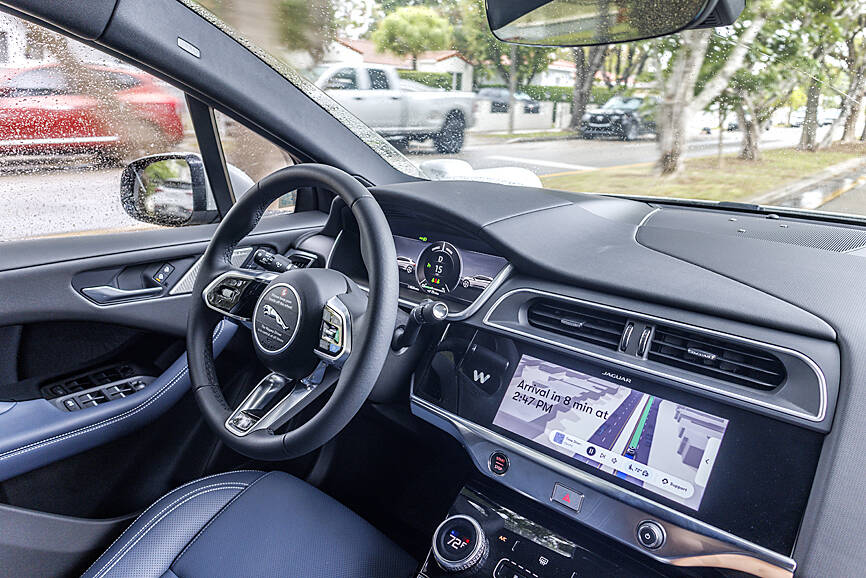
Photo: EPA
The development of robotics and other real-world, “physical AI” marks a paradigm shift from digital-focused AI, one that lays the foundation for a “value chain” that will be more diverse and deeper than the first wave of AI products, they said.
While China currently dominates humanoid and industrial robot deployment, the Barclays analysts identified close to 200 public issuers that could be involved in the theme over the next decade, including 100 with at least one corporate bond outstanding.
“We see automakers emerging as potential major participants, alongside growing deployment of robotic systems across warehousing, logistics and retail,” they wrote.
Examples include Mercedes-Benz Group AG’s use of Nvidia Corp’s Omniverse to “virtually retool factories with minimal disruption” and Tesla Inc’s focus on robots during its fourth-quarter earnings call.
The team highlighted the software and hardware underpinning the technology, including semiconductor and infrastructure providers such as Taiwan Semiconductor Manufacturing Co (台積電), Samsung Electronics Co and Nvidia Corp. They also flag “robotic hardware and motion systems that perform physical tasks,” along with batteries, which “provide the energy backbone for these platforms,” citing Chinese manufacturers like EVE Energy Co (億緯鋰能) and Contemporary Amperex Technology Co (寧德時代).
The Barclays analysts also point to a group they call enablers, which are companies that either build full robots, like Tesla, or “shape the broader ecosystem” by developing technology, like Amazon.com Inc.
A shift toward physical AI is already showing in large-scale logistics and retail operations at companies such as Amazon and Walmart Inc. They said Amazon has more than 1 million robots operating in its fulfillment network, “which is likely still only a fraction of the long-term potential.”

Cairo’s new monorail slices across the city skyline, running above the familiar chaos of blaring horns and aging buses’ exhaust fumes that mark rush hour below. The US$4.5 billion monorail, opened this month, is among Egypt’s most prominent new transport projects, part of a debt-funded infrastructure drive criticized for sapping state finances while bringing limited benefits to most of the country’s 109 million people. “It feels like you’re in a different country,” said Ramy Sayed, a restaurant manager, aboard a driverless Innovia 300 train. “No noise, no traffic, we’re not used to this.” The eastern line runs 56km from the bustling middle-class
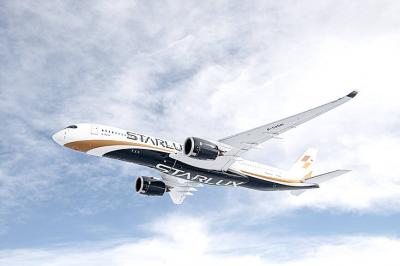
Starlux Airlines Co (星宇航空) today unveiled a long-haul network expansion plan at a shareholders’ meeting in Taipei, including direct flights to Barcelona, Spain, and Zurich, Switzerland, as well as a service connecting Taipei, Sydney and New Zealand. Starlux is to become the first Taiwanese carrier to offer non-stop services to the two European cities, while the inaugural oceanic route is expected to expand transit opportunities within the Australia-New Zealand market, Starlux said. Flight services to Chicago, Dallas, Washington and New York are under evaluation, the airline added. Prior to the shareholders’ meeting, the airline earlier this year announced that it would be
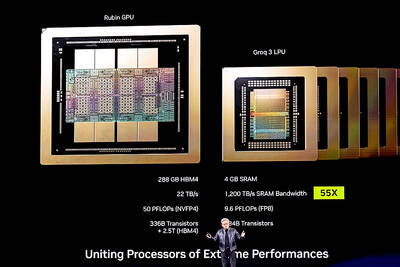
Taiwanese prosecutors suspect that three people successfully smuggled at least one shipment of Nvidia Corp artificial intelligence (AI) chips to China after first exporting them to Japan, people familiar with the matter said. The trio was detained last week by the Keelung District Prosecutors’ Office for allegedly falsifying documents related to exports of Super Micro Computer Inc servers containing advanced Nvidia chips, which the US has barred from sale to China without a license from Washington. The move marked Taiwan’s first public crackdown on AI chip diversion after years of pressure from the US to take a more active role in curtailing
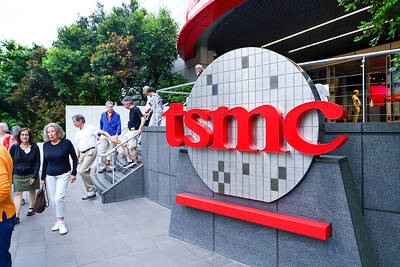
Taiwan Semiconductor Manufacturing Co (TSMC, 台積電) employee bonuses are likely to grow more than 30 percent this year, in line with the past few years as the company’s profits continue to set new records, an anonymous source cited TSMC chairman C.C. Wei (魏哲家) as saying yesterday. TSMC, the world’s largest contract chipmaker, is committed to taking care of its workers, the source said, citing Wei’s meeting with employees yesterday morning. Wei also expressed gratitude to employees for their contribution to the company’s improving bottom line, the source added. Since 2023, TSMC’s employee bonuses have grown at an annual rate of


 RSS
RSS