


Tariffs imposed on South African agricultural products by the US are spiking the price of South African wine in the world’s biggest market, making it less competitive and reducing export volumes.
The price of South African wine is about 17 percentage points more expensive in the US relative to other imports when compared with 2024 prices, the UN Conference on Trade and Development (UNCTAD) said in its global trade update this month.
South African wine and fruit producers are feeling the impact of US duties of as much as 30 percent on some agricultural goods. US tariffs crimped imports 11 percent in the third quarter of last year and 39 percent in the final three months of the year, according to the report.
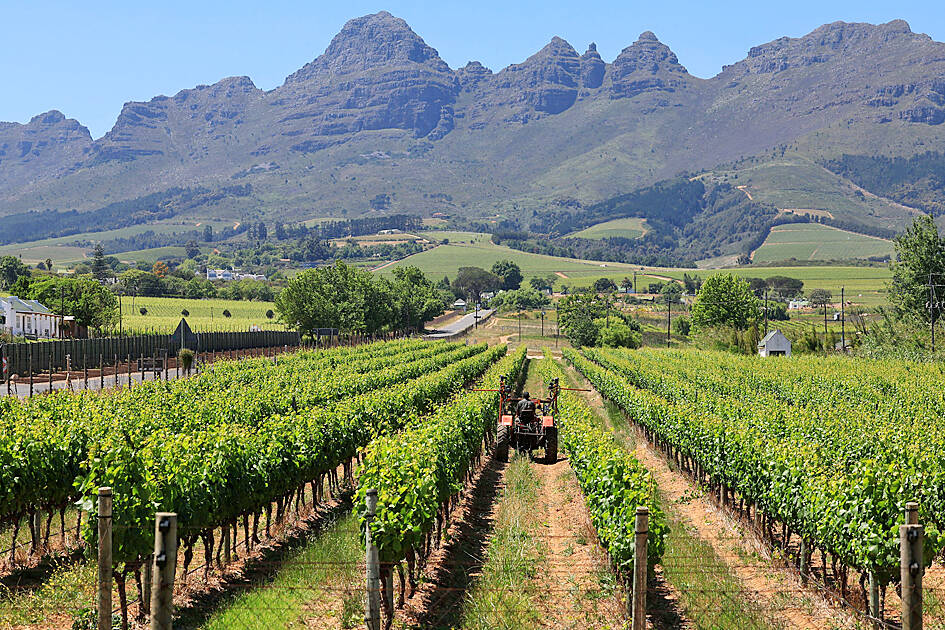
Photo: Reuters
UNCTAD highlighted the effect the tariff regime has on South Africa’s ability to compete in the US by “redistributing competitiveness in complex and uneven ways.” This “differs by sector, country and export structure,” the report said.
“Countries need to monitor their relative tariff positions closely, diversify export markets where access tightens and seize openings where preferential margins improve,” the UNCTAD said.
The US is South Africa’s second-biggest trading partner by country after China. South Africa is the US’ largest trading partner on the African continent with more than 500 US businesses and 30,000 US citizens based in the country.
As bilateral relations floundered, Washington in August last year imposed 30 percent tariffs on South African exports to the US, raising fears of major jobs losses in the local agriculture, automobile and textile sectors.
Pretoria said it was in negotiations with Washington for a better deal, but it has also signed a duty-free agreement with China, its biggest trade partner.
Meanwhile, Washington and Pretoria are at odds over a series of international and domestic policies, from South Africa’s genocide case against Israel to Trump’s disputed claims that white Afrikaners are being persecuted.
Yesterday, the US embassy said a conservative media critic picked by US President Donald Trump to be US ambassador to South Africa has arrived to take up his post.
Brent Bozell, 70, needs to present his credentials to South African President Cyril Ramaphosa before officially taking up his post.
Trump chose the right-wing Bozell for the job in March last year, soon after expelling South Africa’s ambassador on accusations that he was critical of Washington. Pretoria has yet to announce a successor.
Additional reporting by AFP
Shares of contract chipmaker Taiwan Semiconductor Manufacturing Co (TSMC, 台積電) came under pressure yesterday after a report that Apple Inc is looking to shift some orders from the Taiwanese company to Intel Corp. TSMC shares fell NT$55, or 2.4 percent, to close at NT$2,235 on the local main board, Taiwan Stock Exchange data showed. Despite the losses, TSMC is expected to continue to benefit from sound fundamentals, as it maintains a lead over its peers in high-end process development, analysts said. “The selling was a knee-jerk reaction to an Intel-Apple report over the weekend,” Mega International Investment Services Corp (兆豐國際投顧) analyst Alex Huang
Taiwan Semiconductor Manufacturing Co (TSMC, 台積電) is expected to remain Apple Inc’s primary chip manufacturing partner despite reports that Apple could shift some orders to Intel Corp, industry experts said yesterday. The comments came after The Wall Street Journal reported on Friday that Apple and Intel had reached a preliminary agreement following more than a year of negotiations for Intel to manufacture some chips for Apple devices. Taiwan Institute of Economic Research (台灣經濟研究院) economist Arisa Liu (劉佩真) said TSMC’s advanced packaging technologies, including integrated fan-out and chip-on-wafer-on-substrate, remain critical to the performance of Apple’s A-series and M-series chips. She said Intel and Samsung
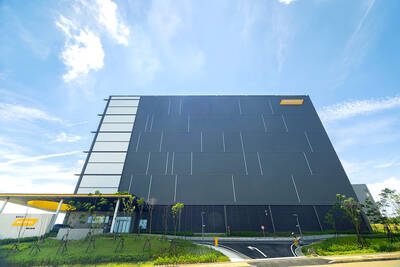
POWER BUILDUP: Powered by Nvidia’s B200 Blackwell chips, the data center would support MediaTek’s computing power demand and business growth, the company said Smartphone chip designer MediaTek Inc (聯發科) yesterday launched a new artificial intelligence (AI) data center with a maximum capacity of 45 megawatts to meet its rising demand for computing power required to develop new advanced chips for AI applications. The company has completed the first-phase computing power buildup at the data center in Miaoli County’s Tongluo Township (銅鑼), providing 15 megawatts of capacity to support its research and development (R&D) capabilities, despite an industrywide shortage of key components, MediaTek said. Supply constraints have plagued a wide range of key components, including memory chips, solid-state drives, power supply units and central
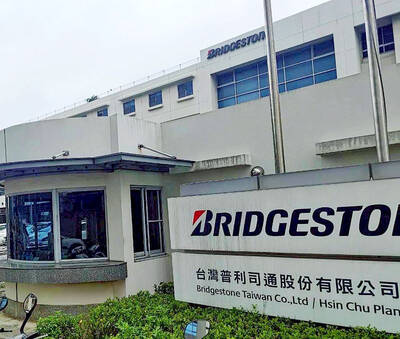
TRANSITION: With the closure, the company would reorganize its Taiwanese unit to a sales and service-focused model, Bridgestone said Bridgestone Corp yesterday announced it would cease manufacturing operations at its tire plant in Hsinchu County’s Hukou Township (湖口), affecting more than 500 workers. Bridgestone Taiwan Co (台灣普利司通) said in a statement that the decision was based on the Tokyo-based tire maker’s adjustments to its global operational strategy and long-term market development considerations. The Taiwanese unit would be reorganized as part of the closure, effective yesterday, and all related production activities would be concluded, the statement said. Under the plan, Bridgestone would continue to deepen its presence in the Taiwanese market, while transitioning to a sales and service-focused business model, it added. The Hsinchu


 RSS
RSS