


Advanced Micro Devices Inc (AMD) is partnering with Tata Consultancy Services Ltd (TCS) to deploy the US chipmaker’s latest artificial intelligence (AI) data center technology in India, challenging Nvidia Corp in one of the world’s fastest-growing markets.
AMD is to offer its Helios data center blueprint and work with TCS to support up to 200 megawatts of AI infrastructure capacity in India, the companies said in a statement on Monday.
“AI adoption is accelerating from pilots to large-scale deployments, and that shift requires a new blueprint for compute infrastructure,” AMD chief executive officer Lisa Su (蘇姿丰) said in the statement. “Together with TCS, we are enabling enterprises across India to deploy AI at scale today while building the compute foundation of tomorrow.”
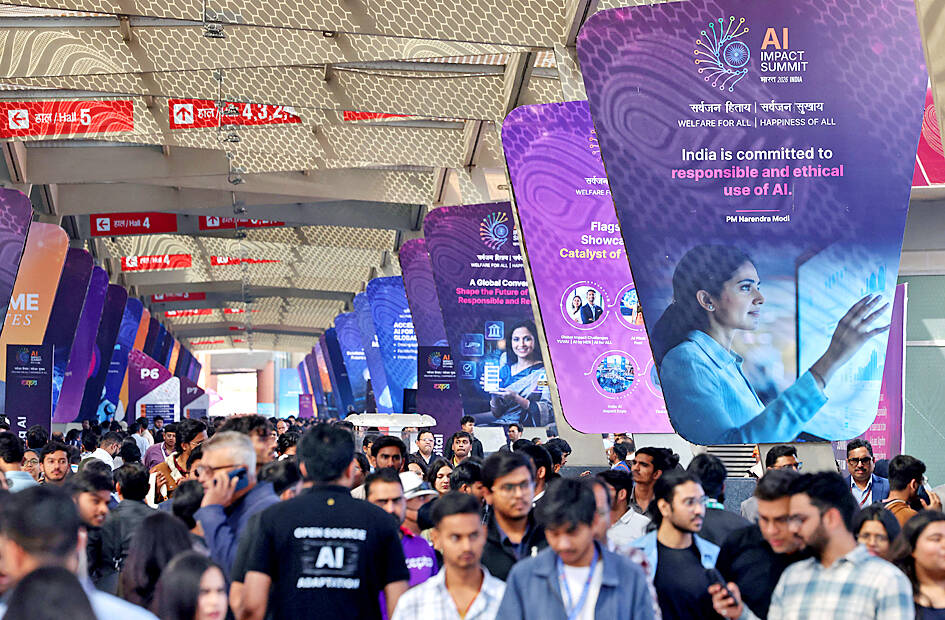
Photo: Reuters
AMD’s push in India underscores a wider strategy to supply end-to-end AI infrastructure to governments and companies racing to build local computing capacity.
TCS late last year announced a plan to enter the data center space, targeting as much as 1.2 gigawatts of capacity.
AMD is capturing AI market share from Nvidia, according to Arista Networks Inc. The AMD partner said last week that it is seeing about 20 percent to 25 percent of chip deployments going to AMD, compared with 99 percent of AI chip deployments going to Nvidia last year.
Separately, Anthropic PBC has partnered with Indian technology firm Infosys Ltd to develop advanced AI solutions for companies across sectors, including telecommunications, financial services, manufacturing and software development.
The partners will develop custom AI agents tailored for specific industries and business functions, Infosys said in a statement. Anthropic is to combine its Claude models, including Claude Code, with Infosys’ Topaz AI products to help companies automate complex workflows and speed up software delivery.
“From modernizing financial services with intelligent risk management and compliance, to enabling engineering businesses to lead with AI-driven design and manufacturing, the goal is to leverage the joint expertise of Infosys and Anthropic to accelerate AI value realization for global enterprises,” Infosys chief executive officer Salil Parekh said in the statement.
The partnership underscores the intensifying race among global AI developers to secure enterprise customers as companies demand industry-specific automation tools. Earlier, Anthropic said it is embedding its marquee AI coding agent within prominent Indian firms, including flag carrier Air India Ltd and outsourcing giant Cognizant Technology Solutions Corp.
India launched one of the world’s largest artificial intelligence summits this week as Indian Prime Minister Narendra Modi seeks to make the country an AI hub amid intense competition to develop frontier models.
Shares of contract chipmaker Taiwan Semiconductor Manufacturing Co (TSMC, 台積電) came under pressure yesterday after a report that Apple Inc is looking to shift some orders from the Taiwanese company to Intel Corp. TSMC shares fell NT$55, or 2.4 percent, to close at NT$2,235 on the local main board, Taiwan Stock Exchange data showed. Despite the losses, TSMC is expected to continue to benefit from sound fundamentals, as it maintains a lead over its peers in high-end process development, analysts said. “The selling was a knee-jerk reaction to an Intel-Apple report over the weekend,” Mega International Investment Services Corp (兆豐國際投顧) analyst Alex Huang
Taiwan Semiconductor Manufacturing Co (TSMC, 台積電) is expected to remain Apple Inc’s primary chip manufacturing partner despite reports that Apple could shift some orders to Intel Corp, industry experts said yesterday. The comments came after The Wall Street Journal reported on Friday that Apple and Intel had reached a preliminary agreement following more than a year of negotiations for Intel to manufacture some chips for Apple devices. Taiwan Institute of Economic Research (台灣經濟研究院) economist Arisa Liu (劉佩真) said TSMC’s advanced packaging technologies, including integrated fan-out and chip-on-wafer-on-substrate, remain critical to the performance of Apple’s A-series and M-series chips. She said Intel and Samsung
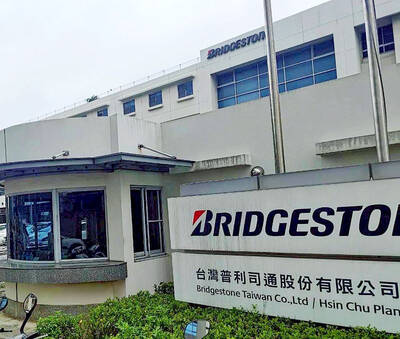
TRANSITION: With the closure, the company would reorganize its Taiwanese unit to a sales and service-focused model, Bridgestone said Bridgestone Corp yesterday announced it would cease manufacturing operations at its tire plant in Hsinchu County’s Hukou Township (湖口), affecting more than 500 workers. Bridgestone Taiwan Co (台灣普利司通) said in a statement that the decision was based on the Tokyo-based tire maker’s adjustments to its global operational strategy and long-term market development considerations. The Taiwanese unit would be reorganized as part of the closure, effective yesterday, and all related production activities would be concluded, the statement said. Under the plan, Bridgestone would continue to deepen its presence in the Taiwanese market, while transitioning to a sales and service-focused business model, it added. The Hsinchu
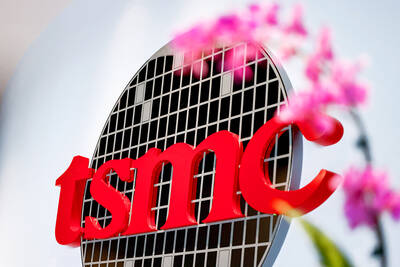
Taiwan Semiconductor Manufacturing Co (TSMC, 台積電) has approved a capital budget of US$31.28 billion for production expansion to meet long-term development needs during the artificial intelligence (AI) boom. The company’s board meeting yesterday approved the capital appropriation plan for purposes such as the installation of advanced technology capacity and fab construction, the world’s largest contract chipmaker said in a statement. At an earnings conference last month, TSMC forecast that its capital expenditure for this year would be at the higher end of the US$52 billion to US$56 billion range it forecast in January in response to robust demand for 5G, AI and


 RSS
RSS