


Selling software stocks before the crowd paid off for Nick Evans, a Polar Capital LLP fund manager. His warning to potential bargain hunters: most shares are still toxic and few firms will survive.
“We think application software faces an existential threat from AI,” said Evans, whose US$12 billion global technology fund beat 99 percent of peers over one year and 97 percent over five.
Fears that sophisticated artificial intelligence (AI) tools like Anthropic PBC’s Claude Cowork will disrupt software businesses sent their stocks tumbling this year. An exchange-traded fund tracking the US software sector is down 22 percent, a sharp contrast to semiconductor stocks that have soared as AI spurs computing demand.

Photo: Bloomberg
Application software, which helps users perform tasks such as writing documents and managing payrolls, looks particularly at risk, Evans said. Apart from a small position and some call options in Microsoft Corp, the fund manager has sold all other holdings in the sector, including SAP SE, ServiceNow Inc, Adobe Inc and HubSpot Inc.
“We won’t go back to these companies,” he said in an interview.
In his view, AI coding tools have improved so much that they can already replicate and modify much existing software. That means established firms face much greater competition from their own clients, who are racing to develop new tools internally to cut costs, as well as AI start-ups.
Companies such as SAP that make complex software packages will likely be more resilient, according to Evans, but with AI tools “getting dramatically more powerful,” there is considerable uncertainty about their long-term valuations, he said.
Seven out of the top 10 positions of the fund as of the end of last month were semiconductor companies, including top holding Nvidia Corp that occupied nearly 10 percent of the portfolio.
Aside from chipmakers, Evans said he is bullish on firms that make networking gear, fiber optics, and those that provide power and energy infrastructure to data centers.
The market rout triggered by the threat of AI disruption could cause another headache for software companies. Employees often receive shares as part of their compensation and managers may have to make up for the lost equity value by paying out more cash, Evans said. Any effort to buy AI start-ups to boost growth could add to the financial strain, he said.
“We don’t believe current prices reflect the terminal value uncertainty or the pressure on free cash flow,” he said.
A debate over the scale of the threat is raging on Wall Street. Strategists at JPMorgan Chase & Co said last week that software stocks could rebound following recent “extreme price action.” They favor stocks like Microsoft and ServiceNow.
There are areas of software Evans considers to be less vulnerable to disruption. Last month, the fund manager increased holdings in infrastructure software firms that provide the foundation of systems which support consumer and enterprise applications. His investments in the sector include Cloudflare Inc and Snowflake Inc.
Recent results from infrastructure software companies Datadog Inc and Fastly Inc showed that demand for the plumbing for the Internet is soaring. Datadog shares rose over 10 percent last week, while Fastly more than doubled.
Evans also has a neutral view on cybersecurity software, as he sees no immediate threat from AI. Still, less than 7 percent of his fund is invested in infrastructure software and cybersecurity stocks.
Outside of those two sectors, Evans expects only a few companies will survive the painful shakeout ahead. He predicts that most will go the way of newspapers in the 2000s, when the print media was decimated by the Internet.
Investors should be “significantly underweight application software and they have to react quickly, because as the models get better, the disruption is accelerating,” he said.
Shares of contract chipmaker Taiwan Semiconductor Manufacturing Co (TSMC, 台積電) came under pressure yesterday after a report that Apple Inc is looking to shift some orders from the Taiwanese company to Intel Corp. TSMC shares fell NT$55, or 2.4 percent, to close at NT$2,235 on the local main board, Taiwan Stock Exchange data showed. Despite the losses, TSMC is expected to continue to benefit from sound fundamentals, as it maintains a lead over its peers in high-end process development, analysts said. “The selling was a knee-jerk reaction to an Intel-Apple report over the weekend,” Mega International Investment Services Corp (兆豐國際投顧) analyst Alex Huang
Taiwan Semiconductor Manufacturing Co (TSMC, 台積電) is expected to remain Apple Inc’s primary chip manufacturing partner despite reports that Apple could shift some orders to Intel Corp, industry experts said yesterday. The comments came after The Wall Street Journal reported on Friday that Apple and Intel had reached a preliminary agreement following more than a year of negotiations for Intel to manufacture some chips for Apple devices. Taiwan Institute of Economic Research (台灣經濟研究院) economist Arisa Liu (劉佩真) said TSMC’s advanced packaging technologies, including integrated fan-out and chip-on-wafer-on-substrate, remain critical to the performance of Apple’s A-series and M-series chips. She said Intel and Samsung
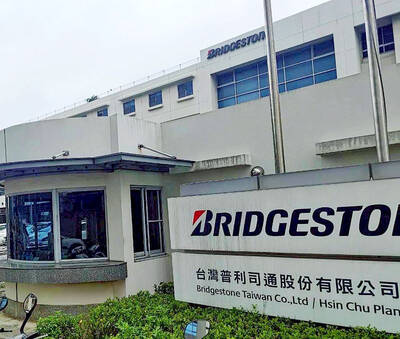
TRANSITION: With the closure, the company would reorganize its Taiwanese unit to a sales and service-focused model, Bridgestone said Bridgestone Corp yesterday announced it would cease manufacturing operations at its tire plant in Hsinchu County’s Hukou Township (湖口), affecting more than 500 workers. Bridgestone Taiwan Co (台灣普利司通) said in a statement that the decision was based on the Tokyo-based tire maker’s adjustments to its global operational strategy and long-term market development considerations. The Taiwanese unit would be reorganized as part of the closure, effective yesterday, and all related production activities would be concluded, the statement said. Under the plan, Bridgestone would continue to deepen its presence in the Taiwanese market, while transitioning to a sales and service-focused business model, it added. The Hsinchu

Taiwan Semiconductor Manufacturing Co (TSMC, 台積電) has approved a capital budget of US$31.28 billion for production expansion to meet long-term development needs during the artificial intelligence (AI) boom. The company’s board meeting yesterday approved the capital appropriation plan for purposes such as the installation of advanced technology capacity and fab construction, the world’s largest contract chipmaker said in a statement. At an earnings conference last month, TSMC forecast that its capital expenditure for this year would be at the higher end of the US$52 billion to US$56 billion range it forecast in January in response to robust demand for 5G, AI and


 RSS
RSS