


Amazon.com Inc shares posted their longest streak of daily losses in almost 20 years, as investors continue to question how much the e-commerce and cloud-computing company spends on capital expenditures.
Shares fell 0.4 percent on Friday last week, their ninth straight negative session. This is the longest losing streak for the stock since another nine-day drop that ended in July 2006. The stock shed 18 percent over the latest stretch, erasing about US$463 billion in market valuation. Shares closed at their lowest since May last year.
Much of the stock’s drop can be traced to results earlier this month, after Amazon said it would spend US$200 billion this year on data centers, chips and other equipment — far more than had been expected.
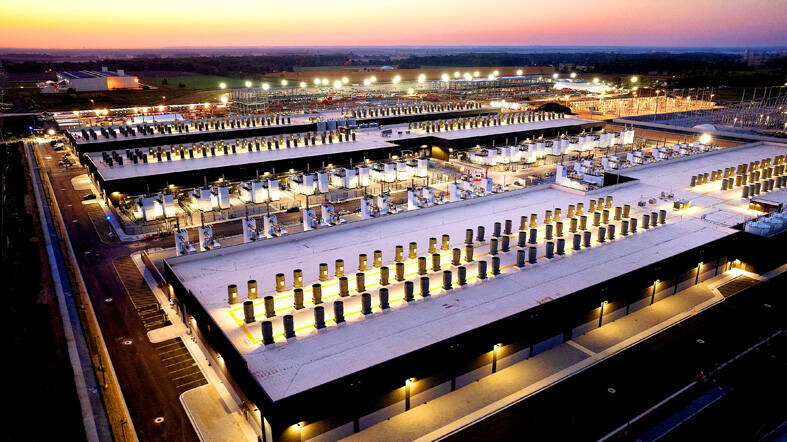
Photo: Reuters
“If Amazon is now spending so much that it has negative cash flow, that’s a major concern and a red flag, and investors are increasingly viewing it as such,” Ameriprise Financial Services Inc chief market strategist Anthony Saglimbene said.
Investors have become increasingly concerned about how much big tech companies are spending on artificial intelligence (AI), and the issue weighed on Microsoft Corp and Alphabet Inc. The four biggest spenders — Amazon, Alphabet, Microsoft and Meta Platforms Inc — have together forecast capital expenditures of about US$650 billion this year.
If these big tech companies “have negative or weaker cash flow on account of this spending, that’s a dynamic shift in how they should be valued, especially if we go through a period of market stress or AI evolves in a way that they or the market is not anticipating,” Saglimbene said.
Amazon shares are down about 17 percent this month, on pace for their biggest monthly percentage drop since April 2022. The NASDAQ 100 Index is down 3.2 percent this month.

HORMUZ ISSUE: The US president said he expected crude prices to drop at the end of the war, which he called a ‘minor excursion’ that could continue ‘for a little while’ The United Arab Emirates (UAE) and Kuwait started reducing oil production, as the near-closure of the crucial Strait of Hormuz ripples through energy markets and affects global supply. Abu Dhabi National Oil Co (ADNOC) is “managing offshore production levels to address storage requirements,” the company said in a statement, without giving details. Kuwait Petroleum Corp said it was lowering production at its oil fields and refineries after “Iranian threats against safe passage of ships through the Strait of Hormuz.” The war in the Middle East has all but closed Hormuz, the narrow waterway linking the Persian Gulf to the open seas,

RATIONING: The proposal would give the Trump administration ample leverage to negotiate investments in the US as it decides how many chips to give each country US officials are debating a new regulatory framework for exporting artificial intelligence (AI) chips and are considering requiring foreign nations to invest in US AI data centers or security guarantees as a condition for granting exports of 200,000 chips or more, according to a document seen by Reuters. The rules are not yet final and could change. They would be the first attempt to regulate the flow of AI chips to US allies and partners since US President Donald Trump’s administration said it rescinded its predecessor’s so-called AI diffusion rules. Those rules sought to keep a significant amount of AI

Apple Inc increased iPhone production in India by about 53 percent last year and now makes a quarter of its marquee devices there, reflecting the US company’s efforts to avoid tariffs on China. The company assembled about 55 million iPhones in India last year, up from 36 million a year earlier, people familiar with the matter said, asking not to be named because the numbers aren’t public. Apple makes about 220 million to 230 million iPhones a year globally, with India’s share of the total increasing rapidly. Apple has accelerated its expansion in the world’s most populous country in recent years, bolstered

A new worry has been rippling across the stock market lately: Entire businesses, not just their employees, might be thrown out of work. While most economists say fears of an artificial intelligence (AI) job apocalypse are overblown, seismic shifts have happened in the past after big tech breakthroughs. The IT revolution of the 1990s led to a surge in productivity that sped up the US economy for several years. It also rendered companies or even industries largely redundant — from travel agents and stockbrokers to classified advertising and newspapers, or video rental stores. Economists expect AI would deliver higher productivity,


 RSS
RSS