


In China, humanoid robots are serving as Lunar New Year entertainment, with their manufacturers pitching their song-and-dance skills to the general public as well as potential customers, investors and government officials.
On Sunday, Shanghai-based robotics start-up Agibot Innovation Technology Co (智元機器人) live-streamed an almost hour-long variety show featuring its robots dancing, performing acrobatics and magic, lip-syncing ballads and performing in comedy sketches. Other Agibot humanoid robots waved from an audience section.
An estimated 1.4 million people watched on the Chinese streaming platform Douyin (抖音). Agibot, which called the promotional stunt “the world’s first robot-powered gala,” did not have an immediate estimate for total viewership.
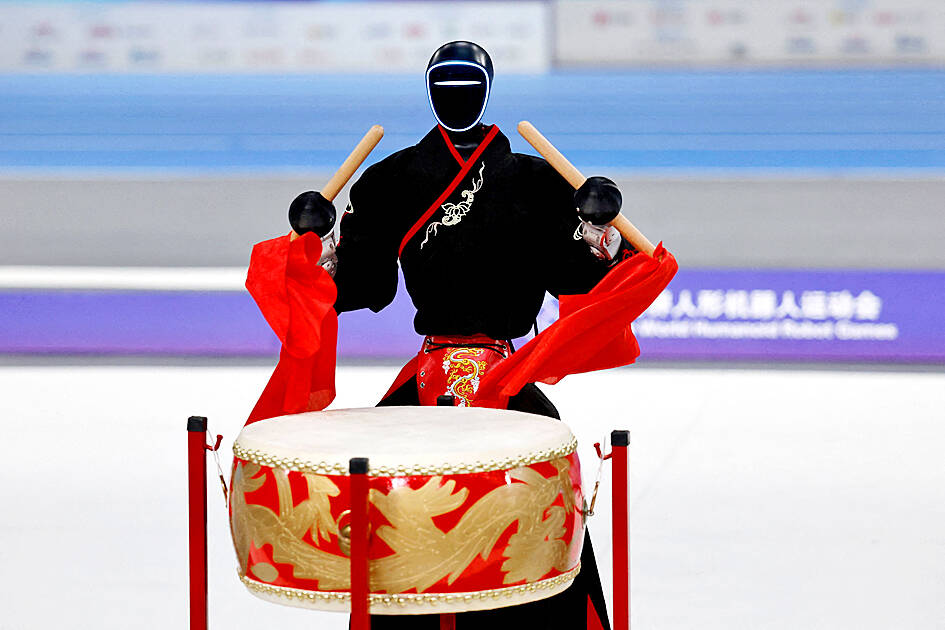
Photo: Tingshu Wang, Reuters
The show ran a week ahead of China’s annual Spring Festival gala to be aired by state television, an event that has become an important — if unlikely — venue for Chinese robot makers to show off their success.
A squad of 16 full-size humanoids from Unitree Technology Co (宇樹科技) joined human dancers in performing at China Central Television’s gala last year, drawing stunned accolades from millions of viewers.
Less than three weeks later, Unitree founder Wang Xingxing (王興興) was invited to a high-profile symposium chaired by Chinese President Xi Jinping (習近平). The Hangzhou-based robotics firm has since been preparing for a potential initial public offering.
This year’s CCTV gala will include participation by four humanoid robot start-ups, Unitree, Galbot Co (銀河通用機器人), Noetix Robotics Technology Co (松延動力) and MagicLab Robotics Technology Co (魔法原子), the companies and broadcaster have said.
Agibot’s gala employed over 200 robots. The company, which says its humanoid robots are designed for a range of applications, including in education, entertainment and factories, plans to launch an initial public offering in Hong Kong, Reuters has reported.
State-run Securities Times said Agibot had opted out of the CCTV gala in order to focus spending on research and development.
The company demonstrated two of its robots to Xi during a visit in April last year.
US billionaire Elon Musk, who has pivoted automaker Tesla Inc toward a focus on artificial intelligence and the Optimus humanoid robot, has said the only competitive threat he faces in robotics is from Chinese firms.
Like those rivals, Musk has also used stunts to promote Optimus, rolling out human-directed robots as bartenders at an event in 2024.
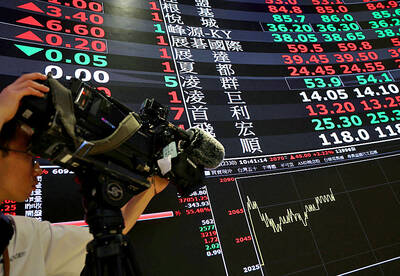
After several years flying high as Asia’s best Nvidia Corp proxy, Taiwan Semiconductor Manufacturing Co (TSMC, 台積電) is increasingly vying with other artificial intelligence (AI) stocks for investor attention. Stock traders are chasing a wider array of beneficiaries as mainstream usage of AI creates demand for hardware beyond the most-advanced chips TSMC makes for Nvidia. Subthemes from the deepening memory crunch to advances in robotics are also luring bids. At the same time, investment caps on single stocks are pushing funds to diversify, while retail investors long familiar with TSMC through its US depositary receipts are being offered a broader set of

UNDER MICROSCOPE: Taiwan detained three people who allegedly conspired to buy servers in Taiwan and export them using fraudulent documentation, prosecutors said Nvidia Corp chief executive officer Jensen Huang (黃仁勳) on Saturday urged Super Micro Computer Inc to tighten up on compliance after Taiwan detained three people this week for allegedly making fraudulent declarations about artificial intelligence (AI) servers made by its US partner. The development marked the nation’s first crackdown on semiconductor smuggling, which grew after the US slapped restrictions on exports of high-end chips such as Nvidia AI accelerators to China. Nvidia is “rigorous” in explaining regulations to all of its partners, Huang told reporters after arriving in Taipei. “Ultimately Super Micro has to run their own company,” he said in response to
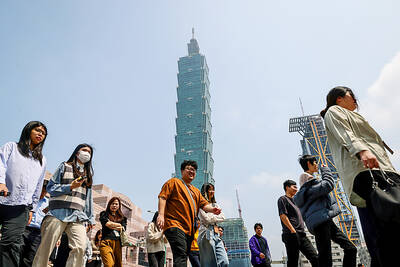
TECH RELIANCE: Growth is increasingly reflecting an unequal K-shaped distribution, where technology sectors outperform and other industries struggle, an expert said Standard Chartered Bank has significantly raised its forecast for Taiwan’s economic growth to 9.5 percent this year, up from 7.6 percent previously, citing surging artificial intelligence (AI) demand driving exports, semiconductor production and investment. The upgrade reflects a sustained AI supercycle that continues to fuel demand for advanced chips and technology infrastructure, which form the backbone of Taiwan’s exports, the bank said in a report this week. “We raise our 2026 growth forecast to reflect a much stronger-than-expected first-quarter GDP figure,” Standard Chartered senior economist for greater China and Asia Tommy Wu (胡東安) said in the report. Driven largely by a 35.3 percent
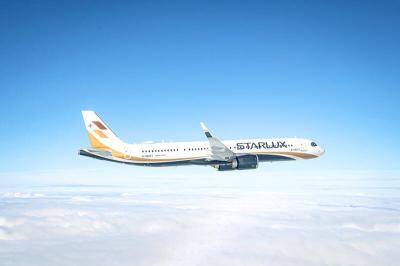
Two of Taiwan’s international carriers, Starlux Airlines Co (星宇航空) and EVA Airways Corp (長榮航空), have retained the five-star airline rating awarded by international airline review organization Skytrax. Starlux was awarded the distinction for a second consecutive year, while EVA Air received it for the 11th straight year, Skytrax said in statements released yesterday and on Thursday last week, respectively. The five-star rating is considered one of the airline industry's highest honors and is awarded following professional audits of airline product and frontline service standards, Skytrax said. The ratings are based on in-depth assessments using unified global quality standards rather than customer review scores


 RSS
RSS