


PwC Taiwan has launched a Taiwan-US service platform to help Taiwanese companies expand into the US, underscoring a shift in corporate investment priorities, as nearly 40 percent of local firms now rank the US as their top overseas destination.
The platform brings together accounting and legal professionals in Taiwan and the US to deliver coordinated advisory services, as supply chain realignment, geopolitical risk and shifts in industrial policy reshape global manufacturing and market access strategies, PwC Taiwan chairman and CEO Patrick Hsu (徐聖忠) told a media briefing in Taipei yesterday.
“North America has moved from being an optional growth market to a core pillar of global strategy for many Taiwanese companies,” Hsu said. “The challenge is no longer whether to invest, but how to do so efficiently while managing regulatory, tax and operational risks.”

Photo: Reuters
The move reflects growing efforts by Taiwanese firms to diversify production bases, secure access to the US market and align operations with policy incentives tied to strategic industries such as semiconductors, electric vehicles and clean energy.
The new platform offers advisory services covering taxation and regulation, mergers and acquisitions, site selection, customs and trade compliance, talent management, Mexico supply chain planning and cross-border capital markets support, PwC said.
Investment in the US typically unfolds in three stages: planning, operational launch and long-term sustainability, with each carrying distinct tax, governance and compliance implications, PwC Taiwan’s US business leader Peter Su (蘇宥人) said.
“Early decisions on entity structure, capital flows and workforce deployment can significantly affect compliance exposure and long-term scalability,” Su said, adding that missteps at the planning stage often prove costly to unwind later.
The complexity of the US regulatory environment remains a key challenge for foreign investors, with layered federal, state and local requirements governing income, sales, property and payroll taxes, as well as licensing, labor standards and corporate governance, PwC said.
Tax incentives continue to play a major role in shaping investment decisions, particularly in semiconductor manufacturing and clean energy projects, said Fong Chan-chang (方振錚), a tax services partner at PwC US.
However, companies frequently underestimate non-tax risks, including weaknesses in internal controls, compliance failures and evolving requirements related to immigration, data privacy and export controls, Fang said.
Mexico is also emerging as a critical component of North American supply chains, benefiting from cost advantages and preferential access under the US-Mexico-Canada Agreement, PwC said.
At the same time, stricter enforcement of rules of origin and regulatory requirements means companies must reassess sourcing, logistics and documentation practices to secure tariff benefits and manage cross-border risks, it said.
As Taiwanese firms continue to deepened their footprint across North America, demand for integrated, cross-border advisory support is expected to rise, reflecting a broader shift toward compliance-driven, regionally diversified investment strategies, PwC said.
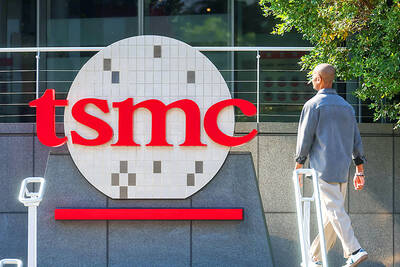
Shares of contract chipmaker Taiwan Semiconductor Manufacturing Co (TSMC, 台積電) came under pressure yesterday after a report that Apple Inc is looking to shift some orders from the Taiwanese company to Intel Corp. TSMC shares fell NT$55, or 2.4 percent, to close at NT$2,235 on the local main board, Taiwan Stock Exchange data showed. Despite the losses, TSMC is expected to continue to benefit from sound fundamentals, as it maintains a lead over its peers in high-end process development, analysts said. “The selling was a knee-jerk reaction to an Intel-Apple report over the weekend,” Mega International Investment Services Corp (兆豐國際投顧) analyst Alex Huang
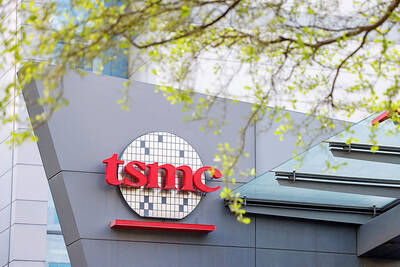
Taiwan Semiconductor Manufacturing Co (TSMC, 台積電) is expected to remain Apple Inc’s primary chip manufacturing partner despite reports that Apple could shift some orders to Intel Corp, industry experts said yesterday. The comments came after The Wall Street Journal reported on Friday that Apple and Intel had reached a preliminary agreement following more than a year of negotiations for Intel to manufacture some chips for Apple devices. Taiwan Institute of Economic Research (台灣經濟研究院) economist Arisa Liu (劉佩真) said TSMC’s advanced packaging technologies, including integrated fan-out and chip-on-wafer-on-substrate, remain critical to the performance of Apple’s A-series and M-series chips. She said Intel and Samsung
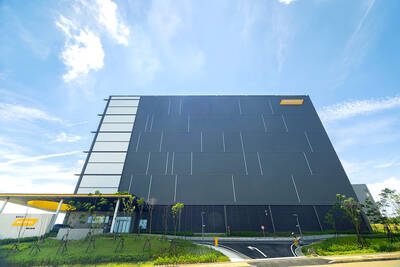
POWER BUILDUP: Powered by Nvidia’s B200 Blackwell chips, the data center would support MediaTek’s computing power demand and business growth, the company said Smartphone chip designer MediaTek Inc (聯發科) yesterday launched a new artificial intelligence (AI) data center with a maximum capacity of 45 megawatts to meet its rising demand for computing power required to develop new advanced chips for AI applications. The company has completed the first-phase computing power buildup at the data center in Miaoli County’s Tongluo Township (銅鑼), providing 15 megawatts of capacity to support its research and development (R&D) capabilities, despite an industrywide shortage of key components, MediaTek said. Supply constraints have plagued a wide range of key components, including memory chips, solid-state drives, power supply units and central
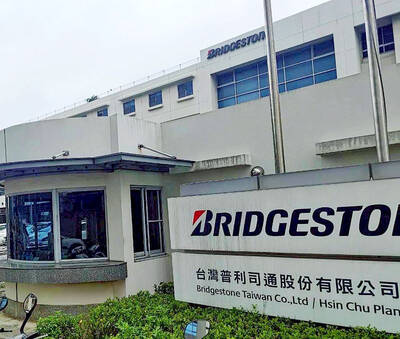
TRANSITION: With the closure, the company would reorganize its Taiwanese unit to a sales and service-focused model, Bridgestone said Bridgestone Corp yesterday announced it would cease manufacturing operations at its tire plant in Hsinchu County’s Hukou Township (湖口), affecting more than 500 workers. Bridgestone Taiwan Co (台灣普利司通) said in a statement that the decision was based on the Tokyo-based tire maker’s adjustments to its global operational strategy and long-term market development considerations. The Taiwanese unit would be reorganized as part of the closure, effective yesterday, and all related production activities would be concluded, the statement said. Under the plan, Bridgestone would continue to deepen its presence in the Taiwanese market, while transitioning to a sales and service-focused business model, it added. The Hsinchu


 RSS
RSS