


Alphabet Inc topped projections for quarterly revenue and outlined an ambitious capital spending plan, far surpassing predictions, leveraging its growth to build out the data centers and infrastructure needed to lead in the artificial intelligence (AI) age.
Google’s parent company said capital expenditures will reach as much as US$185 billion this year, compared with the US$119.5 billion analysts expected. Last quarter’s sales, excluding partner payouts, were US$97.23 billion, surpassing the US$95.2 billion average estimate, with profit rising 30 percent from the prior year to US$34.5 billion, or US$2.82 per share.
Expected spending for this year will total more than what the Internet search giant spent in the three prior years combined. But Alphabet chief executive officer Sundar Pichai reassured investors that the costs are necessary. “We’re seeing our AI investments and infrastructure drive revenue and growth across the board,” he said on Wednesday in a statement. “Search saw more usage than ever before, with AI continuing to drive an expansionary moment.”
Photo: Dado Ruvic, Reuters
Google Cloud revenue in the recent period jumped 48 percent year-on-year to US$17.7 billion, beating the US$16.2 billion analysts expected, and Gemini, its AI model, is rapidly reaching new users, Alphabet said.
Google has raced to reinvent its business for the AI age, working to keep consumers in the habit of going to its search page even when they could also go to chatbots from rivals like OpenAI. The company has quickly improved its Gemini model and integrated it across products — an effort that has required massive investment in data centers and chips for model improvement and cloud customers.
The company has said its massive investments in AI — funding new infrastructure, research and talent — are essential for competing against rivals including Amazon.com Inc, Microsoft Corp and OpenAI.
About 40 percent of the company’s technical infrastructure investments were tied to data centers and networking equipment, while 60 percent were tied to servers, Alphabet chief financial officer Anat Ashkenazi said on a conference call to discuss earnings. Pichai acknowledged that the company would have to plan for constraints on what would be possible, including those of power and supply chains.
To justify its heavy spending, Alphabet continued to demonstrate momentum in its cloud and search advertising businesses. The company has been incorporating Gemini 3, its latest model, in all its products, including its Chrome browser. The Gemini app also saw 750 million active users through December last year, compared with 650 million in the three-month period ending in September. Backlog for the cloud business — or revenue under contract but not yet booked — more than doubled year over year, reaching US$240 billion, Pichai said on the call.
“The increase in backlog was driven by strong demand for our cloud products, led by our enterprise AI offerings from multiple customers,” Pichai added. Gemini Enterprise has more than 8 million paid users, after launching four months ago.
The industry has also leaned on Google’s progress. Alphabet is supplying up to one million of its specialized AI chips to Anthropic PBC, cementing Google’s position as a key infrastructure provider in the AI space. Gemini will also be a provider of AI for Siri on Apple Inc’s iPhones. Ashkenazi also said AI agents are already writing about 50 percent of Google’s own code.
Alphabet’s Other Bets, which includes self-driving car company Waymo and other ventures, reported US$370 million in fourth-quarter revenue, down from last year, while posting an operating loss of US$3.6 billion. That compared with analysts’ projection for a loss of US$1.3 billion.
Alphabet also said its research and development expenses went up by 42 percent, driven by compensation for AI talent and supporting Waymo.
YouTube, Google’s video-streaming platform, also showed momentum, with Shorts, the video format that competes with Instagram Reels and TikTok, averaging 200 billion daily views,

Cairo’s new monorail slices across the city skyline, running above the familiar chaos of blaring horns and aging buses’ exhaust fumes that mark rush hour below. The US$4.5 billion monorail, opened this month, is among Egypt’s most prominent new transport projects, part of a debt-funded infrastructure drive criticized for sapping state finances while bringing limited benefits to most of the country’s 109 million people. “It feels like you’re in a different country,” said Ramy Sayed, a restaurant manager, aboard a driverless Innovia 300 train. “No noise, no traffic, we’re not used to this.” The eastern line runs 56km from the bustling middle-class
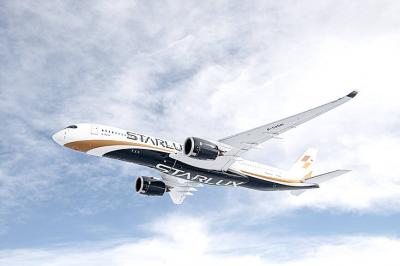
Starlux Airlines Co (星宇航空) today unveiled a long-haul network expansion plan at a shareholders’ meeting in Taipei, including direct flights to Barcelona, Spain, and Zurich, Switzerland, as well as a service connecting Taipei, Sydney and New Zealand. Starlux is to become the first Taiwanese carrier to offer non-stop services to the two European cities, while the inaugural oceanic route is expected to expand transit opportunities within the Australia-New Zealand market, Starlux said. Flight services to Chicago, Dallas, Washington and New York are under evaluation, the airline added. Prior to the shareholders’ meeting, the airline earlier this year announced that it would be

Taiwanese firms have increased investment in the Philippines in recent years as Manila’s ties with Washington deepen and global supply chains continue to shift away from China, an expert at the Chung-Hua Institution for Economic Research (CIER, 中華經濟研究院) said yesterday. The Philippines had not been among Taiwanese investors’ top choices in Southeast Asia, CIER Taiwan ASEAN Studies Center director Kristy Hsu (徐遵慈) said at a seminar in Taipei. However, Taiwan’s investment in the country has grown significantly since the COVID-19 pandemic, reaching US $257 million last year, a high in recent years, she said. Although Taiwan’s total investment in the Philippines still lags
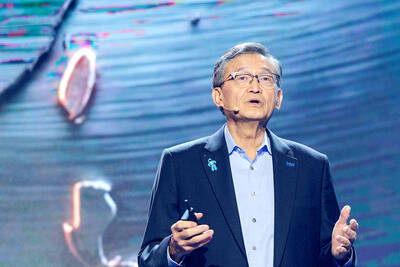
Intel Corp regards Taiwan Semiconductor Manufacturing Co (TSMC, 台積電) as a longstanding partner, as the US chipmaker would continue outsourcing production of advanced chips to TSMC, Intel chief executive officer Lip-Bu Tan (陳立武) said yesterday. “I don’t look at people as competitors. I look at the collaboration... Nvidia is also, you know, a good friend,” Tan told a news conference following his keynote speech at the Computex trade show in Taipei. “It’s a very trusted partnership for us... We are a big, top customer for them, and we’re going to continue doing that,” he said, referring to TSMC, the world’s largest foundry


 RSS
RSS