


Elon Musk is combining Space Exploration Technologies Corp (SpaceX) and x.AI Corp (xAI) in a deal that values the enlarged entity at US$1.25 trillion, as the world’s richest man looks to fuel his increasingly costly ambitions in artificial intelligence (AI) and space exploration.
The acquisition was announced on SpaceX’s Web site, confirming a Bloomberg News report earlier on Monday.
The deal gives SpaceX a valuation of US$1 trillion, and xAI a value of US$250 billion, people familiar with the matter said.
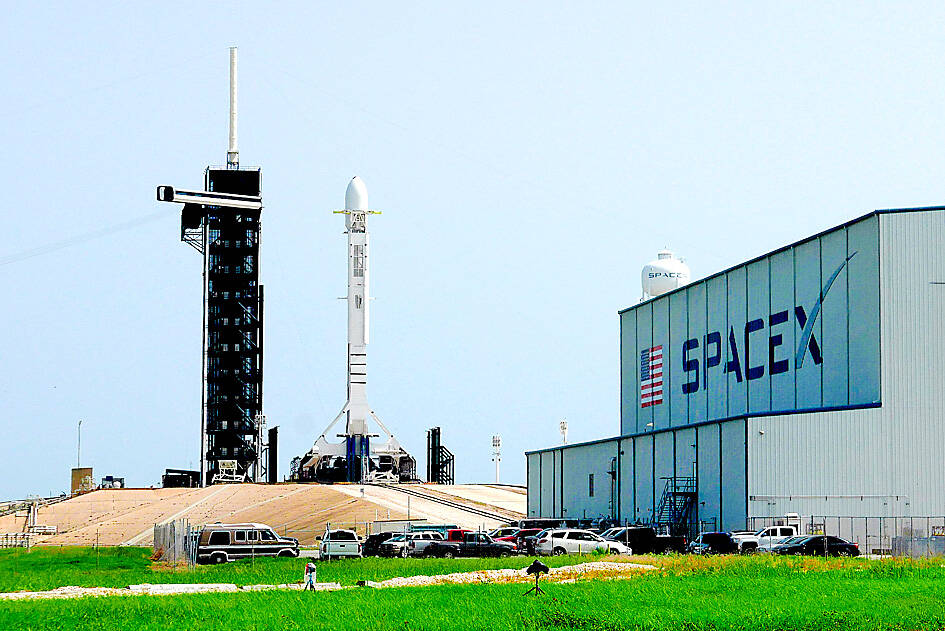
Photo: AP
The combined company’s valuation was announced to employees in a memo on Monday, some of the people said earlier.
SpaceX said it acquired xAI to “form the most ambitious, vertically-integrated innovation engine on (and off) Earth, with AI, rockets, space-based Internet, direct-to-mobile device communications and the world’s foremost real-time information and free speech platform.”
The company is still expecting to hold an initial public offering (IPO) later this year, one of the people said.
SpaceX had been planning an IPO that could raise as much as US$50 billion, in what would be the biggest initial share sale to date.
The combined firm’s shares are expected to be worth US$526.59 each, said some of the people, who asked not to be identified as the information is not public.
The deal is all stock, one of them said.
The deal brings together two of the largest closely held companies in the world. XAI raised funds at a US$230 billion valuation last month, while SpaceX was set to go ahead with a share sale in December at a valuation of about US$800 billion.
In explaining the rationale for the deal, Musk said in the statement that the least expensive way to do AI computations within two to three years would be in space.
“This cost-efficiency alone will enable innovative companies to forge ahead in training their AI models and processing data at unprecedented speeds and scales, accelerating breakthroughs in our understanding of physics and invention of technologies to benefit humanity,” he wrote.
SpaceX is requesting permission to launch as many as a million satellites into the Earth’s orbit for the plan, according to a filing on Friday.
The offering further entangles Musk’s various business ventures. The billionaire acquired social media platform Twitter in late 2022, renamed it X, then merged the site with his artificial intelligence start-up xAI in a US$33 billion deal.
XAI, which also operates chatbot Grok, is an expensive operation, burning about US$1 billion a month in service of its stated ambition to gain “a deeper understanding of our universe.”
A merger with SpaceX pools capital, talent, access to computing power — and blurs corporate boundaries.
Unlike some of Musk’s other ventures, SpaceX stands out as arguably his most successful and consistent business. The company, the only US one that can routinely send astronauts to and from the International Space Station, is a key rocket launch provider for both NASA and the US Department of Defense.
The increasing revenue it is generating from the Starlink network of more than 9,000 satellites is even more significant, now outpacing launch sales and presenting a potential source of funding for xAI’s capital-intensive business.

In Italy’s storied gold-making hubs, jewelers are reworking their designs to trim gold content as they race to blunt the effect of record prices and appeal to shoppers watching their budgets. Gold prices hit a record high on Thursday, surging near US$5,600 an ounce, more than double a year ago as geopolitical concerns and jitters over trade pushed investors toward the safe-haven asset. The rally is putting undue pressure on small artisans as they face mounting demands from customers, including international brands, to produce cheaper items, from signature pieces to wedding rings, according to interviews with four independent jewelers in Italy’s main
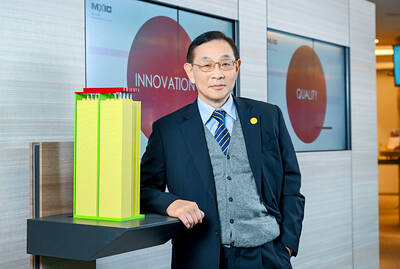
Macronix International Co (旺宏), the world’s biggest NOR flash memory supplier, yesterday said it would spend NT$22 billion (US$699.1 million) on capacity expansion this year to increase its production of mid-to-low-density memory chips as the world’s major memorychip suppliers are phasing out the market. The company said its planned capital expenditures are about 11 times higher than the NT$1.8 billion it spent on new facilities and equipment last year. A majority of this year’s outlay would be allocated to step up capacity of multi-level cell (MLC) NAND flash memory chips, which are used in embedded multimedia cards (eMMC), a managed

Japanese Prime Minister Sanae Takaichi has talked up the benefits of a weaker yen in a campaign speech, adopting a tone at odds with her finance ministry, which has refused to rule out any options to counter excessive foreign exchange volatility. Takaichi later softened her stance, saying she did not have a preference for the yen’s direction. “People say the weak yen is bad right now, but for export industries, it’s a major opportunity,” Takaichi said on Saturday at a rally for Liberal Democratic Party candidate Daishiro Yamagiwa in Kanagawa Prefecture ahead of a snap election on Sunday. “Whether it’s selling food or
In the wake of strong global demand for AI applications, Taiwan’s export-oriented economy accelerated with the composite index of economic indicators flashing the first “red” light in December for one year, indicating the economy is in booming mode, the National Development Council (NDC) said yesterday. Moreover, the index of leading indicators, which gauges the potential state of the economy over the next six months, also moved higher in December amid growing optimism over the outlook, the NDC said. In December, the index of economic indicators rose one point from a month earlier to 38, at the lower end of the “red” light.


 RSS
RSS