


Taiwan has overtaken China as the market with the top weighting in a key emerging-markets stock index for the first time in about two decades, driven by a rally in artificial intelligence (AI) shares.
The Asian chipmaking hub accounts for 21.06 percent of the MSCI Emerging Markets Index, squeaking past China’s 20.93 percent at the end of last month. It marks the first time Taiwan has surpassed China since July 2007, according to data compiled by Bloomberg. MSCI has not replied to a request for comment.
Taiwan’s rise highlights the popularity of AI-related trades and the importance of local companies in the industry, in contrast with China’s two-speed economy being weighed down by weak consumer demand. Taiwan Semiconductor Manufacturing Co is the single biggest weighted stock in the EM gauge, and has climbed about 13 percent this year.
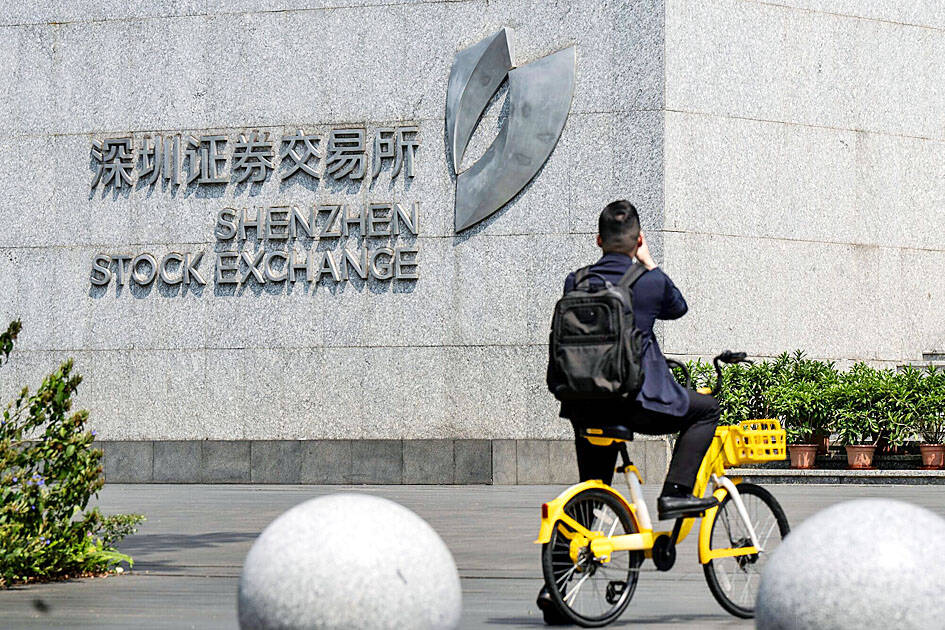
Photo: Bloomberg
It “shows how dominant the AI theme has become,” said Joshua Crabb, head of Asia-Pacific equities at asset manager Robeco. “It underscores increasing interest in the laggard plays in Asia AI given better valuations.”
MSCI’s Taiwan Index rose more than 11 percent in January, compared with a 5 percent gain in the MSCI China benchmark.
While Chinese stocks remain cheaper than Taiwan’s in earnings-based valuations, Taiwan’s MSCI index is expected to deliver earnings growth of 37 percent in the next 12 months, compared with 15 percent for the China gauge, according to data compiled by Bloomberg.
Citigroup Inc strategists upgraded Taiwan equities to overweight from neutral in December, citing their exposure to global AI supply chains and a more favorable earnings outlook. By contrast, the bank downgraded China to neutral from overweight on weaker earnings and a subdued macroeconomic outlook, strategists — including David Groman — wrote in a Dec. 22 report.
Another Asian semiconductor hub, South Korea, has moved past India to become the third-largest market by weighting in the emerging-markets benchmark. Surging memory chip prices have propelled shares of Korean chipmaker giants Samsung Electronics Co and SK Hynix Inc to new highs.
While India’s structural growth story continues to attract investors, its limited exposure to high-end technology has constrained its upside in an AI-driven rally.
“While this enhances Taiwan’s strategic relevance in global portfolios, it also heightens exposure to potential downturns in the global technology or AI cycle,” said Gary Tan, a fund manager at Allspring Global Investments.
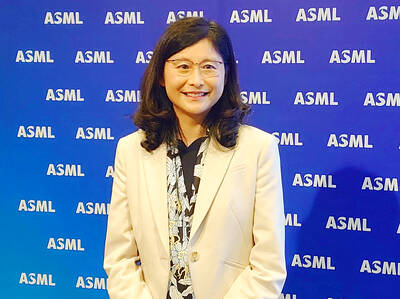
Netherlands-based semiconductor equipment supplier ASML Holding NV yesterday said that it is planning to hire an additional 1,000 people in Taiwan this year in response to growing demand from clients. ASML had previously planned to recruit 600 people this year, but that the plan has been adjusted upward, ASML vice president and ASML Taiwan general manager Grace Wang (汪佳慧) told reporters. ASML has a workforce of more than 4,500 in Taiwan, accounting for about 10 percent of its global total, Wang said. This year’s recruitment campaign would focus on adding people in the customer support, manufacturing and supply chain domains to assist ASML
UNDER MICROSCOPE: Taiwan detained three people who allegedly conspired to buy servers in Taiwan and export them using fraudulent documentation, prosecutors said Nvidia Corp chief executive officer Jensen Huang (黃仁勳) on Saturday urged Super Micro Computer Inc to tighten up on compliance after Taiwan detained three people this week for allegedly making fraudulent declarations about artificial intelligence (AI) servers made by its US partner. The development marked the nation’s first crackdown on semiconductor smuggling, which grew after the US slapped restrictions on exports of high-end chips such as Nvidia AI accelerators to China. Nvidia is “rigorous” in explaining regulations to all of its partners, Huang told reporters after arriving in Taipei. “Ultimately Super Micro has to run their own company,” he said in response to

Nvidia Corp yesterday announced that CEO Jensen Huang (黃仁勳) would attend an employee meeting in Taipei tomorrow to celebrate the launch of the company’s Taiwan headquarters project. Huang would attend a gathering at the site of Nvidia’s planned headquarters in Beitou Shilin Technology Park (北投士林科技園區), the company said in a statement. After arriving in Taiwan on Saturday last week, Huang told reporters that he plans to meet with Quanta Computer Inc (廣達) chairman Barry Lam (林百里) and Taiwan Semiconductor Manufacturing Co (TSMC, 台積電) chairman C.C. Wei (魏哲家), and would attend the groundbreaking ceremony for Nvidia’s Taiwan headquarters tomorrow. Nvidia has not yet applied
Huawei Technologies Co (華為) said it has come up with a new pathway to shorten its gap with industry leader Taiwan Semiconductor Manufacturing Co (TSMC, 台積電), potentially achieving a breakthrough in making advanced semiconductors without cutting-edge equipment. Right now there is about a five-year gap between what TSMC is capable of and what Huawei, together with its manufacturing partner Semiconductor Manufacturing International Corp (中芯), can produce. Huawei is to start making 1.4-nanometer chips by 2031 with its own “LogicFolding” technology, Huawei semiconductor chief He Tingbo (何庭波) said in a rare public appearance during a chip conference yesterday, while TSMC has


 RSS
RSS