


Taiwanese companies will have to increase their foreign direct investments given the limited availability of land in Taiwan and growing external demand, Taiwan Institute of Economic Research (TIER) president Chang Chien-yi (張建一) said yesterday.
Chang’s remarks came as Taiwan and the US reached a tentative trade agreement earlier this month, which sees Taiwan’s semiconductor and technology companies led by Taiwan Semiconductor Manufacturing Co (TSMC, 台積電) will invest at least US$250 billion in the US in exchange for a 15 percent levy imposed on Taiwanese goods — the same rate that applies to Taiwan’s main competitors South Korea and Japan, as well as to the European Union.
"Regardless of tariffs, these companies would not necessarily invest in Taiwan, as limited land availability remains a constraint on domestic investment," Chang said at a news conference in Taipei. "After all, we are not going to have a TSMC facility in Taipei’s Xinyi District (信義)."
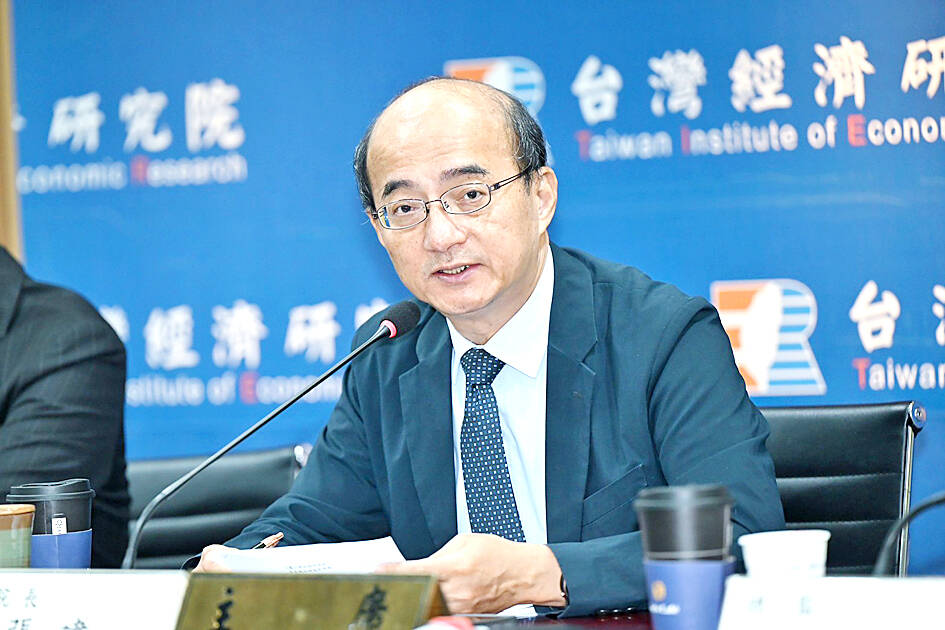
Photo courtesy of the Taiwan Institute of Economic Research
He denied reports that Taiwan’s government asked domestic companies such as TSMC, the world-leading advanced chipmaker, to invest in the US, and that such a move would hollow out Taiwan’s economy.
Despite US Secretary of Commerce Howard Lutnick’s remark that Washington seeks to bring 40 percent of Taiwan’s semiconductor supply chain to the US by the end of Donald Trump’s second presidential term, Chang said it is estimated that at least 75-80 percent would remain in Taiwan in 2030.
Citing TSMC chairman C.C. Wei (魏哲家), Chang said TSMC’s investments in the US are driven primarily by customer demand.
According to the Ministry of Finance, 30.9 percent of Taiwan’s exports went to the US last year, accounting for the largest percentage of any single country. This is the first time the US has surpassed China (including Hong Kong) to become Taiwan’s largest market abroad.
The tentative US tariff arrangement was a "good" development, Chang said, adding that one particularly positive aspect was the most favorable treatment granted for semiconductors and related products, under Section 232 of the US Trade Expansion Act of 1962.
However, the formal US-Taiwan trade pact expected to be signed in the coming weeks will most likely be more controversial, as it aims to open Taiwan’s market to American goods, including vehicles and agricultural products.
Such a move would benefit Taiwanese consumers but pose challenges to some local companies, Chang said.
Political uncertainty remains the biggest variable, he said, as the Chinese Nationalist Party (KMT) and the Taiwan People’s Party — the two main opposition parties that together hold a majority of seats in the Legislature — have expressed skepticism about the agreement and the pending trade pact.
If the trade agreement fails to pass the Legislature, there is no telling whether the US would raise its tariffs on Taiwan again, Chang said, urging the Legislature to work toward a consensus with domestic industries.
"That is the only way for us to navigate the challenges ahead amid an ever-changing geopolitical landscape," he said.
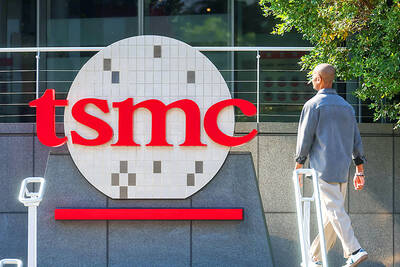
Shares of contract chipmaker Taiwan Semiconductor Manufacturing Co (TSMC, 台積電) came under pressure yesterday after a report that Apple Inc is looking to shift some orders from the Taiwanese company to Intel Corp. TSMC shares fell NT$55, or 2.4 percent, to close at NT$2,235 on the local main board, Taiwan Stock Exchange data showed. Despite the losses, TSMC is expected to continue to benefit from sound fundamentals, as it maintains a lead over its peers in high-end process development, analysts said. “The selling was a knee-jerk reaction to an Intel-Apple report over the weekend,” Mega International Investment Services Corp (兆豐國際投顧) analyst Alex Huang
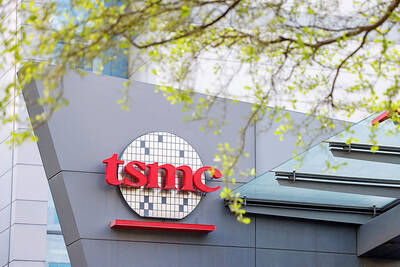
Taiwan Semiconductor Manufacturing Co (TSMC, 台積電) is expected to remain Apple Inc’s primary chip manufacturing partner despite reports that Apple could shift some orders to Intel Corp, industry experts said yesterday. The comments came after The Wall Street Journal reported on Friday that Apple and Intel had reached a preliminary agreement following more than a year of negotiations for Intel to manufacture some chips for Apple devices. Taiwan Institute of Economic Research (台灣經濟研究院) economist Arisa Liu (劉佩真) said TSMC’s advanced packaging technologies, including integrated fan-out and chip-on-wafer-on-substrate, remain critical to the performance of Apple’s A-series and M-series chips. She said Intel and Samsung
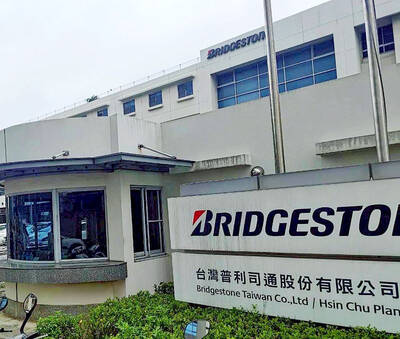
TRANSITION: With the closure, the company would reorganize its Taiwanese unit to a sales and service-focused model, Bridgestone said Bridgestone Corp yesterday announced it would cease manufacturing operations at its tire plant in Hsinchu County’s Hukou Township (湖口), affecting more than 500 workers. Bridgestone Taiwan Co (台灣普利司通) said in a statement that the decision was based on the Tokyo-based tire maker’s adjustments to its global operational strategy and long-term market development considerations. The Taiwanese unit would be reorganized as part of the closure, effective yesterday, and all related production activities would be concluded, the statement said. Under the plan, Bridgestone would continue to deepen its presence in the Taiwanese market, while transitioning to a sales and service-focused business model, it added. The Hsinchu
Taiwan Semiconductor Manufacturing Co (TSMC, 台積電) has approved a capital budget of US$31.28 billion for production expansion to meet long-term development needs during the artificial intelligence (AI) boom. The company’s board meeting yesterday approved the capital appropriation plan for purposes such as the installation of advanced technology capacity and fab construction, the world’s largest contract chipmaker said in a statement. At an earnings conference last month, TSMC forecast that its capital expenditure for this year would be at the higher end of the US$52 billion to US$56 billion range it forecast in January in response to robust demand for 5G, AI and


 RSS
RSS