


The Taiwan Institute of Economic Research (TIER, 台灣經濟研究院) yesterday raised its economic growth forecast for this year to 4.05 percent, up from the 2.6 percent estimate it made in November last year, citing a better-than-expected outlook for net external demand, domestic investment and private consumption.
US tariff policies and China’s overcapacity continue to drive divergent economic performance around the world this year, but the latest Taiwan-US tariff deal and global tech giants’ artificial intelligence (AI) investments are expected to support export growth and domestic demand momentum, the Taipei-based institute said in a report.
Exports are expected to grow 7.22 percent and imports are projected to increase 6.82 percent this year, up from previous estimates of 3.08 percent and 2.84 percent growth respectively, TIER said.
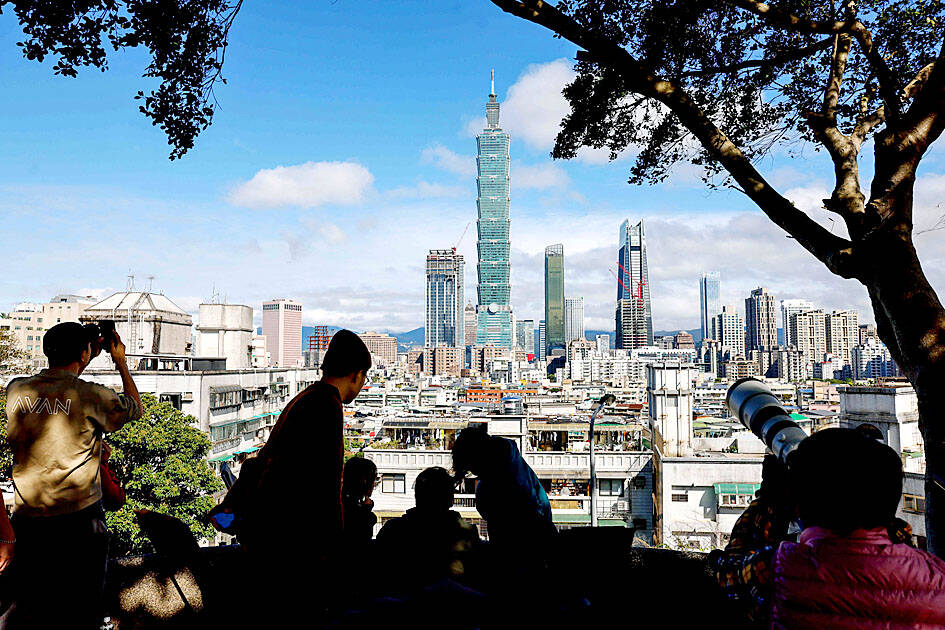
Photo: Ann Wang, Reuters
Private consumption is expected to increase 2.5 percent, up from a previous estimate of 2 percent, it said.
Growth in domestic investment and fixed capital formation were also adjusted upward to 2.88 percent and 3.05 percent, from 2.36 percent and 2.15 percent respectively, it added.
“For 2026, growth is expected to shift toward ‘warm’ both domestically and externally, with recovering private consumption and improved industry divergence,” the institute said, after releasing its business climate survey of local manufacturing, services and construction sectors last month.
The survey showed the composite indicators for local manufacturing, services and construction sectors all rose last month, with the manufacturing index rising for the sixth consecutive month, the services index advancing for the third month in a row and the construction index ending the previous month’s decline to return to an upward trajectory.
The institute’s manufacturing index reached 97.22 points last month, up 3.61 points from 93.61 in the previous month, as robust demand for cloud services, and AI and high-performance computing products drove momentum in domestic manufacturing, as uncertainties about US tariffs faded.
A separate survey of manufacturing firms found that 34.5 percent of firms last month anticipated an improvement in their business over the next six months, a 12.5-percentage-point increase from the 22 percent in November.
Conversely, 18.4 percent of firms foresee a deteriorating economic outlook, down 6.8 percentage points from the 25.2 percent reported one month earlier, TIER said.
The services index climbed 1.21 points to 92.44 last month, up from the previous month’s 91.23, as the sector benefited from Christmas celebrations, New Year’s Eve gatherings, year-end banquets and concerts, along with operators’ partnerships, promotions, new product launches and overseas expansion, the institute said.
The construction index was up 2.31 points to 102.45, from November’s 100.14, boosted by the acceleration of year-end public works projects and semiconductor facility projects.
However, the government’s new soil disposal regulations create challenges in disposal channels and execution, potentially affecting project progress, TIER said.
Moreover, lenders’ mortgage policies, the central bank’s continued credit controls, developers’ inventory adjustments and the implementation of the new soil disposal policy could influence the real-estate market, it added.
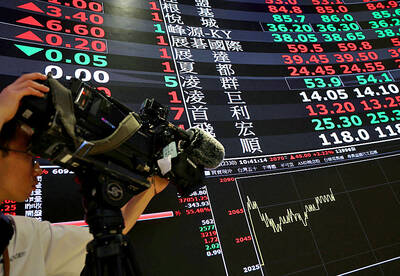
After several years flying high as Asia’s best Nvidia Corp proxy, Taiwan Semiconductor Manufacturing Co (TSMC, 台積電) is increasingly vying with other artificial intelligence (AI) stocks for investor attention. Stock traders are chasing a wider array of beneficiaries as mainstream usage of AI creates demand for hardware beyond the most-advanced chips TSMC makes for Nvidia. Subthemes from the deepening memory crunch to advances in robotics are also luring bids. At the same time, investment caps on single stocks are pushing funds to diversify, while retail investors long familiar with TSMC through its US depositary receipts are being offered a broader set of
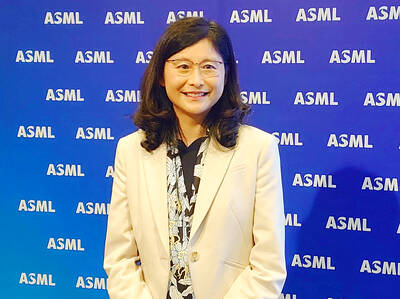
Netherlands-based semiconductor equipment supplier ASML Holding NV yesterday said that it is planning to hire an additional 1,000 people in Taiwan this year in response to growing demand from clients. ASML had previously planned to recruit 600 people this year, but that the plan has been adjusted upward, ASML vice president and ASML Taiwan general manager Grace Wang (汪佳慧) told reporters. ASML has a workforce of more than 4,500 in Taiwan, accounting for about 10 percent of its global total, Wang said. This year’s recruitment campaign would focus on adding people in the customer support, manufacturing and supply chain domains to assist ASML
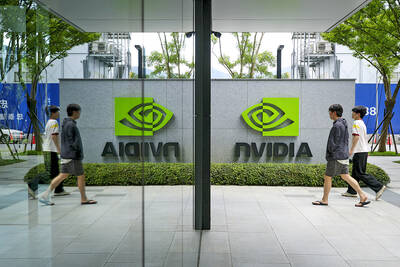
UNDER MICROSCOPE: Taiwan detained three people who allegedly conspired to buy servers in Taiwan and export them using fraudulent documentation, prosecutors said Nvidia Corp chief executive officer Jensen Huang (黃仁勳) on Saturday urged Super Micro Computer Inc to tighten up on compliance after Taiwan detained three people this week for allegedly making fraudulent declarations about artificial intelligence (AI) servers made by its US partner. The development marked the nation’s first crackdown on semiconductor smuggling, which grew after the US slapped restrictions on exports of high-end chips such as Nvidia AI accelerators to China. Nvidia is “rigorous” in explaining regulations to all of its partners, Huang told reporters after arriving in Taipei. “Ultimately Super Micro has to run their own company,” he said in response to

Nvidia Corp yesterday announced that CEO Jensen Huang (黃仁勳) would attend an employee meeting in Taipei tomorrow to celebrate the launch of the company’s Taiwan headquarters project. Huang would attend a gathering at the site of Nvidia’s planned headquarters in Beitou Shilin Technology Park (北投士林科技園區), the company said in a statement. After arriving in Taiwan on Saturday last week, Huang told reporters that he plans to meet with Quanta Computer Inc (廣達) chairman Barry Lam (林百里) and Taiwan Semiconductor Manufacturing Co (TSMC, 台積電) chairman C.C. Wei (魏哲家), and would attend the groundbreaking ceremony for Nvidia’s Taiwan headquarters tomorrow. Nvidia has not yet applied


 RSS
RSS