


Taiwanese machine tool makers aim to grow exports by 5 to 10 percent this year, bolstered by strong demand for high-value-added equipment used in the semiconductor, aerospace and defense sectors, as well as a lower US tariff, the Taiwan Machine Tool and Accessory Builders’ Association (TMBA) said yesterday.
The US market would be one of the major growth drivers, as lower tariffs would help reduce local makers’ costs and enhance their competitiveness against Japanese and South Korean peers, TMBA chairman Patrick Chen (陳紳騰) told a news conference in Taipei.
Taiwan last week announced that the US would slash tariffs on Taiwanese goods to 15 percent from the 20 percent set in August last year, on par with Japan, South Korea and the EU, and without any stacking of duties.
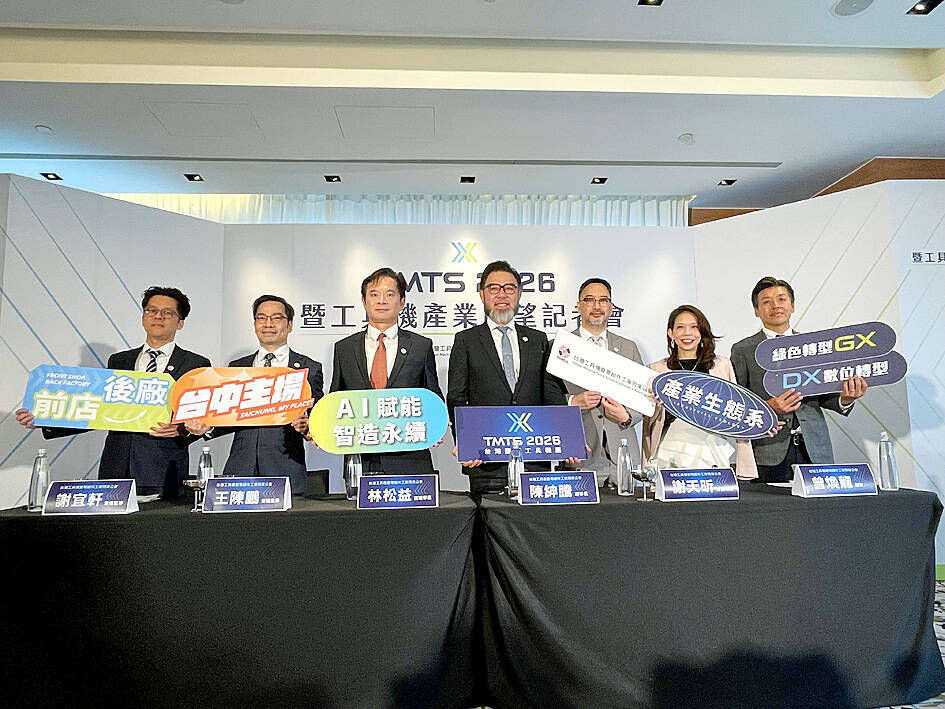
Photo: CNA
The reduction in US tariffs would allow local companies a greater price negotiating leeway of 8.5 to 13 percent, Chen said.
Taiwan’s exports to the US are expected to rise 5 to 8 percent this year, taking advantage of robust demand for machine tools used in artificial intelligence (AI) data centers, semiconductor equipment, and the defense and aerospace segments, he said.
The US was the second-largest export market for local machine tool and accessory companies, accounting for about 16 percent of total exports last year, behind China.
“This year represents a pivotal shift in the machine tool industry’s trajectory,” Chen said. “High import tariffs left Taiwanese manufacturers struggling to compete against major rivals in the US market. The new trade pact would help unleash manufacturers’ innovation and transformation power. We expect the machine tool and accessory industry to usher in a period of rapid growth this year.”
As the semiconductor, electric vehicle, aerospace and defense industries are swinging back to an upcycle, demand for high-precision equipment is surging, he said.
About 60 percent of manufacturers surveyed by the association expressed strong confidence about revenue growth this year, he said.
Last year, Taiwan’s machine tool exports fell 9.6 percent year-on-year to US$2 billion and shipments of machine tool components fell 0.3 percent to US$1.506 billion, as demand dipped almost across all markets, hitting the weakest level since the global financial crisis in 2019, association data showed.
Vietnam, Thailand and Malaysia registered growth last year.
Metal-cutting machine tool exports fell 10 percent to US$1.65 billion, machine centers slumped 8.3 percent to US$603.48 million, lathes dropped 18.3 percent to US$435.77 million and metal-forming machinery slid 7.8 percent to US$353.35 million, the data showed.
The association attributed the export decline to unfavorable foreign exchange rates, given that from 2021 to Jan. 9, the yen and won had depreciated 53.2 percent and 42 percent against the greenback respectively, larger than the New Taiwan dollar’s 11.2 percent fall over the same period.
The association has high hopes for the Taiwan International Machine Tool Show at Taichung International Convention and Exhibition Center from March 25 to 28, as the event is expected to help domestic manufacturers secure orders and bolster their presence in the global market, it added.
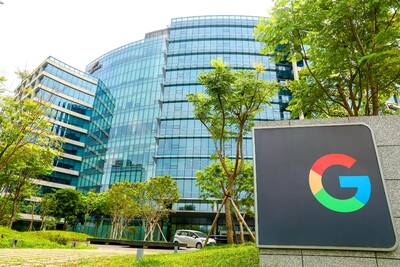
The government yesterday approved applications by Alphabet Inc’s Google to invest NT$27.08 billion (US$859.98 million) in Taiwan, the Ministry of Economic Affairs said in a statement. The Department of Investment Review approved two investments proposed by Google, with much of the funds to be used for data processing and electronic information supply services, as well as inventory procurement businesses in the semiconductor field, the ministry said. It marks the second consecutive year that Google has applied to increase its investment in Taiwan. Google plans to infuse NT$25.34 billion into Charter Investments Ltd (特許投資顧問) through its Singapore-based subsidiary Fructan Holdings Singapore Pte Ltd, and

Micron Technology Inc is a driving force pushing the US Congress to pass legislation that would put new export restrictions on equipment its Chinese competitors use to make their chips, according to people familiar with the matter. A US House of Representatives panel yesterday was to vote on the “MATCH Act,” a bill designed to close gaps in restrictions on chipmaking equipment. It would also pressure foreign companies that sell equipment to Chinese chipmaking facilities to align with export curbs on US companies like Lam Research Corp and Applied Materials Inc. The bill targets facilities operated by China’s ChangXin Memory Technologies Inc

Singapore-based ride-hailing and delivery giant Grab Holdings’ planned acquisition of Foodpanda’s Taiwan operations has yet to enter the formal review stage, as regulators await supplementary documents, the Fair Trade Commission (FTC) said yesterday. Acting FTC Chairman Chen Chih-min (陳志民) told the legislature’s Economics Committee that although Grab submitted its application on March 27, the case has not been officially accepted because required materials remain incomplete. Once the filing is finalized, the FTC would launch a formal probe into the deal, focusing on issues such as cross-shareholding and potential restrictions on market competition, Chen told lawmakers. Grab last month announced that it would acquire

SECOND-RATE: Models distilled from US products do not perform the same as the original and undo measures that ensure the systems are neutral, the US’ cable said The US Department of State has ordered a global push to bring attention to what it said are widespread efforts by Chinese companies, including artificial intelligence (AI) start-up DeepSeek (深度求索), to steal intellectual property from US AI labs, according to a diplomatic cable. The cable, dated Friday and sent to diplomatic and consular posts around the world, instructs diplomatic staff to speak to their foreign counterparts about “concerns over adversaries’ extraction and distillation of US AI models.” Distillation is the process of training smaller AI models using output from larger, more expensive ones to lower the costs of training a powerful new


 RSS
RSS