


The IMF yesterday upgraded its global growth forecast for this year, citing a boost from tech investments but warning that a reevaluation of artificial intelligence (AI) productivity gains or renewed trade tensions could bring disruptions.
World economic growth is projected to hold steady at 3.3 percent this year, the IMF said, raising its forecast by 0.2 percentage points from October last year. This would be the same pace of growth as last year.
But the Washington-based lender cautioned in its World Economic Outlook update that “the resilience exhibited so far is driven largely by a few sectors,” signaling vulnerability.
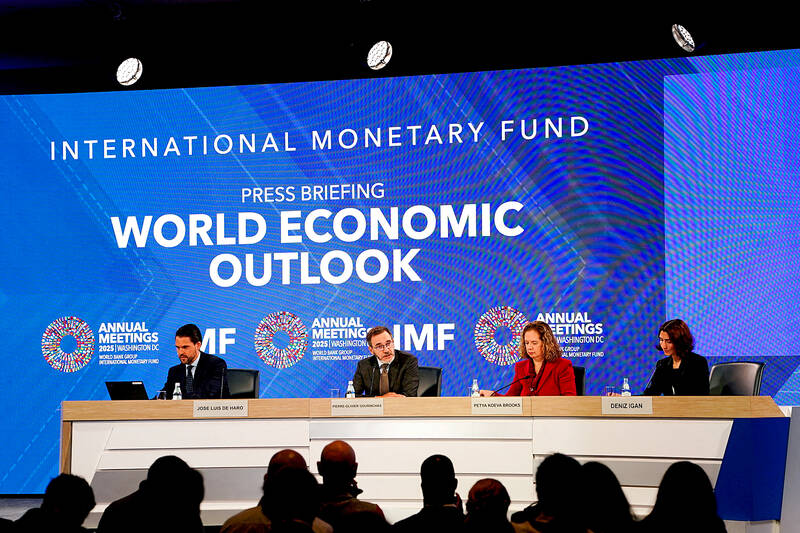
Photo: Elizabeth Frantz, Reuters
While the global economy appears to be “shaking off the trade and tariff disruptions of 2025,” this does not mean they had no impact, IMF chief economist Pierre-Olivier Gourinchas said.
Instead, the challenges were offset by “tailwinds from the AI and tech investment boom,” he told reporters.
This was especially true in North America and Asia, the IMF said.
The private sector also showed adaptability in dealing with trade shocks, while fiscal and monetary support provided boosts.
Since returning to the White House in January last year, US President Donald Trump unleashed sweeping tariffs that hit allies and competitors alike, roiling financial markets and supply chains while causing trade tensions to rocket.
But temperatures have cooled over the year as the Trump administration struck tariff deals with several partners and crucially reached a temporary truce with the world’s second-biggest economy, China.
For now, global inflation is expected to drop from an estimated 4.1 percent last year to 3.8 percent this year.
Nonetheless, the IMF said trade policy uncertainty remains much higher than in January last year and there could still be occasional flare-ups.
The US Supreme Court is also due to rule on the legality of Trump’s use of emergency economic powers to impose tariffs on goods from virtually all trading partners.
The high court is widely expected to deliver a decision early this year, the fund said.
The strikedown of some duties would “inject another dose of trade policy uncertainty into the global economy,” Gourinchas added.
One concern is how Trump could tap other legal authorities to reimpose tariffs. Another issue is how the court ruling would impact government revenues, and therefore fiscal policies, he added.
Besides trade, the AI boom pushing the global economy forward comes with its own risks, Gourinchas said.
He flagged the risk of a “market correction” if expectations about AI gains, productivity and profitability are not realized.
A major catalyst of recent Wall Street stock records has been bullish sentiment about AI.
However, if growth due to AI turns out to be unrealistic, a big drop in the stock market — a correction — could damage the economy if consumers pull back.
The pickup in tech investment and expenditure was estimated to add around 0.3 percentage points to average annualized US GDP growth in the first three quarters of last year.
This offset a drag from the lengthy government shutdown late in the year.
Gourinchas noted the divergence between the US — which is seeing a jump in AI tech investment — and other advanced economies.
The IMF estimates US growth at 2.4 percent this year, 0.3 percentage points higher than predicted in October.
In contrast, it expects euro area growth of 1.3 percent, and a slower pace in Japan.
Growth in China and India is also “relatively strong” compared with other emerging markets, Gourinchas said.
Most of the upward revision in global growth this time was accounted for by the US and China, the IMF said.
Looking ahead, Gourinchas stressed the need for central bank independence, so that they can pursue their mandate of price stability and financial stability.
He did not comment on an ongoing US Department of Justice probe into Federal Reserve Chair Jerome Powell.
But he noted that the importance of the US dollar for the international monetary system means it is “even more important” the Fed is able to do its job and do it well.
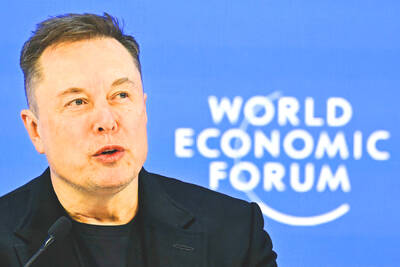
Elon Musk’s lieutenants have reached out to chip industry suppliers, including Applied Materials Inc, Tokyo Electron Ltd and Lam Research Corp, for his envisioned Terafab, early steps in an audacious and likely arduous attempt to break into the production of cutting-edge chips. Staff working for the joint venture between Tesla Inc and Space Exploration Technologies Corp (SpaceX) have sought price quotes and delivery times for an array of chipmaking gear, people familiar with the matter said. In past weeks, they’ve contacted makers of photomasks, substrates, etchers, depositors, cleaning devices, testers and other tools, according to the people, who asked not to

Taichung reported the steepest fall in completed home prices among the six special municipalities in the first quarter of this year, data compiled by Taiwan Realty Co (台灣房屋) showed yesterday. From January through last month, the average transaction price for completed homes in Taichung fell 8 percent from a year earlier to NT$299,000 (US$9,483) per ping (3.3m²), said Taiwan Realty, which compiled the data based on the government’s price registration platform. The decline could be attributed to many home buyers choosing relatively affordable used homes to live in themselves, instead of newly built homes in the city’s prime property market, Taiwan Realty
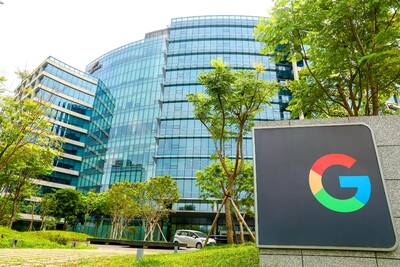
The government yesterday approved applications by Alphabet Inc’s Google to invest NT$27.08 billion (US$859.98 million) in Taiwan, the Ministry of Economic Affairs said in a statement. The Department of Investment Review approved two investments proposed by Google, with much of the funds to be used for data processing and electronic information supply services, as well as inventory procurement businesses in the semiconductor field, the ministry said. It marks the second consecutive year that Google has applied to increase its investment in Taiwan. Google plans to infuse NT$25.34 billion into Charter Investments Ltd (特許投資顧問) through its Singapore-based subsidiary Fructan Holdings Singapore Pte Ltd, and

JET JUICE: The war on Iran’s secondary effects have seen fuel prices skyrocket, knocking flight schedules down to earth in return as airlines struggle with costs Airline passengers should brace for more irritation in the next few months as carriers worldwide cancel flights and ground planes to cope with stratospheric increases in jet-fuel prices. Dutch flag carrier KLM is the latest company to cut its schedule, saying on Thursday that it would scrap 80 return flights at Amsterdam’s Schiphol Airport in the coming month. That puts it in the same league as United Airlines Holdings Inc, Deutsche Lufthansa AG and Cathay Pacific Airways Ltd, which have all pruned itineraries to mitigate costs. Global capacity for next month has been reduced by about 3 percentage points, with all


 RSS
RSS