


Taiwan’s swelling ranks of wealthy people are reshaping how capital is deployed, with overseas investments shifting from optional diversification tools to a core pillar of long-term wealth strategy, a study released yesterday by CTBC Commercial Bank Co (中信銀行) showed.
Total personal wealth in Taiwan is projected to grow at an average annual rate of about 6 percent from last year through 2029, reaching about NT$279 trillion (US$8.82 trillion), CTBC Bank senior vice president John Yang (楊子宏) told a news conference in Taipei.
The expansion reflects Taiwan’s deepening role in the global technology supply chain, which has bolstered corporate earnings, equity valuations and private wealth, Yang said.

Photo: CNA
“Succession sits atop the list of concerns among high-net-worth individuals, both young and old,” Yang said.
Assets held by high-net-worth individuals — defined as those with at least NT$100 million — are expected to increase even faster, rising at a pace of about 10 percent per year to NT$59 trillion by 2029, said the study, which is conducted every two years.
The divergence signals a rapid concentration of wealth among the richest households, said Sharon Weng (翁詩涵), a partner at Boston Consulting Group, which conducted the study.
The number of high-net-worth individuals is forecast to climb from an estimated 123,000 last year to 155,000 by 2029, the study showed.
Within that group, ultra-high-net-worth individuals — those with more than NT$1 billion in personal assets — are set to increase to 11,000 from 8,000, far outpacing growth in the broader market, it showed.
As fortunes scale up, offshore investment has evolved from a risk-hedging tool into a structural foundation supporting family assets, operating businesses and intergenerational succession, the study showed.
About 74 percent of high-net-worth individuals hold overseas assets, while an additional 14 percent plan to invest abroad, it showed.
Among ultra-high-net-worth families, the proportion rises to 86 percent, underscoring cross-border deployment as a central feature of wealth planning, Weng said.
Geographically, wealthy people in Taiwan are becoming more selective, she said.
Singapore and Japan have emerged as favored destinations in the Asia-Pacific region, while exposure to US assets continues to rise, she said.
Holdings in Hong Kong and Macau have stabilized after earlier pullbacks, as investors adopt a wait-and-see stance, while allocations to mainland China remain broadly cautious, Weng said.
The shift reflects a growing emphasis on resilience and risk control as families navigate geopolitical tensions, regulatory uncertainty and market volatility, she said.
The survey also points to a generational divide, she said.
First-generation wealth creators, typically aged 55 to 74, prioritize capital preservation, liquidity and structural stability, favoring lower-volatility instruments, she said.
Second and third-generation family members, primarily aged 35 to 54, are demonstrating a stronger appetite for growth-oriented and globally diversified assets, including cryptocurrency, while also showing greater involvement in education, family values and governance, she added.
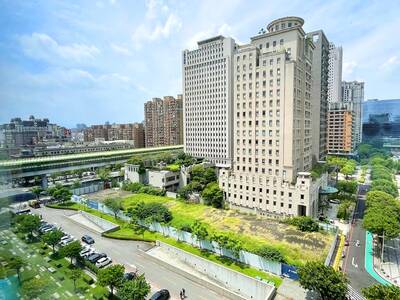
Taichung reported the steepest fall in completed home prices among the six special municipalities in the first quarter of this year, data compiled by Taiwan Realty Co (台灣房屋) showed yesterday. From January through last month, the average transaction price for completed homes in Taichung fell 8 percent from a year earlier to NT$299,000 (US$9,483) per ping (3.3m²), said Taiwan Realty, which compiled the data based on the government’s price registration platform. The decline could be attributed to many home buyers choosing relatively affordable used homes to live in themselves, instead of newly built homes in the city’s prime property market, Taiwan Realty
The government yesterday approved applications by Alphabet Inc’s Google to invest NT$27.08 billion (US$859.98 million) in Taiwan, the Ministry of Economic Affairs said in a statement. The Department of Investment Review approved two investments proposed by Google, with much of the funds to be used for data processing and electronic information supply services, as well as inventory procurement businesses in the semiconductor field, the ministry said. It marks the second consecutive year that Google has applied to increase its investment in Taiwan. Google plans to infuse NT$25.34 billion into Charter Investments Ltd (特許投資顧問) through its Singapore-based subsidiary Fructan Holdings Singapore Pte Ltd, and
Micron Technology Inc is a driving force pushing the US Congress to pass legislation that would put new export restrictions on equipment its Chinese competitors use to make their chips, according to people familiar with the matter. A US House of Representatives panel yesterday was to vote on the “MATCH Act,” a bill designed to close gaps in restrictions on chipmaking equipment. It would also pressure foreign companies that sell equipment to Chinese chipmaking facilities to align with export curbs on US companies like Lam Research Corp and Applied Materials Inc. The bill targets facilities operated by China’s ChangXin Memory Technologies Inc

Japan’s reliance on the Middle East for aluminum is forcing companies to cut back on production and scramble for alternative supply sources after key shipping routes were severed due to the Iran conflict. Among the most exposed are auto and parts makers such as Toyota Motor Corp and Denso Corp. Domestic automakers get about 70 percent of their aluminum imports from the Middle East, the nation’s top auto lobby said. The price of the lightweight alloy — used in everything from engine parts to wheels — has jumped about 13 percent since hostilities started in late February. “It’s only been a month, but it’s


 RSS
RSS