


Chinese customs authorities told customs agents this week that Nvidia Corp’s H200 artificial intelligence (AI) chips are not permitted to enter China, three people briefed on the matter said.
Chinese government officials also summoned domestic technology companies to meetings on Tuesday, at which they were explicitly instructed not to purchase the chips unless necessary, two of the people and a third source said.
“The wording from the officials is so severe that it is basically a ban for now, though this might change in the future should things evolve,” one of the people said.

Photo: Reuters
The H200, Nvidia’s second-most powerful AI chip, is one of the biggest flashpoints in US-China relations.
Although there is demand from Chinese firms, it remains unclear whether Beijing wants to ban it outright so that domestic chip companies can flourish or is still chewing over restrictions, or whether these measures could be used as a bargaining tactic in talks with Washington.
US President Donald Trump’s administration on Tuesday gave a formal green light to China-bound sales of the Nvidia chips with conditions, despite concerns among many China hawks in Washington that the chips could supercharge the Chinese military and erode the US’ advantage in AI.
According to the regulations, the chips would be reviewed by a third-party testing lab to confirm their technical AI capabilities before they can be shipped to China, which cannot receive more than 50 percent of the total amount of chips sold to US-based customers.
Nvidia would need to certify that there are enough H200s in the US, while Chinese customers must demonstrate “sufficient security procedures” and cannot use the chips for military purposes.
Those conditions had not been established previously.
The Information news Web site on Tuesday reported that the Chinese government this week told some tech companies that it would only approve their H200 purchases under special circumstances, such as for research and development (R&D) conducted in partnerships at universities.
Exemptions are being discussed for R&D purposes and universities, one of the sources said.
While Chinese chipmakers have developed AI processors like Huawei Technologies Co’s (華為) Ascend 910C, the H200 is considered far more efficient for the large-scale training of advanced AI models.
Chinese technology companies have placed orders for more than 3 million H200 chips priced at about US$27,000 each, far exceeding Nvidia’s inventory of 700,000 chips, sources said last month.
At the Consumer Electronics Show in Las Vegas last week, Nvidia chief executive officer Jensen Huang (黃仁勳) said the firm was ramping up production of H200 chips amid robust demand that was driving up the price to rent the H200 chips sitting in cloud computing data centers.
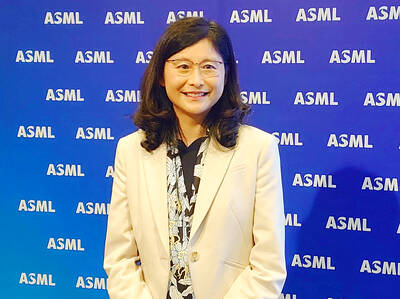
Netherlands-based semiconductor equipment supplier ASML Holding NV yesterday said that it is planning to hire an additional 1,000 people in Taiwan this year in response to growing demand from clients. ASML had previously planned to recruit 600 people this year, but that the plan has been adjusted upward, ASML vice president and ASML Taiwan general manager Grace Wang (汪佳慧) told reporters. ASML has a workforce of more than 4,500 in Taiwan, accounting for about 10 percent of its global total, Wang said. This year’s recruitment campaign would focus on adding people in the customer support, manufacturing and supply chain domains to assist ASML
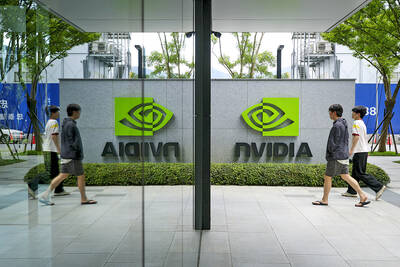
UNDER MICROSCOPE: Taiwan detained three people who allegedly conspired to buy servers in Taiwan and export them using fraudulent documentation, prosecutors said Nvidia Corp chief executive officer Jensen Huang (黃仁勳) on Saturday urged Super Micro Computer Inc to tighten up on compliance after Taiwan detained three people this week for allegedly making fraudulent declarations about artificial intelligence (AI) servers made by its US partner. The development marked the nation’s first crackdown on semiconductor smuggling, which grew after the US slapped restrictions on exports of high-end chips such as Nvidia AI accelerators to China. Nvidia is “rigorous” in explaining regulations to all of its partners, Huang told reporters after arriving in Taipei. “Ultimately Super Micro has to run their own company,” he said in response to

Nvidia Corp yesterday announced that CEO Jensen Huang (黃仁勳) would attend an employee meeting in Taipei tomorrow to celebrate the launch of the company’s Taiwan headquarters project. Huang would attend a gathering at the site of Nvidia’s planned headquarters in Beitou Shilin Technology Park (北投士林科技園區), the company said in a statement. After arriving in Taiwan on Saturday last week, Huang told reporters that he plans to meet with Quanta Computer Inc (廣達) chairman Barry Lam (林百里) and Taiwan Semiconductor Manufacturing Co (TSMC, 台積電) chairman C.C. Wei (魏哲家), and would attend the groundbreaking ceremony for Nvidia’s Taiwan headquarters tomorrow. Nvidia has not yet applied
Huawei Technologies Co (華為) said it has come up with a new pathway to shorten its gap with industry leader Taiwan Semiconductor Manufacturing Co (TSMC, 台積電), potentially achieving a breakthrough in making advanced semiconductors without cutting-edge equipment. Right now there is about a five-year gap between what TSMC is capable of and what Huawei, together with its manufacturing partner Semiconductor Manufacturing International Corp (中芯), can produce. Huawei is to start making 1.4-nanometer chips by 2031 with its own “LogicFolding” technology, Huawei semiconductor chief He Tingbo (何庭波) said in a rare public appearance during a chip conference yesterday, while TSMC has


 RSS
RSS