


The four major units of Formosa Plastics Group (FPG, 台塑集團), the nation’s largest industrial conglomerate, yesterday reported a combined net loss of NT$1.087 billion (US$34.4 million) for last year, due to a decrease in product prices amid China’s overcapacity and smaller sales volumes given the US tariff hikes.
The four units — Formosa Plastics Corp (台灣塑膠), Nan Ya Plastics Corp (南亞塑膠), Formosa Chemicals and Fibre Corp (台灣化學纖維) and Formosa Petrochemical Corp (台塑石化) — had posted a combined net profit of NT$8.458 billion the year before.
The group’s poor performance was primarily driven by Formosa Plastics, as the group’s flagship company saw its net loss expand by NT$8.82 billion from the previous year to NT$10.05 billion, or NT$1.58 in losses per share, owing to sinking average product prices and sales volumes, the company’s regulatory filing showed.
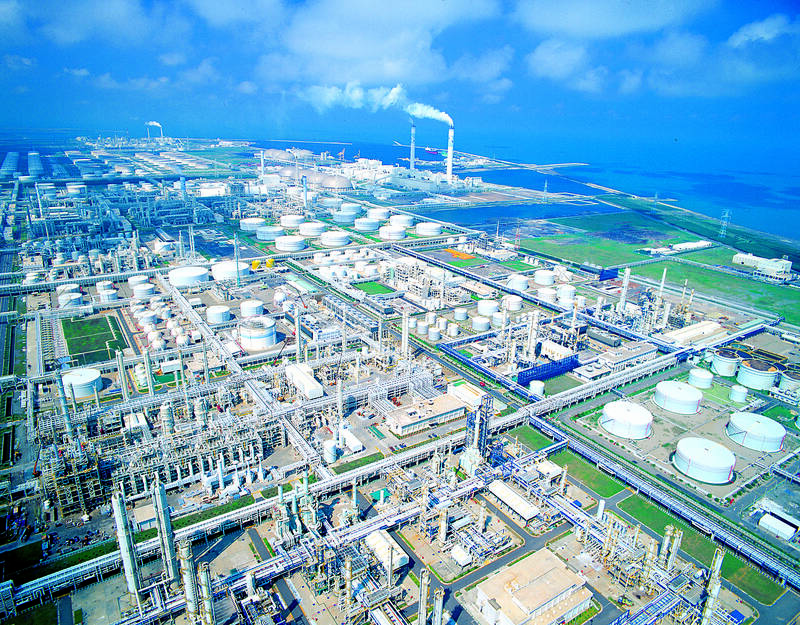
Photo: Taipei Times File Photo
Annual revenue fell 12.3 percent to NT$175.4 billion, it showed.
In addition, Formosa Chemicals and Fibre, a producer of aromatics and styrenics, had a net loss of NT$5.488 billion last year, or NT$0.94 in losses per share — its first-ever annual losses — amid falling crude oil prices and poor market conditions, its regulatory filing showed. Annual revenue dropped 17.7 percent to NT$287.034 billion, the filing showed.
However, Formosa Petrochemical, the nation’s only listed oil refiner, reported that its net profit rose 65 percent to NT$9.941 billion, or earnings per share of NT$1.04, even though annual revenue was down 5.7 percent to NT$626.149 billion.
Nan Ya Plastics, the nation’s largest plastics maker, saw its net profit rise 35 percent to NT$4.51 billion, or earnings per share of NT$0.57, as income from electronic material products increased amid the artificial intelligence boom. Annual revenue rose slightly by 0.11 percent to NT$259.903 billion.
By taking into account last year’s performance and conservative prospects for this year, the group said it would issue year-end bonuses equivalent to three months of wages, the same as the past two years, for its employees later this month.
For this quarter, Formosa Plastics expects revenue to be lower than last quarter’s NT$41.104 billion, as the Lunar New Year holiday next month cuts the number of working days and eight plants enter regular maintenance cycles by the end of March, the company said.
Nan Ya Plastics expects this quarter’s revenue to stay flat from last quarter’s NT$64.458 billion, as the continued strong momentum in the electronic materials business offsets the impact of the Lunar New Year holiday, it said.
Formosa Petrochemicals and Formosa Chemicals are also conservative about this quarter, compared with last quarter's revenues of NT$143.805 billion and NT$62.001 billion respectively, citing the upcoming Lunar New Year holiday’s effect, with Formosa Petrochemicals pointing out the oversupply of global crude oil as a lingering issue from last year to add pressure to oil prices in the first half of this year, the companies said.
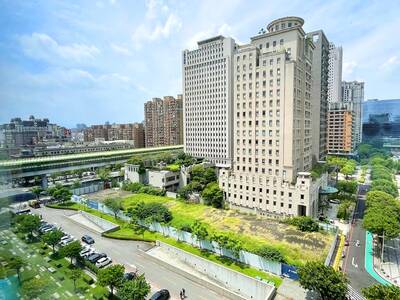
Taichung reported the steepest fall in completed home prices among the six special municipalities in the first quarter of this year, data compiled by Taiwan Realty Co (台灣房屋) showed yesterday. From January through last month, the average transaction price for completed homes in Taichung fell 8 percent from a year earlier to NT$299,000 (US$9,483) per ping (3.3m²), said Taiwan Realty, which compiled the data based on the government’s price registration platform. The decline could be attributed to many home buyers choosing relatively affordable used homes to live in themselves, instead of newly built homes in the city’s prime property market, Taiwan Realty
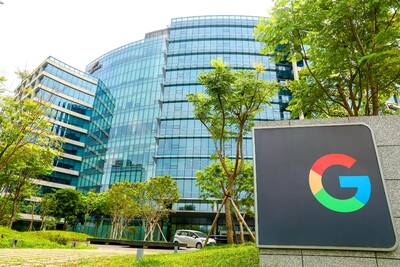
The government yesterday approved applications by Alphabet Inc’s Google to invest NT$27.08 billion (US$859.98 million) in Taiwan, the Ministry of Economic Affairs said in a statement. The Department of Investment Review approved two investments proposed by Google, with much of the funds to be used for data processing and electronic information supply services, as well as inventory procurement businesses in the semiconductor field, the ministry said. It marks the second consecutive year that Google has applied to increase its investment in Taiwan. Google plans to infuse NT$25.34 billion into Charter Investments Ltd (特許投資顧問) through its Singapore-based subsidiary Fructan Holdings Singapore Pte Ltd, and

Micron Technology Inc is a driving force pushing the US Congress to pass legislation that would put new export restrictions on equipment its Chinese competitors use to make their chips, according to people familiar with the matter. A US House of Representatives panel yesterday was to vote on the “MATCH Act,” a bill designed to close gaps in restrictions on chipmaking equipment. It would also pressure foreign companies that sell equipment to Chinese chipmaking facilities to align with export curbs on US companies like Lam Research Corp and Applied Materials Inc. The bill targets facilities operated by China’s ChangXin Memory Technologies Inc

Singapore-based ride-hailing and delivery giant Grab Holdings’ planned acquisition of Foodpanda’s Taiwan operations has yet to enter the formal review stage, as regulators await supplementary documents, the Fair Trade Commission (FTC) said yesterday. Acting FTC Chairman Chen Chih-min (陳志民) told the legislature’s Economics Committee that although Grab submitted its application on March 27, the case has not been officially accepted because required materials remain incomplete. Once the filing is finalized, the FTC would launch a formal probe into the deal, focusing on issues such as cross-shareholding and potential restrictions on market competition, Chen told lawmakers. Grab last month announced that it would acquire


 RSS
RSS