


China yesterday announced an anti-dumping probe into imports from Japan of a key chemical used in making semiconductors, a day after it banned the export to the country of goods with potential military uses.
The Chinese Ministry of Commerce in Beijing said that "from 2022 to 2024, the quantity of dichlorosilane imported from Japan generally increased, while the price cumulatively decreased by 31 percent."
"The dumping of imported products from Japan has damaged the production and operation of domestic industries," the ministry said in a statement.
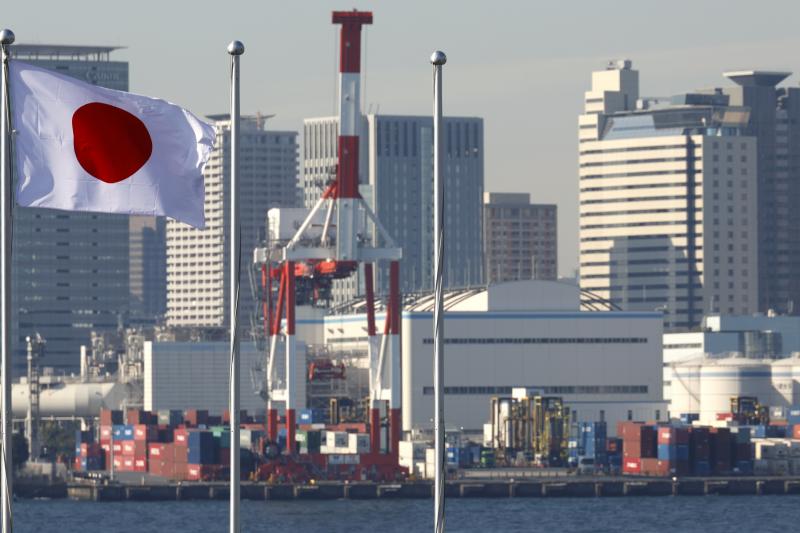
Photo: Franck robichon, EPA
Japan is a major global supplier of dichlorosilane and the probe comes at a time of rising diplomatic tensions between the Asian giants.
China has ramped up pressure on its neighbor after Japanese Prime Minister Sanae Takaichi suggested in November that Tokyo may react militarily to an attack on Taiwan, which Beijing has vowed to seize control of by force if necessary.
Chinese Ministry of Foreign Affairs spokeswoman Mao Ning (毛寧) told a news conference yesterday that Takaichi's "erroneous remarks regarding Taiwan... blatantly interfere in China's internal affairs, and threaten military force against China."
China on Tuesday blocked exports to Japan of "dual-use" items with potential military uses.
While the export ban statement did not mention specific items, it has fueled worries in Japan that Beijing may choke supplies of vital rare earth minerals, some of which are included in China's list of dual-use goods. China is by far the world's biggest supplier of rare earths, which are crucial for a range of tech products from smartphones to fighter jets.
Japanese Ministry of Foreign Affairs Asia and Oceania Bureau Director-General Masaaki Kanai said Japan strongly protested and demanded the withdrawal of these measures.
The bans "deviate significantly from international practice, are absolutely unacceptable and deeply regrettable," Kanai said.
More than 70 percent of Japan's rare earth imports are from China, according to the Japan Organization for Metals and Energy.
That is in spite of Tokyo's efforts to diversify supplies following a 2010 row that saw Beijing temporarily cut off shipments of the minerals to Japan.
Global risk consultancy Teneo said the ambiguous wording of the Chinese statement may be intended to press Takaichi to take a more conciliatory stance towards Beijing.
"The brief statement by China's commerce ministry is vague, and the impact of the new measures could range from almost entirely symbolic to highly disruptive," it said.
"By triggering concern in Japan about the ongoing availability of critical Chinese industrial inputs, the announcement puts immediate pressure on Takaichi to offer concessions."
Nomura Research Institute executive economist Takahide Kiuchi said the impact on the Japanese economy would be "extremely severe" if China included rare earths in export controls.
He estimated that a three-month ban could cost Japan 660 billion yen (US$4.2 billion).
"Particularly for rare earths like dysprosium and terbium, which are auxiliary materials for neodymium magnets used in EV [electric vehicle] motors, Japan is said to depend almost 100 percent on China," he added.
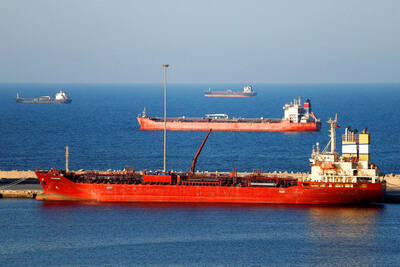
HORMUZ ISSUE: The US president said he expected crude prices to drop at the end of the war, which he called a ‘minor excursion’ that could continue ‘for a little while’ The United Arab Emirates (UAE) and Kuwait started reducing oil production, as the near-closure of the crucial Strait of Hormuz ripples through energy markets and affects global supply. Abu Dhabi National Oil Co (ADNOC) is “managing offshore production levels to address storage requirements,” the company said in a statement, without giving details. Kuwait Petroleum Corp said it was lowering production at its oil fields and refineries after “Iranian threats against safe passage of ships through the Strait of Hormuz.” The war in the Middle East has all but closed Hormuz, the narrow waterway linking the Persian Gulf to the open seas,

RATIONING: The proposal would give the Trump administration ample leverage to negotiate investments in the US as it decides how many chips to give each country US officials are debating a new regulatory framework for exporting artificial intelligence (AI) chips and are considering requiring foreign nations to invest in US AI data centers or security guarantees as a condition for granting exports of 200,000 chips or more, according to a document seen by Reuters. The rules are not yet final and could change. They would be the first attempt to regulate the flow of AI chips to US allies and partners since US President Donald Trump’s administration said it rescinded its predecessor’s so-called AI diffusion rules. Those rules sought to keep a significant amount of AI

Apple Inc increased iPhone production in India by about 53 percent last year and now makes a quarter of its marquee devices there, reflecting the US company’s efforts to avoid tariffs on China. The company assembled about 55 million iPhones in India last year, up from 36 million a year earlier, people familiar with the matter said, asking not to be named because the numbers aren’t public. Apple makes about 220 million to 230 million iPhones a year globally, with India’s share of the total increasing rapidly. Apple has accelerated its expansion in the world’s most populous country in recent years, bolstered

A new worry has been rippling across the stock market lately: Entire businesses, not just their employees, might be thrown out of work. While most economists say fears of an artificial intelligence (AI) job apocalypse are overblown, seismic shifts have happened in the past after big tech breakthroughs. The IT revolution of the 1990s led to a surge in productivity that sped up the US economy for several years. It also rendered companies or even industries largely redundant — from travel agents and stockbrokers to classified advertising and newspapers, or video rental stores. Economists expect AI would deliver higher productivity,


 RSS
RSS