


Chinese auto giant BYD Co (比亞迪) is poised to surpass Tesla Inc as the world’s biggest electric vehicle (EV) company in annual sales.
The two groups are expected to soon publish their final figures for this year, and based on sales data so far this year, there is almost no chance the US company led by CEO Elon Musk would retain its leadership position.
As of the end of last month, BYD, which also produces hybrid vehicles, had sold 2.07 million EVs.

Photo: AFP
Tesla, for its part, had sold 1.22 million by the end of September. Tesla’s September figures included a one-time boost in sales to nearly half-a-million vehicles in a three-month period, before the expiration of a US tax credit for buyers of EVs — which ended under legislation backed by US President Donald Trump, a climate change skeptic.
Tesla’s sales in the December quarter are expected to fall to 449,000, a FactSet analysis consensus said. That would give the company about 1.65 million sales for the entire year, a drop of 7.7 percent and well below BYD’s level by the end of last month.
Deutsche Bank AG, which projects just 405,000 Tesla EV sales during the fourth quarter, sees the company’s sales down by about one-third in North America and Europe, and by one-tenth in China.
Industry watchers said it would take time for EV demand to reach a level of equilibrium in the US following the elimination of the US$7,500 US tax credit at the end of September.
Even prior to that, Tesla had seen sales struggle in key markets over Musk’s political support of Trump and other far-right politicians. Tesla has also faced rising EV competition from BYD and other Chinese companies, and from European giants.
“We believe Tesla will see some weakness on deliveries” in the fourth quarter, Wedbush Securities Inc analyst Dan Ives said.
Sales of 420,000 would be “good enough to show stable demand,” with Wall Street “laser focused on the autonomous chapter kicking off in 2026,” Ives added, referring to plans for self-driving vehicles.
Even as it has grown quickly, BYD has faced challenges in its home market. With profitability in China weighed down by price-wary consumers, the company has sought to strengthen its foothold in foreign markets.
BYD is “one of the pioneers to establish overseas production capacity and supply chains for EVs,” Fitch Ratings Asia-Pacific corporate research director Jing Yang (楊靜) said.
“Going forward, its geographical diversification is likely to help it to navigate an increasingly complicated global tariff environment,” Yang said.
Overseas rivals have balked at Chinese state subsidies and other state supports that have allowed the company to sell vehicles cheaply. Former US president Joe Biden imposed 100 percent tariffs on Chinese EV imports, which could potentially go up under Trump. Europe has also imposed tariffs on Chinese imports, but BYD is building manufacturing capacity in Hungary.
While the chance of Tesla reclaiming its global leadership in EVs looks uncertain, it is also potentially positioned for growth.
TD Cowen Inc analyst Itay Michaeli said autonomous technology could play an increasingly important role for Tesla, with breakthroughs in its full self-driving (FSD) offerings potentially boosting sales.
“As Tesla really begins to roll out eyes-off features and expand FSD capability, if they do that successfully, that should generate more demand for their vehicles,” Michaeli said.
Musk said the Cybercab, an autonomous robotaxi model, would begin production in April next year.
The company also unveiled cheaper versions of the Model 3 and Y that could boost sales.
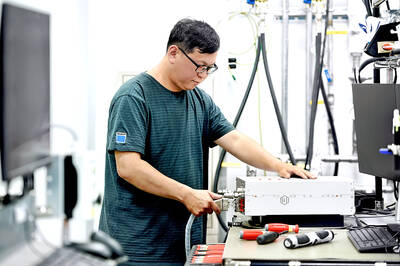
SEMICONDUCTORS: The German laser and plasma generator company will expand its local services as its specialized offerings support Taiwan’s semiconductor industries Trumpf SE + Co KG, a global leader in supplying laser technology and plasma generators used in chip production, is expanding its investments in Taiwan in an effort to deeply integrate into the global semiconductor supply chain in the pursuit of growth. The company, headquartered in Ditzingen, Germany, has invested significantly in a newly inaugurated regional technical center for plasma generators in Taoyuan, its latest expansion in Taiwan after being engaged in various industries for more than 25 years. The center, the first of its kind Trumpf built outside Germany, aims to serve customers from Taiwan, Japan, Southeast Asia and South Korea,

Gasoline and diesel prices at domestic fuel stations are to fall NT$0.2 per liter this week, down for a second consecutive week, CPC Corp, Taiwan (台灣中油) and Formosa Petrochemical Corp (台塑石化) announced yesterday. Effective today, gasoline prices at CPC and Formosa stations are to drop to NT$26.4, NT$27.9 and NT$29.9 per liter for 92, 95 and 98-octane unleaded gasoline respectively, the companies said in separate statements. The price of premium diesel is to fall to NT$24.8 per liter at CPC stations and NT$24.6 at Formosa pumps, they said. The price adjustments came even as international crude oil prices rose last week, as traders
Taiwan Semiconductor Manufacturing Co (TSMC, 台積電), which supplies advanced chips to Nvidia Corp and Apple Inc, yesterday reported NT$1.046 trillion (US$33.1 billion) in revenue for last quarter, driven by constantly strong demand for artificial intelligence (AI) chips, falling in the upper end of its forecast. Based on TSMC’s financial guidance, revenue would expand about 22 percent sequentially to the range from US$32.2 billion to US$33.4 billion during the final quarter of 2024, it told investors in October last year. Last year in total, revenue jumped 31.61 percent to NT$3.81 trillion, compared with NT$2.89 trillion generated in the year before, according to
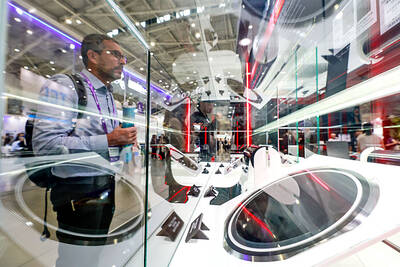
SIZE MATTERS: TSMC started phasing out 8-inch wafer production last year, while Samsung is more aggressively retiring 8-inch capacity, TrendForce said Chipmakers are expected to raise prices of 8-inch wafers by up to 20 percent this year on concern over supply constraints as major contract chipmakers Taiwan Semiconductor Manufacturing Co (TSMC, 台積電) and Samsung Electronics Co gradually retire less advanced wafer capacity, TrendForce Corp (集邦科技) said yesterday. It is the first significant across-the-board price hike since a global semiconductor correction in 2023, the Taipei-based market researcher said in a report. Global 8-inch wafer capacity slid 0.3 percent year-on-year last year, although 8-inch wafer prices still hovered at relatively stable levels throughout the year, TrendForce said. The downward trend is expected to continue this year,


 RSS
RSS