


Micron Technology Inc, the largest US maker of memory chips, has given an upbeat forecast for the current quarter, a sign that surging demand and supply shortages are allowing the company to charge more for products.
Fiscal second-quarter revenue would be US$18.3 billion to US$19.1 billion, the company said in a statement on Wednesday.
Analysts had estimated US$14.4 billion on average for the period.

Photo: Reuters
Excluding some items, profit would be US$8.22 to US$8.62 a share, compared with a projection of US$4.71.
Micron shares rose about 10 percent in pre-market trading yesterday after the forecast was released. The shares were already up 168 percent this year, closing at US$225.52 on Wednesday.
The voracious appetite for artificial intelligence (AI) computing components is outstripping supply, benefiting companies such as Micron.
Micron is positioned as “an essential AI enabler,” chief executive officer Sanjay Mehrotra said in the statement. “And we are investing to support our customers’ growing need for memory and storage.”
However, there have also been shortages of the less sophisticated memory used in PCs. That stems in part from the memory industry shifting production to more advanced technology for AI data centers.
“This is the most significant disconnect between demand and supply in terms of magnitude as well as time horizon that we’ve experienced in my 25 years in the industry,” Micron executive vice president of operations Manish Bhatia said in an interview.
Boise, Idaho-based Micron has been a key beneficiary of AI demand because its high-bandwidth memory is critical to the chips and systems that develop AI models. Micron is already sold out of those components for next year, Bhatia said.
In the fiscal first quarter, which ended on Nov. 27, sales rose 57 percent to US$13.6 billion. Profit, excluding some items, was US$4.78 a share. Analysts had estimated revenue of US$13 billion and earnings per share of US$3.95.
On a conference call with analysts, Mehrotra said that memory shortages would last for a while.
“Sustained and strong industry demand, along with supply constraints, are contributing to tight market conditions,” he said. “We expect these conditions to persist beyond calendar 2026.”
The chief executive said he was disappointed that he could not fill all the company’s orders.
“We are only able to meet about 50 percent to two-thirds of our demand from several key customers,” he said. “So we remain extremely focused on trying to increase the supply here and making the necessary investments.”
Those efforts include stepping up expenditure. The company now expects to devote US$20 billion to capital spending this fiscal year, up from a previous forecast of US$18 billion. The company spent US$13.8 billion on new plants and equipment in the last fiscal year.

In Italy’s storied gold-making hubs, jewelers are reworking their designs to trim gold content as they race to blunt the effect of record prices and appeal to shoppers watching their budgets. Gold prices hit a record high on Thursday, surging near US$5,600 an ounce, more than double a year ago as geopolitical concerns and jitters over trade pushed investors toward the safe-haven asset. The rally is putting undue pressure on small artisans as they face mounting demands from customers, including international brands, to produce cheaper items, from signature pieces to wedding rings, according to interviews with four independent jewelers in Italy’s main
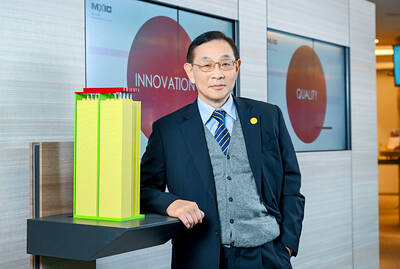
Macronix International Co (旺宏), the world’s biggest NOR flash memory supplier, yesterday said it would spend NT$22 billion (US$699.1 million) on capacity expansion this year to increase its production of mid-to-low-density memory chips as the world’s major memorychip suppliers are phasing out the market. The company said its planned capital expenditures are about 11 times higher than the NT$1.8 billion it spent on new facilities and equipment last year. A majority of this year’s outlay would be allocated to step up capacity of multi-level cell (MLC) NAND flash memory chips, which are used in embedded multimedia cards (eMMC), a managed

In the wake of strong global demand for AI applications, Taiwan’s export-oriented economy accelerated with the composite index of economic indicators flashing the first “red” light in December for one year, indicating the economy is in booming mode, the National Development Council (NDC) said yesterday. Moreover, the index of leading indicators, which gauges the potential state of the economy over the next six months, also moved higher in December amid growing optimism over the outlook, the NDC said. In December, the index of economic indicators rose one point from a month earlier to 38, at the lower end of the “red” light.
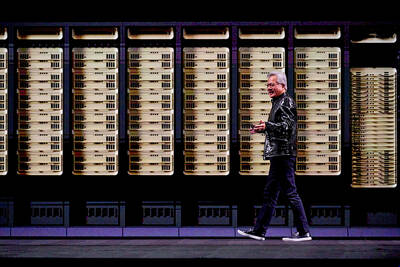
The global server market is expected to grow 12.8 percent annually this year, with artificial intelligence (AI) servers projected to account for 16.5 percent, driven by continued investment in AI infrastructure by major cloud service providers (CSPs), market researcher TrendForce Corp (集邦科技) said yesterday. Global AI server shipments this year are expected to increase 28 percent year-on-year to more than 2.7 million units, driven by sustained demand from CSPs and government sovereign cloud projects, TrendForce analyst Frank Kung (龔明德) told the Taipei Times. Demand for GPU-based AI servers, including Nvidia Corp’s GB and Vera Rubin rack systems, is expected to remain high,


 RSS
RSS