


Cathay Financial Holding Co (國泰金控) yesterday steeply raised its economic growth forecast for this year from 4.5 percent to 7.4 percent, as the surge in global artificial intelligence (AI) investments has more than offset uncertainty linked to US tariffs and propelled exports far beyond expectations.
That momentum is expected to remain strong into next year despite a high base, with growth forecast to reach 3 percent, up from 2 percent, National Central University economics professor Hsu Chih-chiang (徐之強) said, speaking on behalf of a research team commissioned by Cathay Financial.
“There is an 80 percent probability that economic expansion next year will fall between 1.5 percent and 4.5 percent,” Hsu said.
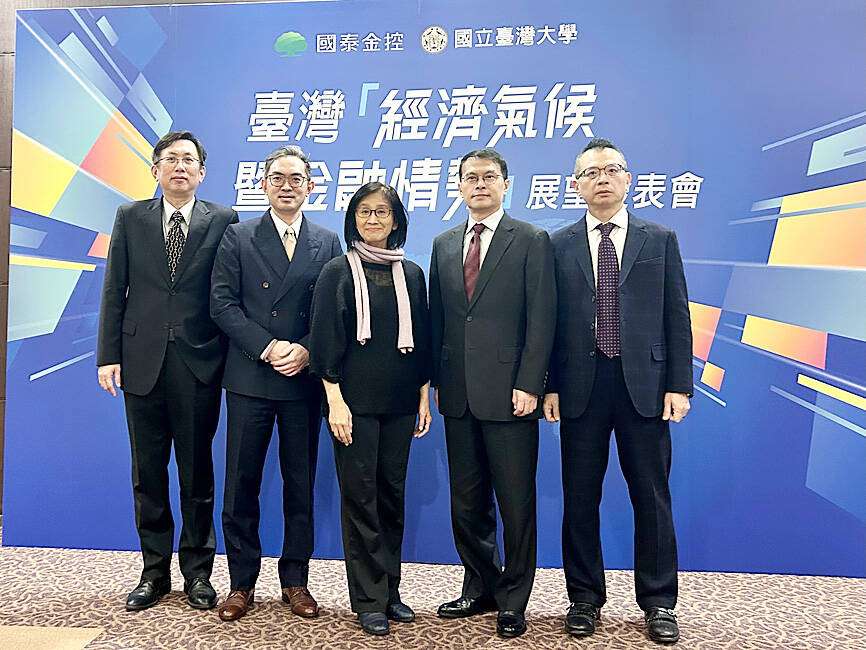
Photo: Wu Hsin-tien, Taipei Times
The upgrade reflected stronger-than-expected performance so far this year, driven by rapidly rising demand for advanced semiconductors and a rush to ship goods during tariff exemption periods, he said.
Taiwan’s economic growth looks set to exceed 8 percent in the second half of this year, beating earlier expectations by a wide margin, he added.
The economic climate for the first quarter of next year remains “bright,” as AI investments continue to gain traction, while domestic consumption receives support from government stimulus and wealth effects from the stock market, Hsu said.
The government’s NT$10,000 (US$319) cash handout is expected to deliver its most visible boost to consumption this quarter and in the first quarter of next year, he said.
Even if some of the funds are channeled into financial markets rather than direct spending, the money would still support private consumption by boosting transaction fees and financial services activity, he added.
However, overseas travel — particularly to Japan — could dilute the impact, as related spending is recorded as imports.
The Directorate-General of Budget, Accounting and Statistics said it expected the stimulus to add about 0.5 percentage points to private consumption.
Cathay Financial expects the US Federal Reserve to carry out one to two interest rate cuts next year, Hsu said, adding that the timing and pace of the cuts would become clearer after a new Fed chair is appointed and updated policy projects are released.
Meanwhile, the central bank is expected to keep policy rates unchanged at its board meeting on Thursday and throughout next year, as inflationary pressures remain contained and economic growth stays robust, he said.
Market expectations of a more dovish Fed leadership could weigh on the US dollar, with the US dollar index likely to trade with a softer bias, Hsu said.
That would support a stronger New Taiwan dollar next year, although its actual trajectory would still depend on broader Asian currency movements and geopolitical risks, which could quickly revive demand for the greenback, he said.
Factors such as the global AI boom, US tariffs, China’s stimulus efforts and property market developments, and Taiwan’s energy supply would weigh on the nation’s economic outlook, he added.
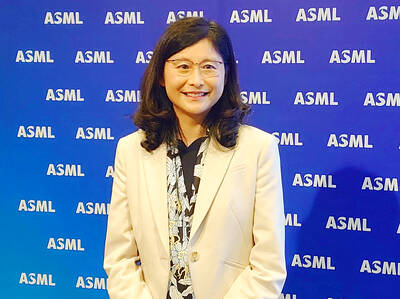
Netherlands-based semiconductor equipment supplier ASML Holding NV yesterday said that it is planning to hire an additional 1,000 people in Taiwan this year in response to growing demand from clients. ASML had previously planned to recruit 600 people this year, but that the plan has been adjusted upward, ASML vice president and ASML Taiwan general manager Grace Wang (汪佳慧) told reporters. ASML has a workforce of more than 4,500 in Taiwan, accounting for about 10 percent of its global total, Wang said. This year’s recruitment campaign would focus on adding people in the customer support, manufacturing and supply chain domains to assist ASML
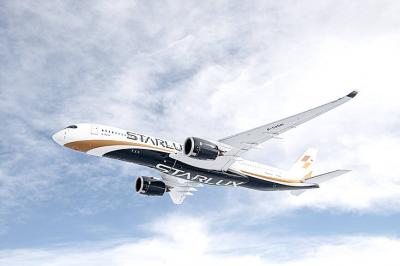
Starlux Airlines Co (星宇航空) today unveiled a long-haul network expansion plan at a shareholders’ meeting in Taipei, including direct flights to Barcelona, Spain, and Zurich, Switzerland, as well as a service connecting Taipei, Sydney and New Zealand. Starlux is to become the first Taiwanese carrier to offer non-stop services to the two European cities, while the inaugural oceanic route is expected to expand transit opportunities within the Australia-New Zealand market, Starlux said. Flight services to Chicago, Dallas, Washington and New York are under evaluation, the airline added. Prior to the shareholders’ meeting, the airline earlier this year announced that it would be
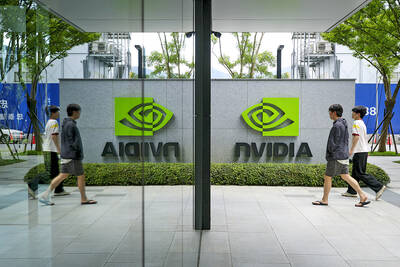
UNDER MICROSCOPE: Taiwan detained three people who allegedly conspired to buy servers in Taiwan and export them using fraudulent documentation, prosecutors said Nvidia Corp chief executive officer Jensen Huang (黃仁勳) on Saturday urged Super Micro Computer Inc to tighten up on compliance after Taiwan detained three people this week for allegedly making fraudulent declarations about artificial intelligence (AI) servers made by its US partner. The development marked the nation’s first crackdown on semiconductor smuggling, which grew after the US slapped restrictions on exports of high-end chips such as Nvidia AI accelerators to China. Nvidia is “rigorous” in explaining regulations to all of its partners, Huang told reporters after arriving in Taipei. “Ultimately Super Micro has to run their own company,” he said in response to
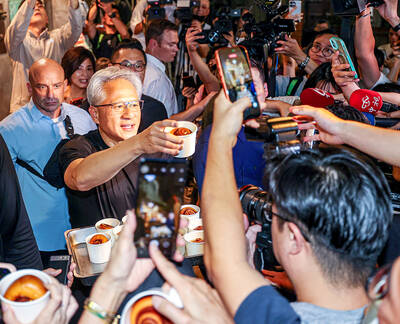
Nvidia Corp yesterday announced that CEO Jensen Huang (黃仁勳) would attend an employee meeting in Taipei tomorrow to celebrate the launch of the company’s Taiwan headquarters project. Huang would attend a gathering at the site of Nvidia’s planned headquarters in Beitou Shilin Technology Park (北投士林科技園區), the company said in a statement. After arriving in Taiwan on Saturday last week, Huang told reporters that he plans to meet with Quanta Computer Inc (廣達) chairman Barry Lam (林百里) and Taiwan Semiconductor Manufacturing Co (TSMC, 台積電) chairman C.C. Wei (魏哲家), and would attend the groundbreaking ceremony for Nvidia’s Taiwan headquarters tomorrow. Nvidia has not yet applied


 RSS
RSS