


US President Donald Trump on Sunday raised potential antitrust concerns around Netflix Inc’s planned US$72 billion acquisition of Warner Bros Discovery Inc, saying that the market share of the combined entity might pose problems.
Trump’s comments, made as he arrived at the Kennedy Center in New York for an event, might spur concerns regulators would oppose the coupling of the world’s dominant streaming service with a Hollywood icon.
The company faces a lengthy US Department of Justice review of a deal that would reshape the entertainment industry.

Photo: Getty Images via AFP
“Well, that’s got to go through a process, and we’ll see what happens,” Trump said when asked about the deal, confirming he met Netflix co-CEO Ted Sarandos recently.
“But it is a big market share. It could be a problem,” he added.
Bets on prediction marketplace Polymarket showed a 23 percent chance of Netflix closing the acquisition by the end of next year, down from about 60 percent just before Trump’s comments.
The transaction would combine the world’s No. 1 streaming player with HBO Max. The justice department’s antitrust division, which would review the transaction in the US, could argue that the deal is illegal, because the combined market share would put Netflix well above the 30 percent threshold.
Netflix has “a very big market share, and when they have Warner Brothers, you know, that share goes up a lot,” Trump said, adding that he would be personally involved in the decisionmaking process.
Sarandos met with Trump at the White House recently to lobby for the acquisition, Bloomberg reported earlier.
Netflix was not any kind of all-powerful monopoly, and had suffered its own subscriber losses a couple of years earlier, Sarandos said at the time, according to people familiar with the matter.
US lawmakers from both parties, including Republican Representative Darrell Issa and Democratic Senator Elizabeth Warren, have already faulted the transaction — which would create a global streaming giant with 450 million users — as harmful to consumers.
EU regulators are also likely to subject the Netflix proposal to an intensive review. In the UK, the deal has already drawn scrutiny before the announcement, with British House of Lords member Baroness Luciana Berger pressing the government on how the transaction would impact competition and consumer prices.
Even if antitrust reviews just focus on streaming, Netflix believes it would ultimately prevail, pointing to Amazon.com Inc’s Prime and Walt Disney Co as other major competitors, people familiar with the company’s thinking said.
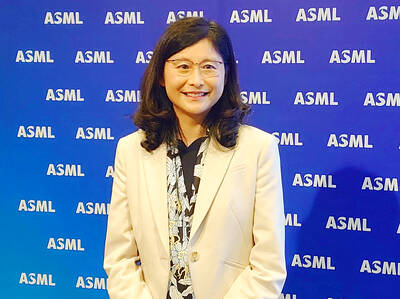
Netherlands-based semiconductor equipment supplier ASML Holding NV yesterday said that it is planning to hire an additional 1,000 people in Taiwan this year in response to growing demand from clients. ASML had previously planned to recruit 600 people this year, but that the plan has been adjusted upward, ASML vice president and ASML Taiwan general manager Grace Wang (汪佳慧) told reporters. ASML has a workforce of more than 4,500 in Taiwan, accounting for about 10 percent of its global total, Wang said. This year’s recruitment campaign would focus on adding people in the customer support, manufacturing and supply chain domains to assist ASML
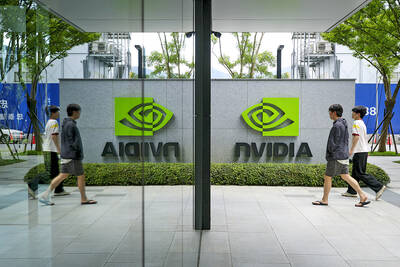
UNDER MICROSCOPE: Taiwan detained three people who allegedly conspired to buy servers in Taiwan and export them using fraudulent documentation, prosecutors said Nvidia Corp chief executive officer Jensen Huang (黃仁勳) on Saturday urged Super Micro Computer Inc to tighten up on compliance after Taiwan detained three people this week for allegedly making fraudulent declarations about artificial intelligence (AI) servers made by its US partner. The development marked the nation’s first crackdown on semiconductor smuggling, which grew after the US slapped restrictions on exports of high-end chips such as Nvidia AI accelerators to China. Nvidia is “rigorous” in explaining regulations to all of its partners, Huang told reporters after arriving in Taipei. “Ultimately Super Micro has to run their own company,” he said in response to

Nvidia Corp yesterday announced that CEO Jensen Huang (黃仁勳) would attend an employee meeting in Taipei tomorrow to celebrate the launch of the company’s Taiwan headquarters project. Huang would attend a gathering at the site of Nvidia’s planned headquarters in Beitou Shilin Technology Park (北投士林科技園區), the company said in a statement. After arriving in Taiwan on Saturday last week, Huang told reporters that he plans to meet with Quanta Computer Inc (廣達) chairman Barry Lam (林百里) and Taiwan Semiconductor Manufacturing Co (TSMC, 台積電) chairman C.C. Wei (魏哲家), and would attend the groundbreaking ceremony for Nvidia’s Taiwan headquarters tomorrow. Nvidia has not yet applied

Huawei Technologies Co (華為) said it has come up with a new pathway to shorten its gap with industry leader Taiwan Semiconductor Manufacturing Co (TSMC, 台積電), potentially achieving a breakthrough in making advanced semiconductors without cutting-edge equipment. Right now there is about a five-year gap between what TSMC is capable of and what Huawei, together with its manufacturing partner Semiconductor Manufacturing International Corp (中芯), can produce. Huawei is to start making 1.4-nanometer chips by 2031 with its own “LogicFolding” technology, Huawei semiconductor chief He Tingbo (何庭波) said in a rare public appearance during a chip conference yesterday, while TSMC has


 RSS
RSS