


The US government plans to take more equity stakes in critical minerals companies, a White House official said on Thursday, calling the once-rare move necessary to counter China’s dominance in the raw materials used in everything from semiconductors to MRI machines.
“I think they’re the norm from our perspective,” US National Energy Dominance Council executive director Jarrod Agen said at a forum in Washington. “There is a broad scope of different companies who are coming to us. They’re making the right case.”
Critical minerals such as gallium and cobalt are used in products ranging from iPhones to industrial magnets. They are also vital for defense systems, including missile guidance, radar and jet engines, as well as batteries and other technologies.
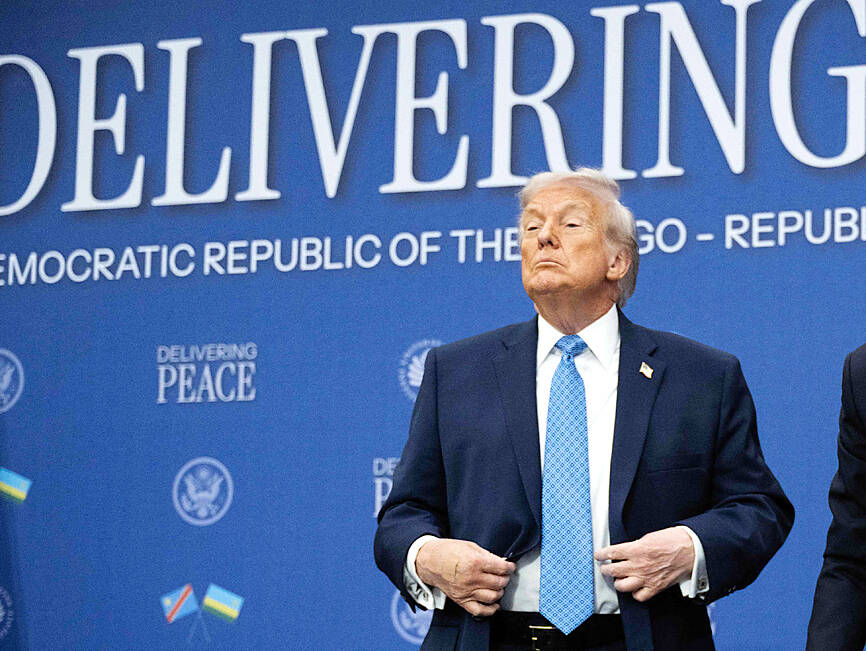
Photo: AFP
Over the past year, the administration of US President Donald Trump has spent more than US$1 billion to take stakes in critical minerals and mining companies.
Among the deals are US$400 million in exchange for a 15 percent stake in MP Materials Corp, with the deal announced in July, US$670 million in exchange for a stake in magnet producer Vulcan Elements Inc and US$35.6 million for a 10 percent stake in Canadian minerals explorer Trilogy Metals Inc.
The Trump administration in September announced that it was acquiring a stake in Lithium Americas Corp, which is developing the largest lithium deposit in the country, as part of a deal to restructure a US$2.23 billion loan that the Canadian company held with the US Department of Energy.
Agen, in a brief interview, declined to specify what company could be next.
The strategy of investing taxpayer dollars in companies that the administration has deemed essential to national security comes as the US’ reliance on China for the crucial materials has become a flash point in a trade dispute.
Beijing responded to US export restrictions by curbing shipments of rare earths, a move that briefly disrupted global supplies before China eased the limits after Washington lifted its countermeasures.
“We’re literally buying equity, getting equity in companies to give the backing of the US, because that’s the only way we’re going to catch up with China on these things,” Agen said in his remarks at the American Growth Summit, which was sponsored by companies such as Citigroup Inc and Nvidia Corp.
“They know the government is backing us,” he said. “No one wants to mess with President Trump and so we can actually get the materials.”
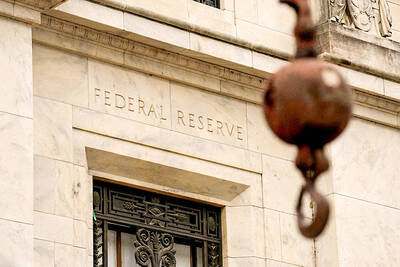
DAMAGE REPORT: Global central banks are assessing war-driven inflation risks as the law of unintended consequences careens around the world, spiking oil prices Central banks from Washington to London and from Jakarta to Taipei are about to make their first assessments of economic damage after more than two weeks of conflict between the US and Iran. Decisions this week encompassing every member of the G7 and eight of the world’s 10 most-traded currency jurisdictions are likely to confirm to investors that the specter of a new inflation shock is already worrying enough to prompt heightened caution. The US Federal Reserve is widely expected to do exactly what everyone anticipated weeks ahead of its March 17-18 policy gathering: hold rates steady. The narrative surrounding that
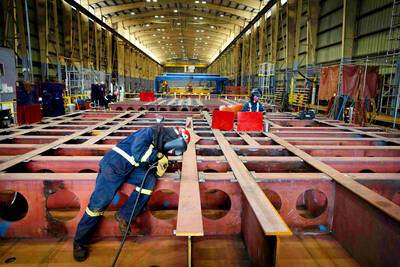
At a massive shipyard in North Vancouver, Canadian workers grind metal beams for a powerful new icebreaker crucial to cementing the country’s presence in the increasingly contested arctic. Icebreakers are specialized, expensive vessels able to navigate in the frozen far north. And “this is the crown jewel,” said Eddie Schehr, vice president of production at the Seaspan shipyard. For Canadian Prime Minister Mark Carney, who heads to Norway next Friday to observe arctic defense drills involving troops from 14 NATO states, Canada’s extreme north has emerged as a strategic priority. “Canada is and forever will be an Arctic nation,” he said ahead of

Chinese entrepreneur Frank Gao used to spend long hours running his social media accounts but now outsources the chore to artificial intelligence (AI) agent tool OpenClaw, which is taking China by storm despite official warnings over cybersecurity. OpenClaw, created in November by an Austrian coder, differs from bots such as ChatGPT because it can execute real-life tasks such as sending e-mails, organizing files or even booking flight tickets. “Since January, I’ve spent hours on the lobster every day,” Gao said in an interview, referring to OpenClaw’s red crustacean mascot. “We’re family.” After downloading OpenClaw, users connect it to artificial intelligence models of their
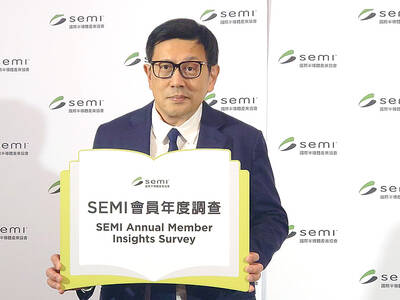
PRICE HIKES: The war in the Middle East would not significantly disrupt supply in the short term, but semiconductor companies are facing price surges for materials Taiwan’s semiconductor companies are not facing imminent supply disruptions of essential chemicals or raw materials due to the war in the Middle East, but surges in material costs loom large, industry association SEMI Taiwan said yesterday. The association’s comments came amid growing concerns that supplies of helium and other key raw materials used in semiconductor production could become a choke point after Qatar shut down its liquefied natural gas (LNG) production and helium output earlier this month due to the conflict. Qatar is the second-largest LNG supplier in the world and accounts for about 33 percent of global helium output. Helium is


 RSS
RSS