


Taiwan and Japan yesterday signed two deals designed to enhance cooperation in customs and digital trade during an annual bilateral conference held in Taipei.
The two pacts — one memorandum of understanding (MOU) on regional customs cooperation and a digital trade agreement — were signed by Taiwan-Japan Relations Association (TJRA) chairman Su Jia-chyuan (蘇嘉全) and Japan-Taiwan Exchange Association (JTEA) chairman Shuzo Sumi at the 49th Taiwan-Japan Economic and Trade Conference.
TJRA and JTEA represent Taipei and Tokyo’s interests in each other’s countries in the absence of official diplomatic ties.

Photo: CNA
According to the two organizations, the customs cooperation MOU will facilitate collaboration between the Port of Kaohsiung and the Port of Kobe to improve customs clearance.
The digital trade cooperation deal aims to create “a free, open and safe digital trade environment to promote closer cooperation for consumers and businesses,” the organizations said.
Speaking at the opening ceremony, Su accused Beijing of engaging in ongoing economic coercion against Tokyo over recent remarks by Japanese Prime Minister Sanae Takaichi about Japan’s potential response to a Taiwan contingency.
Takaichi said recently that a Chinese attack on Taiwan would count as a situation threatening Japan’s survival and thus could warrant a military response from Tokyo, which drew an angry reaction from Beijing.
Su said that China has repeatedly taken similar actions against Taiwan, citing China’s 2021 ban on Taiwanese pineapple imports, which many in Taiwan believed was politically motivated, as an example.
He added that in moments like these, Taiwan and Japan look for ways to show solidarity with each other.
In an apparent reference to Beijing’s retaliatory actions, Sumi said some actor “is trying to use military and other means of coercion to unilaterally change the status quo.”
China’s actions against Japan have included travel and study advisories, a ban on Japanese marine products, and multiple rounds of military drills.
Sumi, who attended the conference for the first time since taking office as JTEA head in June, added that Taiwan is Japan’s “important partner and cherished friend” with shared democratic values and close people-to-people ties.
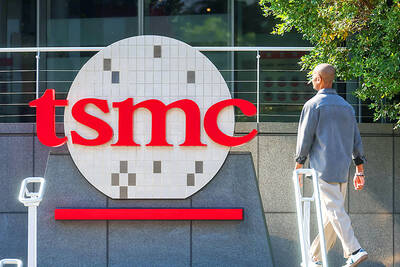
Shares of contract chipmaker Taiwan Semiconductor Manufacturing Co (TSMC, 台積電) came under pressure yesterday after a report that Apple Inc is looking to shift some orders from the Taiwanese company to Intel Corp. TSMC shares fell NT$55, or 2.4 percent, to close at NT$2,235 on the local main board, Taiwan Stock Exchange data showed. Despite the losses, TSMC is expected to continue to benefit from sound fundamentals, as it maintains a lead over its peers in high-end process development, analysts said. “The selling was a knee-jerk reaction to an Intel-Apple report over the weekend,” Mega International Investment Services Corp (兆豐國際投顧) analyst Alex Huang
Taiwan Semiconductor Manufacturing Co (TSMC, 台積電) is expected to remain Apple Inc’s primary chip manufacturing partner despite reports that Apple could shift some orders to Intel Corp, industry experts said yesterday. The comments came after The Wall Street Journal reported on Friday that Apple and Intel had reached a preliminary agreement following more than a year of negotiations for Intel to manufacture some chips for Apple devices. Taiwan Institute of Economic Research (台灣經濟研究院) economist Arisa Liu (劉佩真) said TSMC’s advanced packaging technologies, including integrated fan-out and chip-on-wafer-on-substrate, remain critical to the performance of Apple’s A-series and M-series chips. She said Intel and Samsung
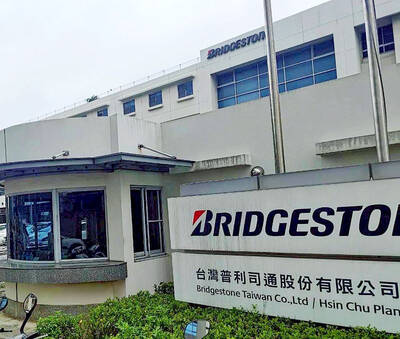
TRANSITION: With the closure, the company would reorganize its Taiwanese unit to a sales and service-focused model, Bridgestone said Bridgestone Corp yesterday announced it would cease manufacturing operations at its tire plant in Hsinchu County’s Hukou Township (湖口), affecting more than 500 workers. Bridgestone Taiwan Co (台灣普利司通) said in a statement that the decision was based on the Tokyo-based tire maker’s adjustments to its global operational strategy and long-term market development considerations. The Taiwanese unit would be reorganized as part of the closure, effective yesterday, and all related production activities would be concluded, the statement said. Under the plan, Bridgestone would continue to deepen its presence in the Taiwanese market, while transitioning to a sales and service-focused business model, it added. The Hsinchu
Taiwan Semiconductor Manufacturing Co (TSMC, 台積電) has approved a capital budget of US$31.28 billion for production expansion to meet long-term development needs during the artificial intelligence (AI) boom. The company’s board meeting yesterday approved the capital appropriation plan for purposes such as the installation of advanced technology capacity and fab construction, the world’s largest contract chipmaker said in a statement. At an earnings conference last month, TSMC forecast that its capital expenditure for this year would be at the higher end of the US$52 billion to US$56 billion range it forecast in January in response to robust demand for 5G, AI and


 RSS
RSS