


Property transfers totaled about 15,919 units across the six special municipalities last month, down 6.3 percent from a month earlier and 19.7 percent from a year earlier, data compiled by local land administrations showed on Monday.
The figure marked the third-lowest monthly tally this year, with transactions supported mainly by genuine demand as restrictive mortgage terms continued to sideline investors, real-estate brokers said.
Among the six municipalities, transfers fell 11.7 percent year-on-year to 1,977 units in Taipei, dropped 12.7 percent to 4,427 in New Taipei City and slumped 24.4 percent to 3,906 in Taoyuan. They also plunged 20 percent to 4,391 in Taichung, declined 16.9 percent to 1,906 in Tainan and tumbled 29.8 percent to 3,217 in Kaohsiung, the data showed.
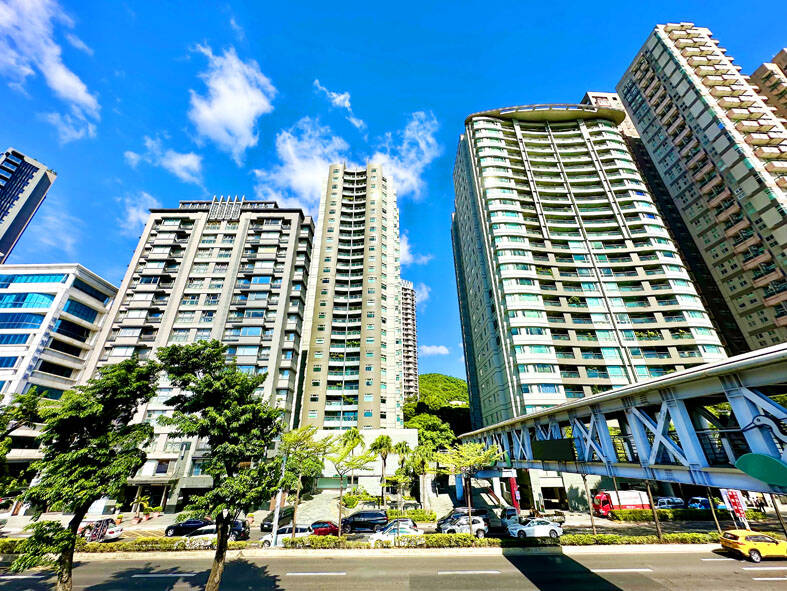
Photo: Hsu Yi-ping, Taipei Times
Sentiment among first-time buyers and upgraders has improved modestly on the back of the limited loosening of credit rules and the traditional fourth-quarter sales peak, Evertrust Rehouse Co (永慶房屋) said on Monday.
The Financial Supervisory Commission in September exempted first-home buyers and relocators from central bank lending restrictions designed to curb real-estate credit growth.
However, slower new-home handovers offset a mild pickup in existing-home transactions, Evertrust deputy research head Chen Chin-ping (陳金萍) said.
With expectations of price corrections deepening, buyers hold the upper hand, she said.
Last month’s figures also indicate that the market is showing early signs of stabilizing, as the pace of annual decline narrowed, Sinyi Realty Inc (信義房屋) said.
Transfers in the first 11 months of this year reached 184,704 units in the six major municipalities, a 26.1 percent drop from a year earlier, the data showed.
“This year’s slump has been unusually sharp and such dramatic swings are rare without major non-market intervention,” Sinyi chief researcher Tseng Ching-der (曾敬德) said, adding that a full-year tally of about 260,000 units would make this year the weakest in eight years.
The narrowing month-on-month decline is a positive sign, Tseng said, adding that next year’s outlook appears more constructive amid improving economic sentiment and expectations of steady liquidity.
However, areas that have experienced steep price gains could stay under correction pressure as buyers become more cautious, he said.
The central bank is scheduled to hold its quarterly board meeting on Dec. 18. It is expected to review property-lending rules at the meeting, and evaluate whether current curbs adequately address banks’ growing exposure to real estate and are helping to prevent a housing bubble.
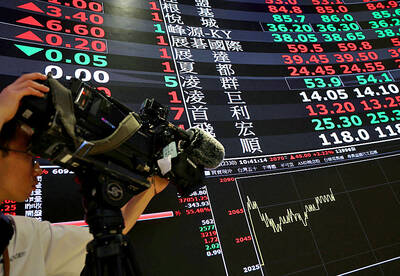
After several years flying high as Asia’s best Nvidia Corp proxy, Taiwan Semiconductor Manufacturing Co (TSMC, 台積電) is increasingly vying with other artificial intelligence (AI) stocks for investor attention. Stock traders are chasing a wider array of beneficiaries as mainstream usage of AI creates demand for hardware beyond the most-advanced chips TSMC makes for Nvidia. Subthemes from the deepening memory crunch to advances in robotics are also luring bids. At the same time, investment caps on single stocks are pushing funds to diversify, while retail investors long familiar with TSMC through its US depositary receipts are being offered a broader set of

UNDER MICROSCOPE: Taiwan detained three people who allegedly conspired to buy servers in Taiwan and export them using fraudulent documentation, prosecutors said Nvidia Corp chief executive officer Jensen Huang (黃仁勳) on Saturday urged Super Micro Computer Inc to tighten up on compliance after Taiwan detained three people this week for allegedly making fraudulent declarations about artificial intelligence (AI) servers made by its US partner. The development marked the nation’s first crackdown on semiconductor smuggling, which grew after the US slapped restrictions on exports of high-end chips such as Nvidia AI accelerators to China. Nvidia is “rigorous” in explaining regulations to all of its partners, Huang told reporters after arriving in Taipei. “Ultimately Super Micro has to run their own company,” he said in response to
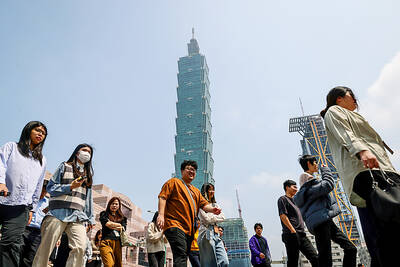
TECH RELIANCE: Growth is increasingly reflecting an unequal K-shaped distribution, where technology sectors outperform and other industries struggle, an expert said Standard Chartered Bank has significantly raised its forecast for Taiwan’s economic growth to 9.5 percent this year, up from 7.6 percent previously, citing surging artificial intelligence (AI) demand driving exports, semiconductor production and investment. The upgrade reflects a sustained AI supercycle that continues to fuel demand for advanced chips and technology infrastructure, which form the backbone of Taiwan’s exports, the bank said in a report this week. “We raise our 2026 growth forecast to reflect a much stronger-than-expected first-quarter GDP figure,” Standard Chartered senior economist for greater China and Asia Tommy Wu (胡東安) said in the report. Driven largely by a 35.3 percent
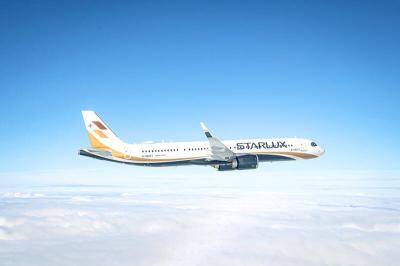
Two of Taiwan’s international carriers, Starlux Airlines Co (星宇航空) and EVA Airways Corp (長榮航空), have retained the five-star airline rating awarded by international airline review organization Skytrax. Starlux was awarded the distinction for a second consecutive year, while EVA Air received it for the 11th straight year, Skytrax said in statements released yesterday and on Thursday last week, respectively. The five-star rating is considered one of the airline industry's highest honors and is awarded following professional audits of airline product and frontline service standards, Skytrax said. The ratings are based on in-depth assessments using unified global quality standards rather than customer review scores


 RSS
RSS