


Manufacturing activity continued to expand last month, fueled by strong demand for electronic components and power equipment, even as firms remained cautious about medium to long-term prospects, the Chung-Hua Institution for Economic Research (CIER, 中經院) said yesterday.
The manufacturing purchasing managers’ index (PMI) rose 1.1 percentage points to 51.4, marking the second month of expansion, the think tank said.
“Manufacturers are still wary about their business outlook, but their pessimism has eased,” CIER president Liu Hsien-ming (連賢明) told reporters.
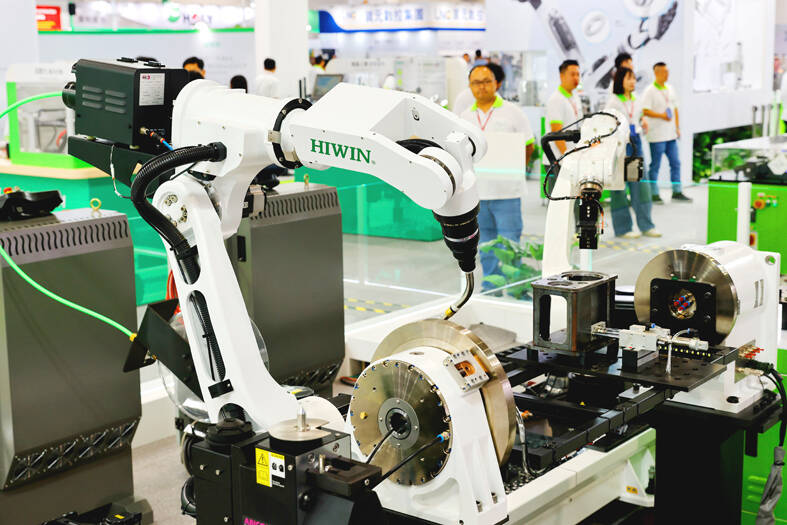
Photo: Ritchie B. Tongo, EPA
PMI surveys gauge the health of the manufacturing sector, with readings above 50 signaling expansion and those below 50 suggesting contraction.
The upturn was broad, except among firms supplying basic materials, which continued to lag, the monthly survey found.
While shortages and the rising prices of key components sustained production and hiring — with the indices at 50.9 and 52.2 respectively — growth in new orders and output was slower than the previous month, the institute said.
Inventories at downstream clients remained low at 45.5 and unfilled orders continued to contract to 43.6, indicating that end-market demand has yet to fully recover, it said.
CIER researcher Chen Shin-hui (陳馨蕙) said the demand forecasts of some clients for next year, combined with short-term rush orders for restocking, supported a second month of expansion in new orders and production, but added that uncertainty in long-term demand limited further acceleration.
The impact of US tariffs has eased for some sectors, and earlier concerns about a sharp drag on second-half demand have not materialized, Chen said.
However, Lien said concerns over US tariffs would persist until Taiwan finishes its trade negotiations with the US, adding that a 15 percent tariff rate would put Taiwan on comparable footing with Japan and South Korea.
The six-month outlook across major industries rose 3.9 points to 45.4, the strongest showing since April. The weak sentiment was in sharp contrast to Taiwan’s robust export performance, driven by strong demand for artificial intelligence chips and servers.
Nonmanufacturing activity held resilient, with the nonmanufacturing index (NMI) climbing 1.4 points to 55.8 last month, reflecting a seasonal sales peak and a rebound in manufacturing-linked demand.
The Double 11 Singles’ Day shopping festival, travel fairs, year-end conventions and improving car sales helped keep the sector positive, Lien said.
Still, service capacity remains underutilized, with some firms relying on existing staff to meet short-term seasonal demand.
The six-month outlook for the NMI rose 5 points to 47.5, its highest since April, but was still in contraction territory.
Consumer spending is expected to benefit from the government’s NT$10,000 cash handouts, which were distributed last month and are claimable until early next year, the CIER said.
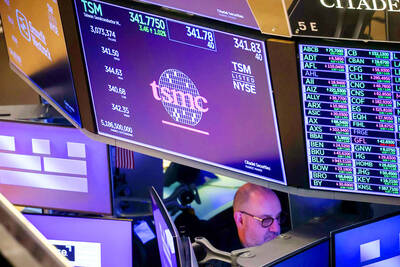
STRONG INTEREST: Analysts have pointed to optimism in TSMC’s growth prospects in the artificial intelligence era as the cause of the rising number of shareholders The number of people holding shares of chipmaker Taiwan Semiconductor Manufacturing Co (TSMC, 台積電) hit a new high last week despite a decline in its stock price, the Taiwan Depository and Clearing Corp (TDCC, 台灣集保) said. The number of TSMC shareholders rose to 2.46 million as of Friday, up 75,536 from a week earlier, TDCC data showed. The stock price fell 1.34 percent during the same week to close at NT$1,840 (US$57.55). The decline in TSMC’s share price resulted from volatility in global tech stocks, driven by rising international crude oil prices as the war against Iran continues. Dealers said
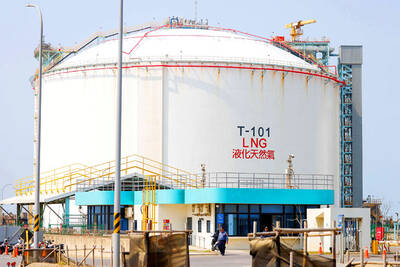
Taiwan’s natural gas supply remains stable through the end of May, despite rising concerns about potential disruptions to Qatari liquefied natural gas (LNG) supplies due to escalating conflicts in the Middle East, the Ministry of Economic Affairs said yesterday. The ministry in a statement said that Taiwan has completed preparations for natural gas supply and shipping schedules through the end of May. It has also made plans to increase natural gas imports from regions outside the Middle East in June to ensure a stable supply, it added. Taiwan sources natural gas from 14 countries and is not solely dependent on the Middle East,
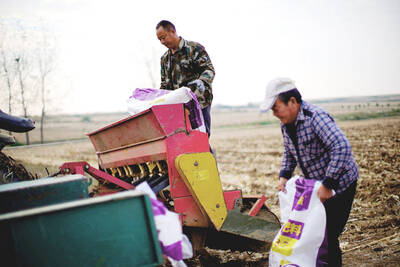
China is clamping down on fertilizer exports to protect its domestic market, industry sources said, putting an additional strain on global markets that were already grappling with shortages caused by the US-Israeli war on Iran. China is among the largest fertilizer exporters — shipping more than US$13 billion of it last year — and it has a history of controlling exports to keep prices low for farmers. Shipments through the war-blocked Strait of Hormuz account for about one-third of the sea-borne supply. This month, Beijing banned exports of nitrogen-potassium fertilizer blends and certain phosphate varieties, sources said. The ban, which has not

Grab Holdings Ltd agreed to buy Delivery Hero SE’s Foodpanda operations in Taiwan for US$600 million, a deal that marks its first foray outside of its Southeast Asian base. The cash acquisition will allow Grab to expand into 21 cities across Taiwan, the Singapore-based ride-hailing and delivery company said in a statement yesterday. Grab expects the transaction to be completed in the second half, subject to regulatory approvals. The purchase will give Grab a presence on the island of about 23 million people, helping it to expand beyond its intensely competitive home market. Grab has seen growth slow dramatically as it takes


 RSS
RSS