


Taiwan’s life insurers are issuing US dollar bonds at a record pace to build capital buffers and help them avoid adding to currency mismatch risks that have triggered billions in losses.
Taiwanese insurance companies have sold more than US$1.8 billion of subordinated debt in Taiwan and Singapore so far this year, closing in on last year’s record, according to Bloomberg-compiled data.
Despite it being costlier to raise funds in the greenback, the insurers are likely to step up the pace next year to comply with higher capital requirements, and better match duration and currency imbalances of assets and liabilities.
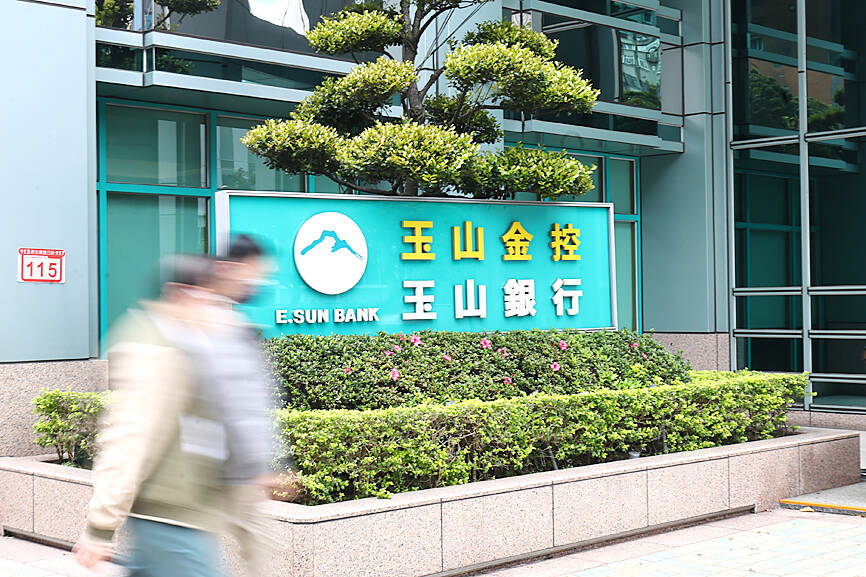
Photo: CNA
“There could be an increase in issuance next year compared to this year, as there may be some new names coming to the market,” said Nicholas Yap, head of Asia credit desk analysts at Nomura Holdings Inc in Singapore.
The dramatic spike of the New Taiwan dollar in May has drawn heightened scrutiny on insurers, who hold US$700 billion in foreign assets, as exchange rate volatility and rising hedging costs weigh on profitability, and raise concerns about their financial health.
This month, Cathay Life Insurance Co (國泰人壽) approved up to US$1 billion in new debt to be issued in Singapore within a year. Taiwan Life Insurance Co (台灣人壽) completed setting up its offshore borrowing unit, while E.Sun Financial Holding Co (玉山金控) said the insurer it is acquiring plans to issue at least US$100 million of dollar bonds next year.
Taiwan’s US$1 trillion insurance industry needs to build up assets ahead of a sectorwide shift to an accounting regime with stricter financial standards. The new rules are set to take effect in January.
“Beyond the major players, mid-sized insurers with stable earnings should also retain flexibility to raise funds via US dollar-denominated subordinated debt over the coming years,” said Terrence Wong (王長泰), a senior director covering Asia Pacific insurance ratings at Fitch Ratings in Hong Kong.
Taiwan’s regulator only opened the overseas fundraising channel for the insurers in March last year, and companies have since been working to establish the necessary processes to issue bonds abroad.
The vast majority of the insurers’ US dollar notes have been sold in Singapore to foreign buyers — including asset managers, pensions and retirement funds — through special-purpose vehicles.
“The bonds have attracted foreign investors with their reasonably attractive yields,” said Serene Hsieh (謝雅瑛), a credit analyst at Taiwan Ratings Corp (中華信評). “These are also relatively new names in the global bond market, offering additional diversification for investors.”
The US dollar bonds could in turn help Taiwan’s insurers broaden their investor mix — although at a cost. Since 2023, the benchmark 10-year US Treasury yield has consistently stood at least 2 percentage points above the comparable Taiwanese counterpart. In other words, borrowing in NT dollars is much cheaper.
Currency headwinds have also weighed on some of Taiwanese insurers’ US dollar bonds, particularly those issued by smaller and weaker firms, which are trading at relatively wider spreads, Yap said.
“In an environment where Asia credit spreads are trading quite tight, this stands out,” he said.
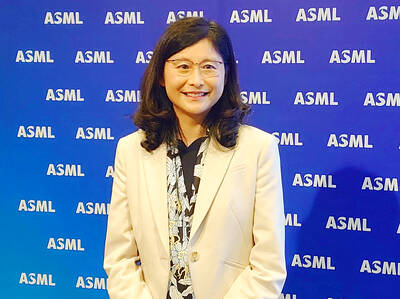
Netherlands-based semiconductor equipment supplier ASML Holding NV yesterday said that it is planning to hire an additional 1,000 people in Taiwan this year in response to growing demand from clients. ASML had previously planned to recruit 600 people this year, but that the plan has been adjusted upward, ASML vice president and ASML Taiwan general manager Grace Wang (汪佳慧) told reporters. ASML has a workforce of more than 4,500 in Taiwan, accounting for about 10 percent of its global total, Wang said. This year’s recruitment campaign would focus on adding people in the customer support, manufacturing and supply chain domains to assist ASML
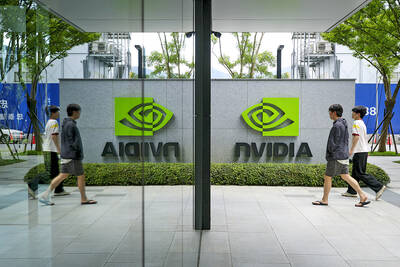
UNDER MICROSCOPE: Taiwan detained three people who allegedly conspired to buy servers in Taiwan and export them using fraudulent documentation, prosecutors said Nvidia Corp chief executive officer Jensen Huang (黃仁勳) on Saturday urged Super Micro Computer Inc to tighten up on compliance after Taiwan detained three people this week for allegedly making fraudulent declarations about artificial intelligence (AI) servers made by its US partner. The development marked the nation’s first crackdown on semiconductor smuggling, which grew after the US slapped restrictions on exports of high-end chips such as Nvidia AI accelerators to China. Nvidia is “rigorous” in explaining regulations to all of its partners, Huang told reporters after arriving in Taipei. “Ultimately Super Micro has to run their own company,” he said in response to

Nvidia Corp yesterday announced that CEO Jensen Huang (黃仁勳) would attend an employee meeting in Taipei tomorrow to celebrate the launch of the company’s Taiwan headquarters project. Huang would attend a gathering at the site of Nvidia’s planned headquarters in Beitou Shilin Technology Park (北投士林科技園區), the company said in a statement. After arriving in Taiwan on Saturday last week, Huang told reporters that he plans to meet with Quanta Computer Inc (廣達) chairman Barry Lam (林百里) and Taiwan Semiconductor Manufacturing Co (TSMC, 台積電) chairman C.C. Wei (魏哲家), and would attend the groundbreaking ceremony for Nvidia’s Taiwan headquarters tomorrow. Nvidia has not yet applied
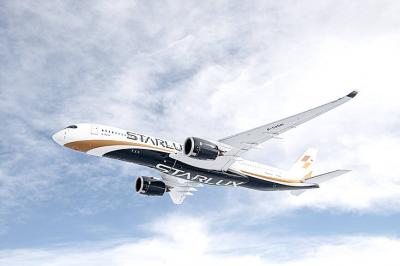
Starlux Airlines Co (星宇航空) today unveiled a long-haul network expansion plan at a shareholders’ meeting in Taipei, including direct flights to Barcelona, Spain, and Zurich, Switzerland, as well as a service connecting Taipei, Sydney and New Zealand. Starlux is to become the first Taiwanese carrier to offer non-stop services to the two European cities, while the inaugural oceanic route is expected to expand transit opportunities within the Australia-New Zealand market, Starlux said. Flight services to Chicago, Dallas, Washington and New York are under evaluation, the airline added. Prior to the shareholders’ meeting, the airline earlier this year announced that it would be


 RSS
RSS