


MediaTek Inc (聯發科) shares posted their best week since 2002, as artificial intelligence (AI) advances at its client Google help reshape the growth outlook for the Taiwanese chip designer.
The stock yesterday rose for a fifth-straight day in Taipei, taking its weekly gain to 22 percent, on investor enthusiasm over Google’s latest Gemini model and AI chip deals.
MediaTek has reportedly partnered with the Alphabet Inc unit on design of tensor processing units (TPUs), seen as a potential rival to Nvidia Corp chips in AI applications.
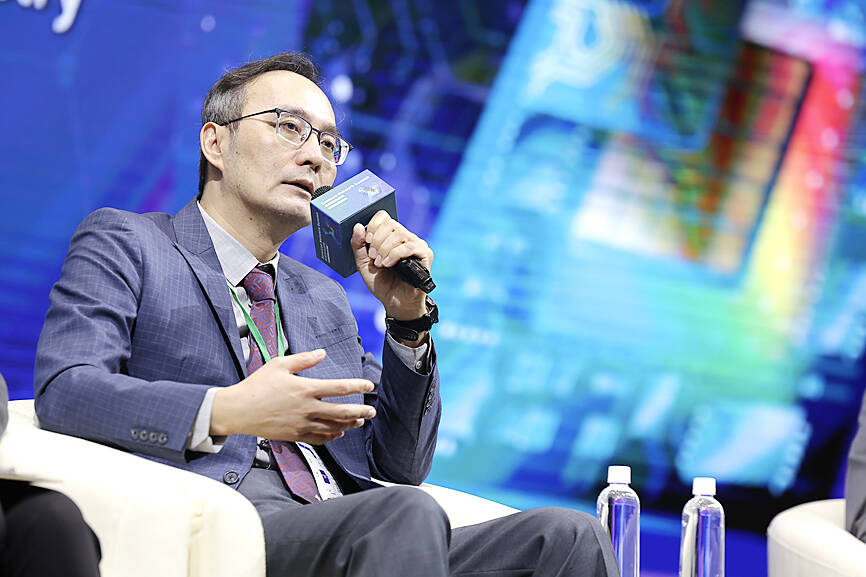
Photo: CNA
The stock price of MediaTek rallied 4.1 percent to NT$1,395 yesterday, ending the week 21.3 percent higher.
Known for its smartphone chips, MediaTek has suffered from a cloudy outlook for end-product demand, as well as margin pressure due to competition and high development costs.
The AI news has brought relief for the shares, which are still down about 2 percent on the year.
China business remains tough into next year, but “Google TPU upside should offset the smartphone headwind in the longer term,” Morgan Stanley analysts Charlie Chan (詹家鴻) and Daniel Yen (顏志天) said.
They upgraded the stock to overweight from equal-weight on Thursday.
The early days of AI centered on the training of large language models (LLM), which requires the massive computing power provided by graphic processing units such as those from Nvidia.
The shift in focus to inference — or how LLMs respond to user queries — is putting a spotlight on application-specific integrated circuits (ASIC), such as TPUs.
UBS Group AG analysts led by Sunny Lin (林莉鈞) raised their estimate for MediaTek’s sales contribution from TPUs in 2027 to US$4 billion from US$1.8 billion.
The analysts see the chips accounting for 20 percent of the company’s operating profit by 2028, “depending on execution by MediaTek and Google,” they wrote in a note on Thursday.
Part of this week’s excitement was due to news that Meta Platforms Inc is in discussions to use Google TPUs in data centers in 2027.
UBS sees further potential upside for MediaTek from additional ASIC projects with Meta.
The sell-side overall is bullish on MediaTek, with 23 buy recommendations, 10 holds and no sells. The consensus price target projects a further 9 percent rise in the stock over the next year.
In terms of future AI stock investing, Macquarie Group Ltd analysts including Arthur Lai said they “lean more” toward MediaTek and other Google partners over the Nvidia supply chain.
“We view the current AI surge as less a speculative bubble, but rather a necessary, capital-intensive build-out of a new, foundational technology layer,” they wrote in a report this week.
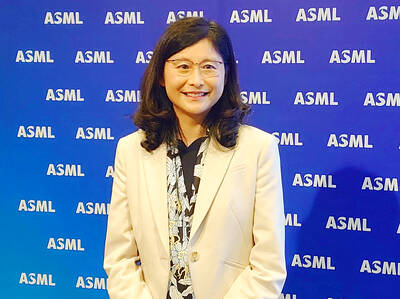
Netherlands-based semiconductor equipment supplier ASML Holding NV yesterday said that it is planning to hire an additional 1,000 people in Taiwan this year in response to growing demand from clients. ASML had previously planned to recruit 600 people this year, but that the plan has been adjusted upward, ASML vice president and ASML Taiwan general manager Grace Wang (汪佳慧) told reporters. ASML has a workforce of more than 4,500 in Taiwan, accounting for about 10 percent of its global total, Wang said. This year’s recruitment campaign would focus on adding people in the customer support, manufacturing and supply chain domains to assist ASML
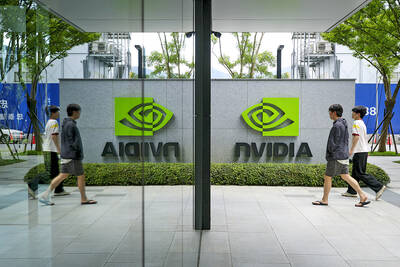
UNDER MICROSCOPE: Taiwan detained three people who allegedly conspired to buy servers in Taiwan and export them using fraudulent documentation, prosecutors said Nvidia Corp chief executive officer Jensen Huang (黃仁勳) on Saturday urged Super Micro Computer Inc to tighten up on compliance after Taiwan detained three people this week for allegedly making fraudulent declarations about artificial intelligence (AI) servers made by its US partner. The development marked the nation’s first crackdown on semiconductor smuggling, which grew after the US slapped restrictions on exports of high-end chips such as Nvidia AI accelerators to China. Nvidia is “rigorous” in explaining regulations to all of its partners, Huang told reporters after arriving in Taipei. “Ultimately Super Micro has to run their own company,” he said in response to

Nvidia Corp yesterday announced that CEO Jensen Huang (黃仁勳) would attend an employee meeting in Taipei tomorrow to celebrate the launch of the company’s Taiwan headquarters project. Huang would attend a gathering at the site of Nvidia’s planned headquarters in Beitou Shilin Technology Park (北投士林科技園區), the company said in a statement. After arriving in Taiwan on Saturday last week, Huang told reporters that he plans to meet with Quanta Computer Inc (廣達) chairman Barry Lam (林百里) and Taiwan Semiconductor Manufacturing Co (TSMC, 台積電) chairman C.C. Wei (魏哲家), and would attend the groundbreaking ceremony for Nvidia’s Taiwan headquarters tomorrow. Nvidia has not yet applied
Huawei Technologies Co (華為) said it has come up with a new pathway to shorten its gap with industry leader Taiwan Semiconductor Manufacturing Co (TSMC, 台積電), potentially achieving a breakthrough in making advanced semiconductors without cutting-edge equipment. Right now there is about a five-year gap between what TSMC is capable of and what Huawei, together with its manufacturing partner Semiconductor Manufacturing International Corp (中芯), can produce. Huawei is to start making 1.4-nanometer chips by 2031 with its own “LogicFolding” technology, Huawei semiconductor chief He Tingbo (何庭波) said in a rare public appearance during a chip conference yesterday, while TSMC has


 RSS
RSS