


Taiwan’s consumer confidence inched higher this month, supported by robust exports, even as sentiment toward stock investment fell to a five-month low amid concerns over a potential artificial intelligence (AI) bubble, according to a survey released yesterday by National Central University.
The consumer confidence index rose 0.69 points to 64.65, with five of six subindices hitting six-month highs.
“The broad sentiment improvement is closely linked to strong export momentum, which lent support to the economy and family finances,” said Dachrahn Wu (吳大任), head of the university’s Research Center for Taiwan Economic Development, which conducts the monthly survey.

Photo: CNA
The impressive export performance has played a major role in lifting GDP growth toward 6 percent this year, providing stability for the labor market and household consumption, Wu said.
The drop in stock investment confidence largely reflected profit-taking after the TAIEX repeatedly reached record highs last month, he said.
Meanwhile, the consumption of durable goods also rebounded, apparently aided by eased real-estate lending rules for first-time homebuyers and relocators, Wu said.
Automobile and motorcycle sales also recovered from earlier tariff-related weakness, he said.
However, Wu cautioned that uncertainties remain, including the risk of an AI-driven market bubble and Taiwan’s ongoing trade negotiations with the US.
In a related development, the government’s business climate gauge last month remained in the “yellow-red” expansion zone for a second consecutive month, indicating sustained economic growth, the National Development Council (NDC) said in a report yesterday.
The council’s composite monitoring indicator rose to 35 from a revised 34 in September, bolstered by surging equities and strong demand in the tech sector, NDC Department of Economic Development Director Chen Mei-chu (陳美菊) said.
The index of leading indicators, which projects the economic landscape over the next six months, increased 0.41 percent to 101.18, as gains in export orders, equity prices, manufacturing sentiment and money supply offset declines in construction floor areas, semiconductor equipment imports, and net hiring in the industry and services sectors, the report showed.
The coincident indicators index, which reflects current economic conditions, fell slightly to 104.85, weighed down by mild drops in industrial production, machinery and electrical imports, and manufacturing sales, even as exports, electricity use, retail and restaurant revenue, and overtime hours rose, the report showed.
Investment momentum is expected to remain strong, as semiconductor and supply-chain companies expand capacity to seize AI opportunities, Chen said.
Multinational firms are also increasing operations in Taiwan, while government-led AI initiatives and public-works projects continue at record speed, underpinning domestic demand and business confidence, she said.
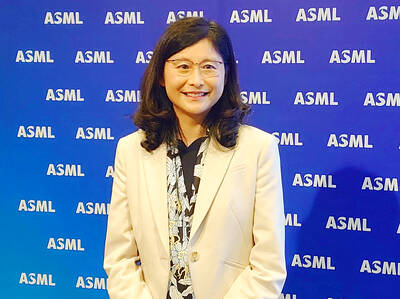
Netherlands-based semiconductor equipment supplier ASML Holding NV yesterday said that it is planning to hire an additional 1,000 people in Taiwan this year in response to growing demand from clients. ASML had previously planned to recruit 600 people this year, but that the plan has been adjusted upward, ASML vice president and ASML Taiwan general manager Grace Wang (汪佳慧) told reporters. ASML has a workforce of more than 4,500 in Taiwan, accounting for about 10 percent of its global total, Wang said. This year’s recruitment campaign would focus on adding people in the customer support, manufacturing and supply chain domains to assist ASML
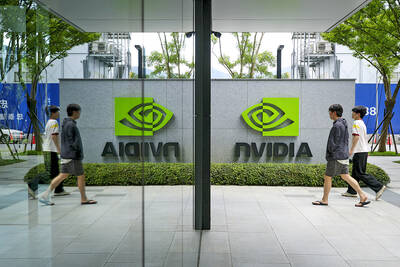
UNDER MICROSCOPE: Taiwan detained three people who allegedly conspired to buy servers in Taiwan and export them using fraudulent documentation, prosecutors said Nvidia Corp chief executive officer Jensen Huang (黃仁勳) on Saturday urged Super Micro Computer Inc to tighten up on compliance after Taiwan detained three people this week for allegedly making fraudulent declarations about artificial intelligence (AI) servers made by its US partner. The development marked the nation’s first crackdown on semiconductor smuggling, which grew after the US slapped restrictions on exports of high-end chips such as Nvidia AI accelerators to China. Nvidia is “rigorous” in explaining regulations to all of its partners, Huang told reporters after arriving in Taipei. “Ultimately Super Micro has to run their own company,” he said in response to

Nvidia Corp yesterday announced that CEO Jensen Huang (黃仁勳) would attend an employee meeting in Taipei tomorrow to celebrate the launch of the company’s Taiwan headquarters project. Huang would attend a gathering at the site of Nvidia’s planned headquarters in Beitou Shilin Technology Park (北投士林科技園區), the company said in a statement. After arriving in Taiwan on Saturday last week, Huang told reporters that he plans to meet with Quanta Computer Inc (廣達) chairman Barry Lam (林百里) and Taiwan Semiconductor Manufacturing Co (TSMC, 台積電) chairman C.C. Wei (魏哲家), and would attend the groundbreaking ceremony for Nvidia’s Taiwan headquarters tomorrow. Nvidia has not yet applied

Huawei Technologies Co (華為) said it has come up with a new pathway to shorten its gap with industry leader Taiwan Semiconductor Manufacturing Co (TSMC, 台積電), potentially achieving a breakthrough in making advanced semiconductors without cutting-edge equipment. Right now there is about a five-year gap between what TSMC is capable of and what Huawei, together with its manufacturing partner Semiconductor Manufacturing International Corp (中芯), can produce. Huawei is to start making 1.4-nanometer chips by 2031 with its own “LogicFolding” technology, Huawei semiconductor chief He Tingbo (何庭波) said in a rare public appearance during a chip conference yesterday, while TSMC has


 RSS
RSS