


Building a resilient energy supply chain is crucial for Taiwan to develop artificial intelligence (AI) technology and grow its economy, former Intel Corp chief executive officer Pat Gelsinger said yesterday.
Gelsinger, now a general partner at the US venture capital firm Playground Global LLC, was asked at a news conference in Taipei about his views on Taiwan’s hardware development and growing concern over an AI bubble.
“Today, the greatest issue in Taiwan isn’t even in the software or in architecture. It is energy,” Gelsinger said. “You are not in the position to have a resilient energy supply chain, and that, I think, puts your entire industry in a very precarious state. You need more energy resilience in Taiwan if you want to grow the economy of Taiwan.”
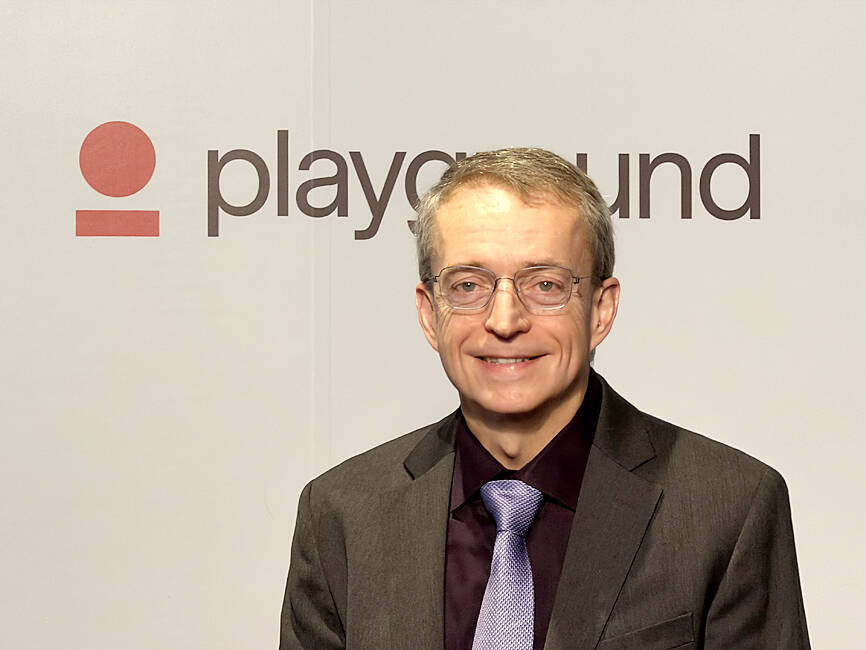
Photo: CNA
He said he did not expect the heavy AI infrastructure investments by the world’s major cloud service providers to cause an AI bubble burst soon.
“Maybe we’ll spend a couple of hundred million [US] dollars putting concrete in the base of building infrastructure. We will not spend billions of dollars on chips until we have energy availability,” he said. “And fundamentally, that becomes a buffer or a limiter.”
The AI industry is supported by solid business models to generate real profits, which is different from the dotcom bubble of 2000, he said.
Gelsinger said he is “supportive” of US President Donald Trump’s call for bringing more chip manufacturing to the US, as “everything rides on the foundations of semiconductors.”
“I believe that having more resilience of those supply chains is the best policy. For that, I’m very much supportive of the Trump administration wanting to see more built in the US,” he said. “That doesn’t mean there’s less in Taiwan. It just says more of a growth should occur in other geographies like the US.”
Gelsinger said Taiwan Semiconductor Manufacturing Co (TSMC, 台積電) should “have more advanced nodes, and more research and development in the US, because it simply is a better policy for the world.”
“It is so important to the future of the world,” he added.
Separately, former TSMC senior vice president Lo Wei-jen (羅唯仁), who retired in July, is expected to join Intel to help improve the US chipmaker’s foundry business, alarming authorities, local media reported.
The High Prosecutors’ Office yesterday opened an intellectual property theft investigation, while the Ministry of Economic Affairs approached TSMC to gain more understanding of the issue, the Chinese-language Liberty Times (sister paper of the Taipei Times) reported.
Prosecutors suspect that Lo allegedly attempted to obtain sensitive information about TSMC’s most advanced process technologies, including 2-nanometer, 16A and 14A technologies, it reported.
Lo joined TSMC in 2004 from Intel, where he held various positions in technology development and management.
TSMC and Intel declined to comment.
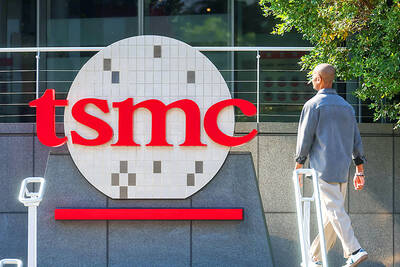
Shares of contract chipmaker Taiwan Semiconductor Manufacturing Co (TSMC, 台積電) came under pressure yesterday after a report that Apple Inc is looking to shift some orders from the Taiwanese company to Intel Corp. TSMC shares fell NT$55, or 2.4 percent, to close at NT$2,235 on the local main board, Taiwan Stock Exchange data showed. Despite the losses, TSMC is expected to continue to benefit from sound fundamentals, as it maintains a lead over its peers in high-end process development, analysts said. “The selling was a knee-jerk reaction to an Intel-Apple report over the weekend,” Mega International Investment Services Corp (兆豐國際投顧) analyst Alex Huang
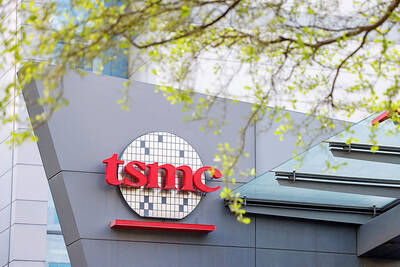
Taiwan Semiconductor Manufacturing Co (TSMC, 台積電) is expected to remain Apple Inc’s primary chip manufacturing partner despite reports that Apple could shift some orders to Intel Corp, industry experts said yesterday. The comments came after The Wall Street Journal reported on Friday that Apple and Intel had reached a preliminary agreement following more than a year of negotiations for Intel to manufacture some chips for Apple devices. Taiwan Institute of Economic Research (台灣經濟研究院) economist Arisa Liu (劉佩真) said TSMC’s advanced packaging technologies, including integrated fan-out and chip-on-wafer-on-substrate, remain critical to the performance of Apple’s A-series and M-series chips. She said Intel and Samsung
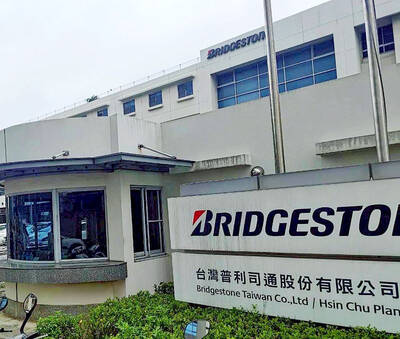
TRANSITION: With the closure, the company would reorganize its Taiwanese unit to a sales and service-focused model, Bridgestone said Bridgestone Corp yesterday announced it would cease manufacturing operations at its tire plant in Hsinchu County’s Hukou Township (湖口), affecting more than 500 workers. Bridgestone Taiwan Co (台灣普利司通) said in a statement that the decision was based on the Tokyo-based tire maker’s adjustments to its global operational strategy and long-term market development considerations. The Taiwanese unit would be reorganized as part of the closure, effective yesterday, and all related production activities would be concluded, the statement said. Under the plan, Bridgestone would continue to deepen its presence in the Taiwanese market, while transitioning to a sales and service-focused business model, it added. The Hsinchu
Taiwan Semiconductor Manufacturing Co (TSMC, 台積電) has approved a capital budget of US$31.28 billion for production expansion to meet long-term development needs during the artificial intelligence (AI) boom. The company’s board meeting yesterday approved the capital appropriation plan for purposes such as the installation of advanced technology capacity and fab construction, the world’s largest contract chipmaker said in a statement. At an earnings conference last month, TSMC forecast that its capital expenditure for this year would be at the higher end of the US$52 billion to US$56 billion range it forecast in January in response to robust demand for 5G, AI and


 RSS
RSS