


Apple Inc’s latest generation of iPhones is off to a faster start than usual, with its most basic model surging in popularity.
The iPhone 17 series outsold the iPhone 16 range by 14 percent over their respective first 10 days on sale in the US and China, Counterpoint Research said.
The standard iPhone 17 is in much higher demand than the corresponding US$799 model last year, the data showed.

Photo: Reuters
Counterpoint analysts attributed the boost to an improved display, more storage and the upgraded A19 chip.
“Consumers are resonating with the base model iPhone 17 on improved specs and upgrades,” Counterpoint senior analyst Ivan Lam (林科宇) said. “In China, sales are almost double those of the base iPhone 16 over the initial availability period — and the momentum continues to be good into October.”
At the other end of Apple’s lineup, the iPhone 17 Pro Max is also seeing strong demand, particularly in the US.
It is drawing people who got their last phone during the COVID-19 pandemic to finally upgrade, Counterpoint said.
Apple’s new top-of-the-line handset has its best cameras to date, an improved heat dissipation system and its most significant physical redesign in years.
The company still relies on the iPhone for about half of its revenue. It has managed to sustain strong sales of it despite several missteps with its development of artificial intelligence features and enhancements, and Chinese consumers are still waiting for its rollout of Apple Intelligence in the country.
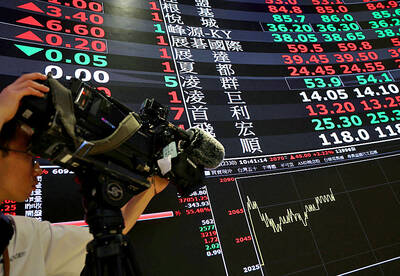
After several years flying high as Asia’s best Nvidia Corp proxy, Taiwan Semiconductor Manufacturing Co (TSMC, 台積電) is increasingly vying with other artificial intelligence (AI) stocks for investor attention. Stock traders are chasing a wider array of beneficiaries as mainstream usage of AI creates demand for hardware beyond the most-advanced chips TSMC makes for Nvidia. Subthemes from the deepening memory crunch to advances in robotics are also luring bids. At the same time, investment caps on single stocks are pushing funds to diversify, while retail investors long familiar with TSMC through its US depositary receipts are being offered a broader set of
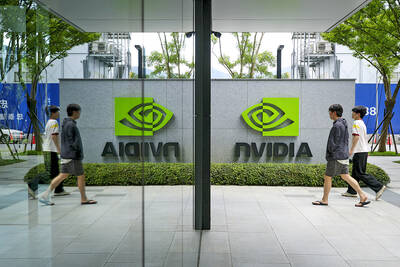
UNDER MICROSCOPE: Taiwan detained three people who allegedly conspired to buy servers in Taiwan and export them using fraudulent documentation, prosecutors said Nvidia Corp chief executive officer Jensen Huang (黃仁勳) on Saturday urged Super Micro Computer Inc to tighten up on compliance after Taiwan detained three people this week for allegedly making fraudulent declarations about artificial intelligence (AI) servers made by its US partner. The development marked the nation’s first crackdown on semiconductor smuggling, which grew after the US slapped restrictions on exports of high-end chips such as Nvidia AI accelerators to China. Nvidia is “rigorous” in explaining regulations to all of its partners, Huang told reporters after arriving in Taipei. “Ultimately Super Micro has to run their own company,” he said in response to
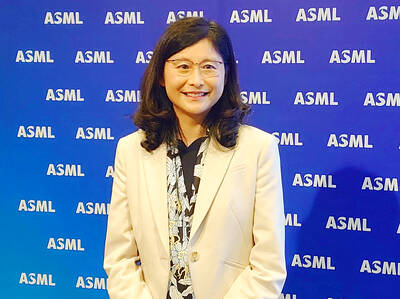
Netherlands-based semiconductor equipment supplier ASML Holding NV yesterday said that it is planning to hire an additional 1,000 people in Taiwan this year in response to growing demand from clients. ASML had previously planned to recruit 600 people this year, but that the plan has been adjusted upward, ASML vice president and ASML Taiwan general manager Grace Wang (汪佳慧) told reporters. ASML has a workforce of more than 4,500 in Taiwan, accounting for about 10 percent of its global total, Wang said. This year’s recruitment campaign would focus on adding people in the customer support, manufacturing and supply chain domains to assist ASML
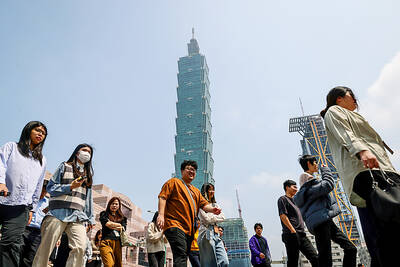
TECH RELIANCE: Growth is increasingly reflecting an unequal K-shaped distribution, where technology sectors outperform and other industries struggle, an expert said Standard Chartered Bank has significantly raised its forecast for Taiwan’s economic growth to 9.5 percent this year, up from 7.6 percent previously, citing surging artificial intelligence (AI) demand driving exports, semiconductor production and investment. The upgrade reflects a sustained AI supercycle that continues to fuel demand for advanced chips and technology infrastructure, which form the backbone of Taiwan’s exports, the bank said in a report this week. “We raise our 2026 growth forecast to reflect a much stronger-than-expected first-quarter GDP figure,” Standard Chartered senior economist for greater China and Asia Tommy Wu (胡東安) said in the report. Driven largely by a 35.3 percent


 RSS
RSS