


Taiwanese consumers have become more optimistic about the economy and financial markets this month, with sentiment toward spending and investment improving in tandem, according to a survey released yesterday by Cathay Financial Holding Co (國泰金控), the nation’s largest financial group by assets.
The monthly poll found that 67 percent of respondents expect Taiwan’s economy to grow by more than 3 percent this year, while 60 percent anticipate inflation to exceed 2 percent.
The results suggest growing public confidence as official data and corporate forecasts continue to signal solid momentum. The Directorate-General of Budget, Accounting and Statistics (DGBAS) in August projected GDP growth of 4.45 percent, but DGBAS Minister Chen Shu-tzu (陳淑姿) said last week there was scope for an upward revision toward 5 percent, citing robust export demand driven by the artificial intelligence boom.
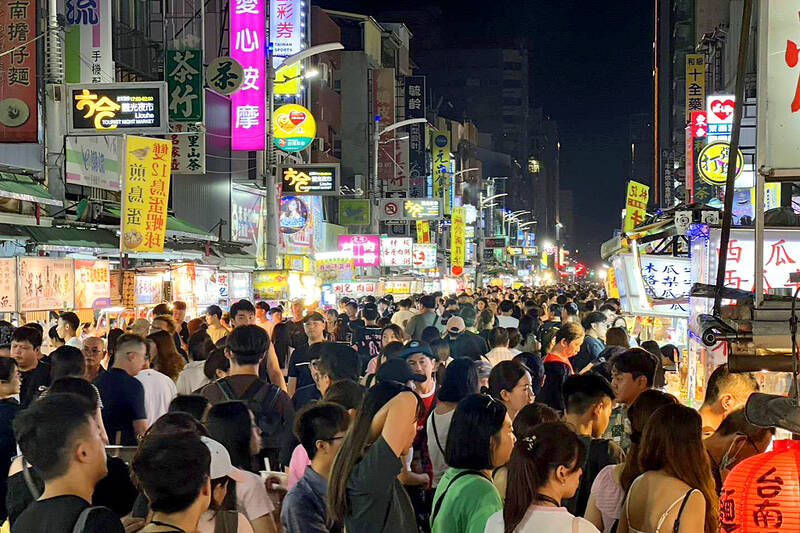
Photo courtesy of the Kaohsiung Tourism Bureau
On average, respondents forecast 3.42 percent growth — more upbeat than in previous months, yet still below the government’s projection, Cathay Financial said.
“The public appears more confident about the outlook, but remains somewhat conservative compared with official expectations,” the company said in a statement.
While optimism over growth strengthened, inflation concerns persisted. Respondents on average predicted a 2.25 percent inflation rate, higher than the government’s 1.76 percent forecast. Sixty percent said they expect price increases to surpass 2 percent, reflecting ongoing caution about living costs despite official data showing moderate inflation.
Consumer confidence in spending also rose, with interest in purchasing big-ticket and durable goods rising from the previous month.
In real-estate, more respondents said they saw opportunities to buy or sell property over the next six months, although both readings remained below the neutral level, indicating continued caution in the housing market.
Financial sentiment rebounded notably as global and local stock markets rallied following the US Federal Reserve’s rate cut last month and growing expectations of further monetary easing by major central banks.
Cathay Financial’s stock investment confidence index rose to 24.8, while its risk appetite gauge climbed to 17.2, tracking the TAIEX’s advance to record highs.
The survey also asked respondents how they plan to use the government’s upcoming NT$10,000 universal cash handout, to be distributed next month.
About 41 percent said they would spend the funds on travel and consumption — 26 percent for domestic trips and 15 percent for overseas travel. Another 32 percent plan to invest the money in stocks, mutual funds or foreign currencies, while 14 percent plan to save it.
Cathay Financial said the results suggest the handout could help bolster private consumption in the final quarter of the year, adding further momentum to an economy already buoyed by technology exports and rising household confidence.
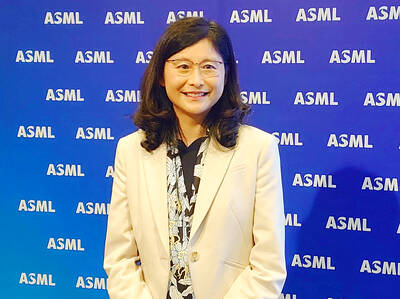
Netherlands-based semiconductor equipment supplier ASML Holding NV yesterday said that it is planning to hire an additional 1,000 people in Taiwan this year in response to growing demand from clients. ASML had previously planned to recruit 600 people this year, but that the plan has been adjusted upward, ASML vice president and ASML Taiwan general manager Grace Wang (汪佳慧) told reporters. ASML has a workforce of more than 4,500 in Taiwan, accounting for about 10 percent of its global total, Wang said. This year’s recruitment campaign would focus on adding people in the customer support, manufacturing and supply chain domains to assist ASML
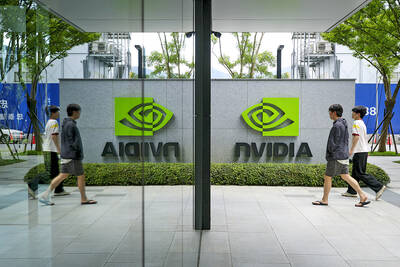
UNDER MICROSCOPE: Taiwan detained three people who allegedly conspired to buy servers in Taiwan and export them using fraudulent documentation, prosecutors said Nvidia Corp chief executive officer Jensen Huang (黃仁勳) on Saturday urged Super Micro Computer Inc to tighten up on compliance after Taiwan detained three people this week for allegedly making fraudulent declarations about artificial intelligence (AI) servers made by its US partner. The development marked the nation’s first crackdown on semiconductor smuggling, which grew after the US slapped restrictions on exports of high-end chips such as Nvidia AI accelerators to China. Nvidia is “rigorous” in explaining regulations to all of its partners, Huang told reporters after arriving in Taipei. “Ultimately Super Micro has to run their own company,” he said in response to
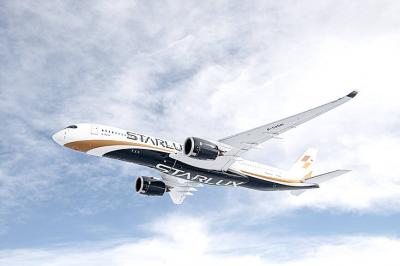
Starlux Airlines Co (星宇航空) today unveiled a long-haul network expansion plan at a shareholders’ meeting in Taipei, including direct flights to Barcelona, Spain, and Zurich, Switzerland, as well as a service connecting Taipei, Sydney and New Zealand. Starlux is to become the first Taiwanese carrier to offer non-stop services to the two European cities, while the inaugural oceanic route is expected to expand transit opportunities within the Australia-New Zealand market, Starlux said. Flight services to Chicago, Dallas, Washington and New York are under evaluation, the airline added. Prior to the shareholders’ meeting, the airline earlier this year announced that it would be

Nvidia Corp yesterday announced that CEO Jensen Huang (黃仁勳) would attend an employee meeting in Taipei tomorrow to celebrate the launch of the company’s Taiwan headquarters project. Huang would attend a gathering at the site of Nvidia’s planned headquarters in Beitou Shilin Technology Park (北投士林科技園區), the company said in a statement. After arriving in Taiwan on Saturday last week, Huang told reporters that he plans to meet with Quanta Computer Inc (廣達) chairman Barry Lam (林百里) and Taiwan Semiconductor Manufacturing Co (TSMC, 台積電) chairman C.C. Wei (魏哲家), and would attend the groundbreaking ceremony for Nvidia’s Taiwan headquarters tomorrow. Nvidia has not yet applied


 RSS
RSS