


China’s sanctions on US-linked units of shipbuilder Hanwha Ocean threaten to impact ambitious plans for shipbuilding cooperation between Seoul and Washington by disrupting supplies of Chinese equipment and materials, officials in Seoul said yesterday.
The Chinese Ministry of Commerce on Tuesday banned transactions and cooperation with Hanwha Ocean’s US-linked units, citing security risks stemming from what it said was their involvement in the US government’s “relevant investigative activities.”
Beijing announced the sanctions as the US and China began charging additional port fees on each other’s vessels, in the latest exchange in a protracted trade war ahead of a planned meeting of the two countries’ leaders.
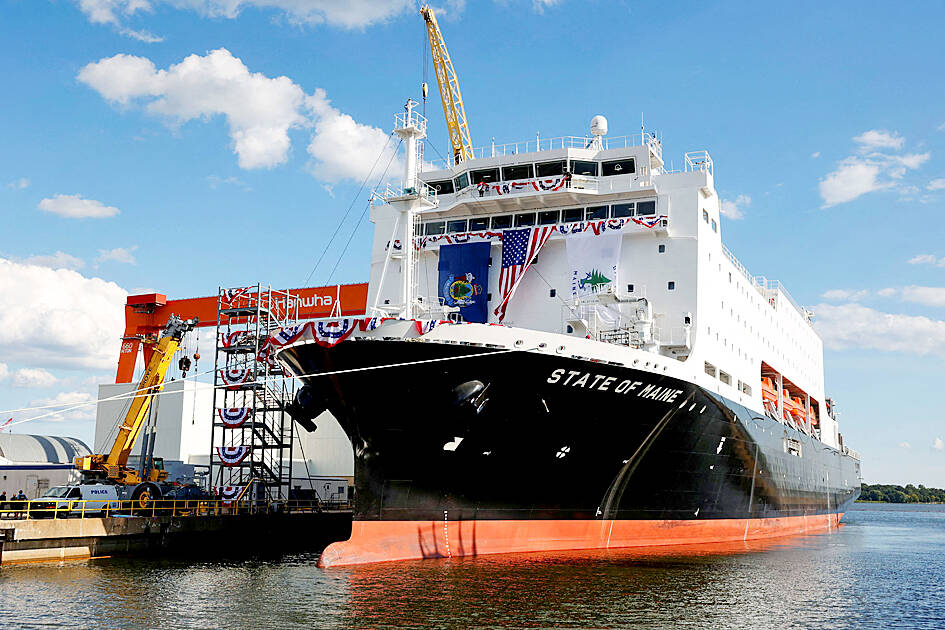
Photo: Reuters
South Korea has vowed to “Make America Shipbuilding Great Again” [MASGA] with a pledge of US$150 billion of investment in the sector to help US President Donald Trump’s push to revitalize US shipbuilding to catch up with China’s.
The decline of the US shipbuilding sector and the industries needed to support it were such that it would be impossible to supply materials and parts from within the US, officials in Seoul said.
“There is bound to be an impact,” South Korean Minister of Defense Procurement Program Administration Seok Jong-gun said.
“I don’t see how we can make all the materials and supplies for Philly Shipyard within the US,” Seok said in a parliamentary yesterday.
“So if you’re going to get a lot of things to the US from South Korea, and you have sanctions and all kinds of obstacles to doing that, I’d say there’s going to be an impact on MASGA eventually,” he said.
Hanwha also runs a shipyard in China’s eastern province of Shandong that builds modules of ship components, a company filing showed.
It supplies the modules to its shipyard in South Korea for the final assembly, it said.
While analysts said the Chinese sanctions would not have an immediate impact, they added it might be a harbinger of tougher Chinese actions that could hit South Korean shipbuilders cooperating with the US.
South Korean lawmaker Yu Yong-weon estimated the Chinese sanctions would cost Philly Shipyard US$60 million over the next two years. Yu did not give a breakdown of the estimate but cited likely disruptions of supplies to the shipyard and delayed delivery of vessels.
“This is not simply a trade issue, but a grave matter that affects our economic security and industrial supremacy,” Yu said, adding that he visited the shipyard last month.
Philadephis-based Philly Shipyard was bought by Hanwha last year and is one of five subsidiaries in the US hit by the new Chinese sanctions.
Hanwha’s South Korean competitors, HD Hyundai and Samsung Heavy Industries, are eyeing projects envisioned for rebuilding US maritime capabilities, including work to build and maintain navy vessels.
Earlier yesterday, the US Department of State lambasted the Chinese sanctions as an “irresponsible” act that interferes with a private company’s operations and undermines South Korea-US cooperation on revitalizing US shipbuilding and manufacturing.
“China’s actions ... are the latest example in a long pattern of China’s attempts to coerce [South] Korea,” a spokesperson said in a statement to Reuters.
Hanwha Ocean declined to comment on the lawmaker’s claim on losses.
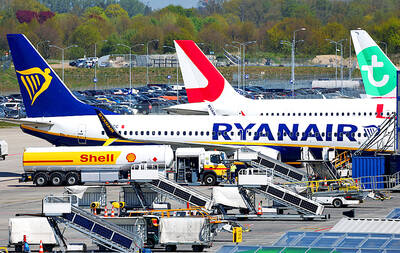
Ryanair, Transavia, Volotea and other low-cost airlines are feeling the financial pain from high jet fuel prices as a result of the Middle East war and are cutting flights. The closure of the Strait of Hormuz has taken a huge chunk of oil supplies off the market, sending the price of jet fuel soaring and triggering fears of shortages that could force airlines to cancel flights. Airlines are not waiting for a lack of supplies to react. “Travel alert: Airlines are cutting thousands of flights right now,” Travel Therapy host Karen Schaler said in an Instagram reel this past weekend.
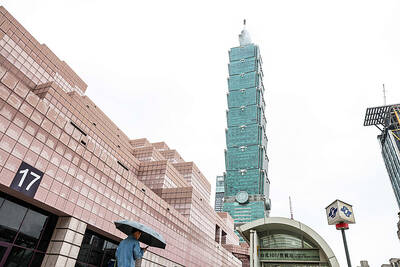
MANAGING RISKS: Taiwan has secured LNG sufficient to cover 95 percent of electricity demand for next month, UBS said, describing the government’s approach as proactive UBS Group AG has raised its forecast for Taiwan’s economic growth this year to 8 percent, up from 6.9 percent previously, and said expansion could reach as high as 8.6 percent if external energy shocks are avoided. The upgrade reflects a stronger-than-expected first-quarter performance and sustained momentum in artificial intelligence (AI)-driven exports, which UBS said are providing a firm foundation for growth despite geopolitical and energy risks. Taiwan’s GDP expanded 13.69 percent year-on-year in the first quarter, the fastest growth since the second quarter of 1987, the Directorate-General of Budget, Accounting and Statistics (DGBAS) reported on Thursday. On a seasonally
The Fair Trade Commission’s (FTC) ongoing review of Grab Holdings Ltd’s US$600 million acquisition of Foodpanda Taiwan’s operations, announced on March 23, has taken on fresh urgency as industry experts warn that the transaction could embed significant Chinese cybersecurity vulnerabilities into Taiwan’s digital infrastructure through Grab’s deep ties to autonomous-driving firm WeRide (文遠知行). Less than 16 months after the FTC blocked Uber Eats’ direct attempt to acquire Foodpanda Taiwan — citing potential combined market shares of 80 to 90 percent — the emergence of Grab as the buyer has prompted questions about whether the same competitive harm is simply being rerouted
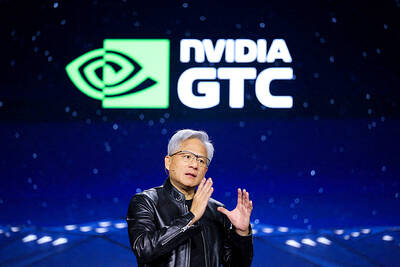
The list of Asian stocks that benefit from business partnership with Nvidia Corp is getting longer, as the region further integrates into the artificial intelligence (AI) chip giant’s business ecosystem. Just in the past week, South Korea’s LG Electronics Inc, Taiwan’s Nanya Technology Corp (南亞科技), as well as China’s Huizhou Desay SV Automotive Co (德賽西威) and Pateo Connect Technology Shanghai Corp (博泰車聯) have become the latest to rally on news of tie-ups, supply-chain participation or product collaboration with the US chip designer. Asian suppliers account for about 90 percent of Nvidia’s production costs, up from about 65 percent last year, data compiled


 RSS
RSS