


Taiwan’s top-tier wealth management market, DBS Bank Taiwan (星展台灣) announced the launch of DBS Treasures Private Client (星展頂級私人客戶), marking the completion of its ultimate wealth management blueprint.
Tailored for ultra-high-net-worth clients with assets of NT$100 million (US$3.26 million) or more, the new segment provides comprehensive services from asset allocation, wealth succession planning and exclusive privileges, empowering clients to enjoy premium services and expand their global wealth horizons.
Shee Tse Koon (許志坤), head of consumer banking and wealth management at DBS Group Holdings Ltd, said the bank has benefited from the sustained growth in Asia’s wealth management sector.
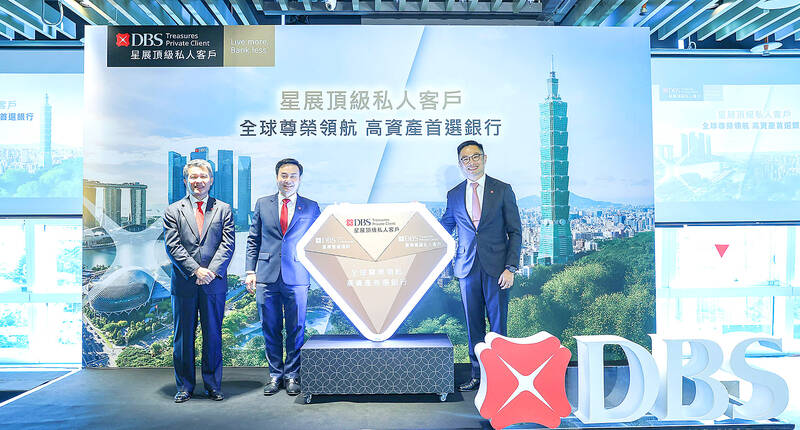
Photo courtesy of DBS Bank Taiwan
Since 2015, DBS has pursued a series of strategic mergers and integrations, while broadening its wealth management offerings and regional presence. As a result, assets under management have tripled, rising from S$142 billion to S$424 billion (US$109.56 billion to US$327.14 billion), elevating DBS Private Bank to the third-largest in Asia (excluding China) and reinforcing its leadership across the region.
Despite global uncertainty and market volatility, DBS remains optimistic about the future of its wealth management business, with ambitions to exceed S$500 billion in assets under management by next year, Shee said.
To address the diverse wealth management needs of its clients, DBS continuously leverages “Wealth Continuum” and “One Bank one-stop service.”
THE WEALTH CONTINUUM
DBS Group is committed to delivering bespoke and comprehensive wealth management solutions that accompany clients through every stage of their financial journey, from wealth accumulation and growth to succession. In addition, DBS has found that approximately 70 percent of its wealth management clients are also business owners, Shee said.
Beyond personal wealth planning, these high-net-worth clients also seek holistic support for their business and corporate financing needs. Therefore, DBS has developed its distinctive “One Bank” strategy, built on deep industry insights, an extensive Asian network and cutting-edge digital innovation.
The approach offers a seamless cross-border experience. For example, clients can apply to extend their DBS wealth management privileges to other markets where they already maintain DBS accounts, enjoying local benefits and account management fee waivers.
“PHYGITAL” WEALTH MANAGEMENT
Facing global market transformation and structural changes in high-net-worth client segments, DBS integrates cross-market resources and introduces artificial intelligence (AI) and big data. Through AI-driven market insights, dynamic portfolio optimization and personalized recommendations, DBS empowers its frontline teams to accurately analyze clients’ investment portfolios and risk management.
Last year, the group completed more than 1.2 billion AI-driven personalized nudges, helping more than 13 million clients improve their decisionmaking efficiency and make more precise and forward-looking financial and investment plans.
TAIWAN’S WEALTH MANAGEMENT POTENTIAL
Taiwan’s wealth management market is entering a pivotal phase, DBS Taiwan general manager and CEO Ng Sier Han (黃思翰) said.
Supported by the Asia Asset Management Hub and Wealth Management 2.0, the Financial Supervisory Commission estimates that Taiwan’s assets under management would strive to double to NT$60 trillion by 2030.
Wealth management has always been one of the key strategic priorities for DBS Taiwan. The launch of “DBS Treasures Private Client,” designed for clients with assets exceeding NT$100 million, marks the completion of DBS’ ultimate wealth management blueprint in Taiwan.
“DBS Treasures Private Client” plans to establish top-tier private wealth management centers across major metropolitan areas in northern, central and southern Taiwan, creating a service environment that offers privacy and exclusivity.
“‘DBS Treasures Private Client’ offers tailor-made wealth management plans from a professional team, who deeply understands clients’ asset size, risk preferences and family needs, and are committed to supporting clients’ long-term wealth growth and legacy planning objectives,” DBS Taiwan consumer banking managing director Seraph Sun (孫可基) said.
MEETING DIVERSE NEEDS
To enhance the financial resilience of high-net-worth clients, DBS plans to launch several advanced wealth management products, exclusive privileges and limited-time projects:
First, the Diversified Investment Portfolio offers diversified financial products, such as private asset funds, initial public offerings and non-investment rated bonds, and direct access trading for structured notes. Clients who enroll as Kaohsiung Asset Management Zone clients can enjoy more advanced and diversified financial services, including trust lending, premium/insurance finance, Lombard lending, and procedure for purchase of non-approved products.
Second, Exclusive Privileges include benefits such as waivers on personal financial service fees and fee exemptions for interbank transfers through domestic automated channels. Additionally, top-tier lifestyle privileges are provided, including up to eight free airport transfers annually at 12 major international airports in Asia, fast-track immigration, high-end medical examinations, private art tours and platinum concierge services.
Third, effective from today until Dec. 17, “DBS Treasures Private Clients” exclusively enjoy a six-month, 2 percent New Taiwan dollar high-rate time deposit (maximum placement amount of NT$30 million per client), while wealth management clients enjoy a three-month, 1.75 percent NT dollar high-rate time deposit (maximum placement amount of NT$500 million per client).
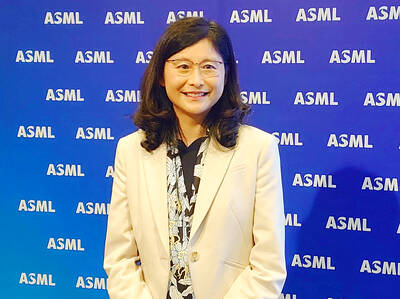
Netherlands-based semiconductor equipment supplier ASML Holding NV yesterday said that it is planning to hire an additional 1,000 people in Taiwan this year in response to growing demand from clients. ASML had previously planned to recruit 600 people this year, but that the plan has been adjusted upward, ASML vice president and ASML Taiwan general manager Grace Wang (汪佳慧) told reporters. ASML has a workforce of more than 4,500 in Taiwan, accounting for about 10 percent of its global total, Wang said. This year’s recruitment campaign would focus on adding people in the customer support, manufacturing and supply chain domains to assist ASML
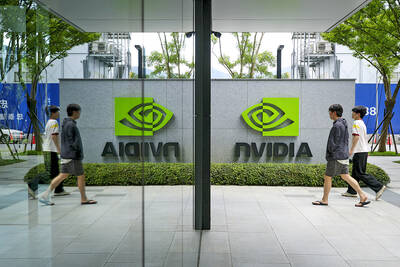
UNDER MICROSCOPE: Taiwan detained three people who allegedly conspired to buy servers in Taiwan and export them using fraudulent documentation, prosecutors said Nvidia Corp chief executive officer Jensen Huang (黃仁勳) on Saturday urged Super Micro Computer Inc to tighten up on compliance after Taiwan detained three people this week for allegedly making fraudulent declarations about artificial intelligence (AI) servers made by its US partner. The development marked the nation’s first crackdown on semiconductor smuggling, which grew after the US slapped restrictions on exports of high-end chips such as Nvidia AI accelerators to China. Nvidia is “rigorous” in explaining regulations to all of its partners, Huang told reporters after arriving in Taipei. “Ultimately Super Micro has to run their own company,” he said in response to

Nvidia Corp yesterday announced that CEO Jensen Huang (黃仁勳) would attend an employee meeting in Taipei tomorrow to celebrate the launch of the company’s Taiwan headquarters project. Huang would attend a gathering at the site of Nvidia’s planned headquarters in Beitou Shilin Technology Park (北投士林科技園區), the company said in a statement. After arriving in Taiwan on Saturday last week, Huang told reporters that he plans to meet with Quanta Computer Inc (廣達) chairman Barry Lam (林百里) and Taiwan Semiconductor Manufacturing Co (TSMC, 台積電) chairman C.C. Wei (魏哲家), and would attend the groundbreaking ceremony for Nvidia’s Taiwan headquarters tomorrow. Nvidia has not yet applied
Huawei Technologies Co (華為) said it has come up with a new pathway to shorten its gap with industry leader Taiwan Semiconductor Manufacturing Co (TSMC, 台積電), potentially achieving a breakthrough in making advanced semiconductors without cutting-edge equipment. Right now there is about a five-year gap between what TSMC is capable of and what Huawei, together with its manufacturing partner Semiconductor Manufacturing International Corp (中芯), can produce. Huawei is to start making 1.4-nanometer chips by 2031 with its own “LogicFolding” technology, Huawei semiconductor chief He Tingbo (何庭波) said in a rare public appearance during a chip conference yesterday, while TSMC has


 RSS
RSS