


Global artificial intelligence (AI) notebook computer shipments are expected to account for 19.7 percent of the overall notebook market this year, driven mainly by Apple Inc’s MacBook models, TrendForce Corp (集邦科技) said on Thursday.
The Taipei-based researcher defines AI notebooks by considering their operating system support and the neural processing unit’s (NPU) power, measured in trillions of operations per second (TOPS), TrendForce analyst Sanesha Huang (黃淑芳) told the Taipei Times by telephone.
While Apple defines its MacBook models with M-series chips as AI notebooks, other brands such as Microsoft Corp and Google classify AI notebooks as those with more than 40 NPU TOPS, she said.
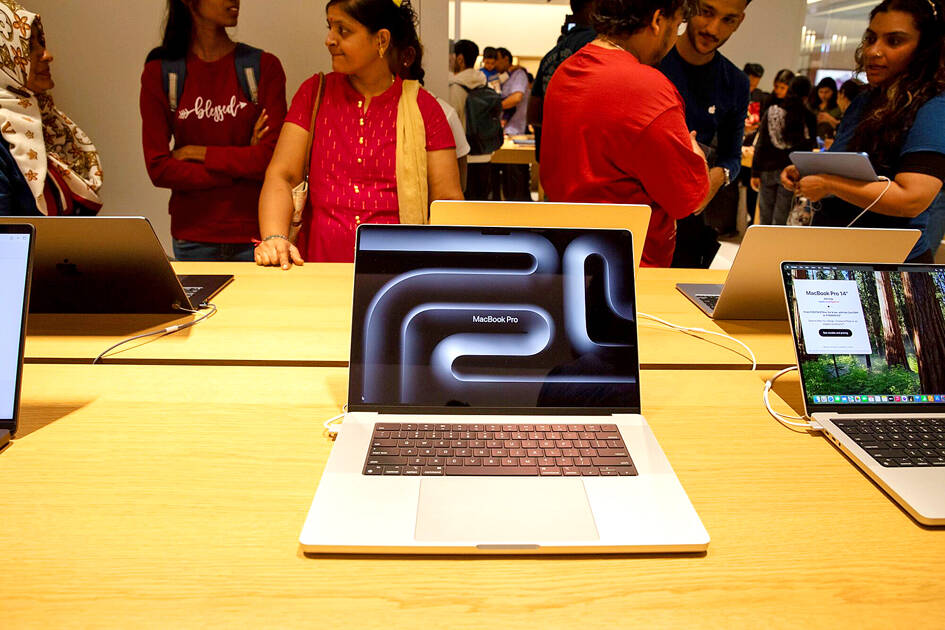
Photo: Bloomberg
Apple’s models are expected to account for about 11.4 percent of global shipments this year, compared with 8.3 percent for other brands, indicating Apple would remain the main player in the market, Huang said.
The overall figure was set at the end of August and has been downgraded several times since then, she said.
Huang attributed the downgrade to several factors, including immature AI applications.
While consumers still rely on cloud services such as ChatGPT and NotebookLM, they are not willing to upgrade to AI models, she said.
An AI notebook computer generally costs about US$1,000 due to geopolitical factors and rising chip costs, and even with promotions, they can only be lowered to US$500 to US$900 — too high for broad market acceptance, she added.
Advanced AI notebook models are typically priced 5 to 10 percent higher than traditional ones, she said.
Consumer demand this year has remained focused on low-price models, affecting shipments of more advanced versions, Huang said.
AI notebook shipments this quarter are expected to be limited to a few popular models and fall 10.8 percent quarter-on-quarter, she said.
As demand was front-loaded last quarter, the usual holiday peak season is unlikely to generate great demand, she said.
The figure is to drop 4.5 percent year-on-year, as vendors such as Lenovo Group Ltd (聯想) and Acer Inc (宏碁) pulled in orders for the Southeast Asian market in the fourth quarter last year, creating a high comparison base, she said.
Shipments this year are expected to reach 35.4 million units, up 90 percent year-on-year, due to a low base as shipments only began in the second half of last year, Huang said.
TrendForce expects the global AI notebook penetration rate to reach 28.3 percent next year, but the figure is likely to be trimmed due to geopolitical uncertainties, vendors shifting capacity to Southeast Asia to mitigate US tariffs, and higher chip prices that could raise production costs and retail prices, Huang said.
Among international PC vendors, Dell Technologies Inc has been the most proactive after Apple in deploying AI notebooks, given its focus on advanced products and willingness to adopt new technologies, followed by Lenovo and HP Inc, she said.
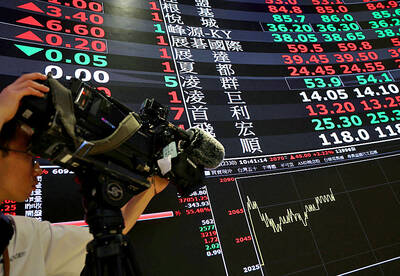
After several years flying high as Asia’s best Nvidia Corp proxy, Taiwan Semiconductor Manufacturing Co (TSMC, 台積電) is increasingly vying with other artificial intelligence (AI) stocks for investor attention. Stock traders are chasing a wider array of beneficiaries as mainstream usage of AI creates demand for hardware beyond the most-advanced chips TSMC makes for Nvidia. Subthemes from the deepening memory crunch to advances in robotics are also luring bids. At the same time, investment caps on single stocks are pushing funds to diversify, while retail investors long familiar with TSMC through its US depositary receipts are being offered a broader set of
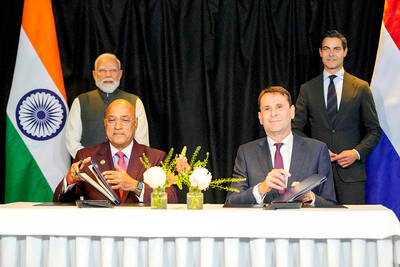
NEW MARKET: The partnership opens up India to the Dutch company, which already has a strong hold in the semiconductor market of South Korea, Taiwan and China ASML Holding NV entered into a partnership agreement with Tata Electronics Pvt Ltd aimed at ramping up India’s goal to develop domestic chip-manufacturing capabilities. The Dutch company’s technology would help power Tata Electronics’ planned 300 millimeter (mm) semiconductor foundry in Gujarat, according to a joint statement from the two companies on Saturday. The signing of a memorandum of understanding coincides with a visit by Indian Prime Minister Narendra Modi to the Netherlands, which is looking to deepen bilateral relations with New Delhi. ASML, whose top customers include Taiwan Semiconductor Manufacturing Co (台積電) and Samsung Electronics Co, makes lithography machines that can print
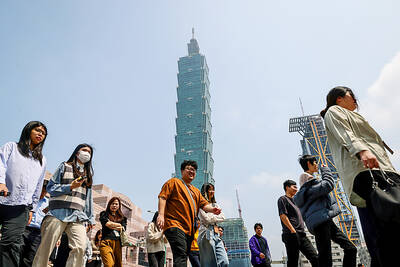
TECH RELIANCE: Growth is increasingly reflecting an unequal K-shaped distribution, where technology sectors outperform and other industries struggle, an expert said Standard Chartered Bank has significantly raised its forecast for Taiwan’s economic growth to 9.5 percent this year, up from 7.6 percent previously, citing surging artificial intelligence (AI) demand driving exports, semiconductor production and investment. The upgrade reflects a sustained AI supercycle that continues to fuel demand for advanced chips and technology infrastructure, which form the backbone of Taiwan’s exports, the bank said in a report this week. “We raise our 2026 growth forecast to reflect a much stronger-than-expected first-quarter GDP figure,” Standard Chartered senior economist for greater China and Asia Tommy Wu (胡東安) said in the report. Driven largely by a 35.3 percent
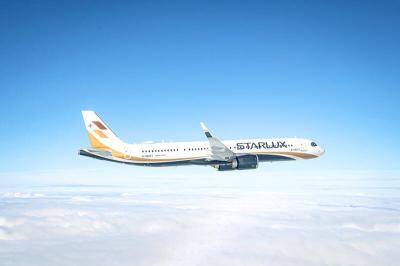
Two of Taiwan’s international carriers, Starlux Airlines Co (星宇航空) and EVA Airways Corp (長榮航空), have retained the five-star airline rating awarded by international airline review organization Skytrax. Starlux was awarded the distinction for a second consecutive year, while EVA Air received it for the 11th straight year, Skytrax said in statements released yesterday and on Thursday last week, respectively. The five-star rating is considered one of the airline industry's highest honors and is awarded following professional audits of airline product and frontline service standards, Skytrax said. The ratings are based on in-depth assessments using unified global quality standards rather than customer review scores


 RSS
RSS