


Gold climbed to a record above US$3,800 an ounce as precious metals surged, boosted by a weaker US dollar as investors weighed a potential US government shutdown.
Bullion rose as much as 1.4 percent to an all-time high of US$3,812.05 an ounce — eclipsing a peak reached on Tuesday last week — after notching six straight weekly gains.
Silver increased as much as 2.4 percent, while platinum and palladium also rallied strongly, with gains underpinned by persistent market tightness and inflows into exchange-traded funds (ETFs) backed by the metals.
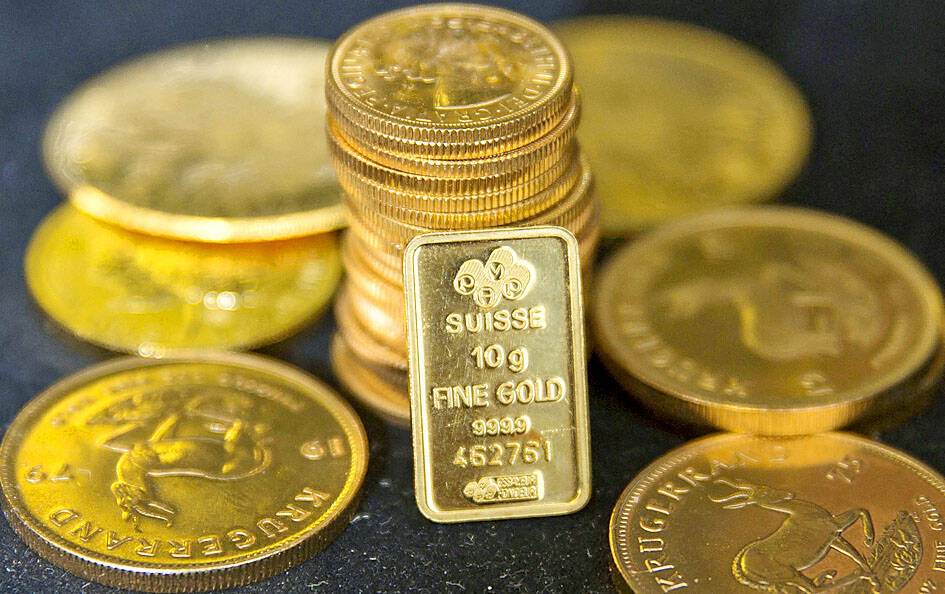
Photo: Reuters
The US dollar fell as investors awaited developments ahead of a planned meeting between top US congressional leaders and President Donald Trump after press time last night — a day before federal funding would expire if an agreement on a short-term spending bill cannot be reached.
A shutdown would threaten the release of key data including Friday’s payrolls report, which economists expect would show subdued jobs growth this month.
Weaker employment figures would bolster the case for easing by US Federal Reserve officials at their next month’s rate decision — a scenario that would make non-interest bearing precious metals more attractive.
Still, there is a high degree of uncertainty over the outlook for the Fed’s cutting cycle, with officials voicing diverging views on monetary policy, while some economic data came in stronger than expected.
Traders also continued to weigh threats to the US central bank’s independence, after Fed Governor Lisa Cook’s attorneys on Thursday urged the US Supreme Court to let her stay on the job while she fights Trump’s attempt to fire her.
Bullion does not look overpriced relative to the US dollar and US Treasuries, which “ought to contain a level of Fed-related premium, given the nature of the risk” from the central bank’s potential loss of independence, Barclays PLC said in a note on Sunday. “This makes it a surprisingly good value hedge.”
Gold has soared 45 percent this year, setting successive peaks on central-bank demand and a resumption of interest-rate cuts by the Fed. Prices are on track to close out a third consecutive quarterly gain this week, with holdings in bullion-backed ETFs at the highest since 2022. Banks including Goldman Sachs Group Inc and Deutsche Bank AG have said they expect the rally to extend.
Meanwhile, gold’s precious metal peers have seen unprecedented tightness this year, exacerbating concerns about dwindling stockpiles of freely available metal in London as several years of supply deficits come to a head. Lease rates — which reflect the cost of borrowing metal, generally for a short period of time — for silver, platinum and palladium have all surged well above their normal levels of close to zero.
Silver jumped to its highest since 2011 yesterday after rising above US$45 an ounce last week for the first time in 14 years, and was trading up 1.5 percent to US$46.7857 an ounce.
Platinum was up 2.6 percent to trade above US$1,600 an ounce for the first time since 2013, while palladium gained as much as 2.9 percent to its highest since July.

Cairo’s new monorail slices across the city skyline, running above the familiar chaos of blaring horns and aging buses’ exhaust fumes that mark rush hour below. The US$4.5 billion monorail, opened this month, is among Egypt’s most prominent new transport projects, part of a debt-funded infrastructure drive criticized for sapping state finances while bringing limited benefits to most of the country’s 109 million people. “It feels like you’re in a different country,” said Ramy Sayed, a restaurant manager, aboard a driverless Innovia 300 train. “No noise, no traffic, we’re not used to this.” The eastern line runs 56km from the bustling middle-class

Taiwanese firms have increased investment in the Philippines in recent years as Manila’s ties with Washington deepen and global supply chains continue to shift away from China, an expert at the Chung-Hua Institution for Economic Research (CIER, 中華經濟研究院) said yesterday. The Philippines had not been among Taiwanese investors’ top choices in Southeast Asia, CIER Taiwan ASEAN Studies Center director Kristy Hsu (徐遵慈) said at a seminar in Taipei. However, Taiwan’s investment in the country has grown significantly since the COVID-19 pandemic, reaching US $257 million last year, a high in recent years, she said. Although Taiwan’s total investment in the Philippines still lags
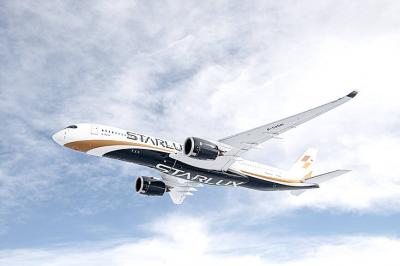
Starlux Airlines Co (星宇航空) today unveiled a long-haul network expansion plan at a shareholders’ meeting in Taipei, including direct flights to Barcelona, Spain, and Zurich, Switzerland, as well as a service connecting Taipei, Sydney and New Zealand. Starlux is to become the first Taiwanese carrier to offer non-stop services to the two European cities, while the inaugural oceanic route is expected to expand transit opportunities within the Australia-New Zealand market, Starlux said. Flight services to Chicago, Dallas, Washington and New York are under evaluation, the airline added. Prior to the shareholders’ meeting, the airline earlier this year announced that it would be
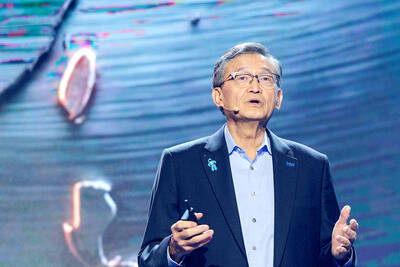
Intel Corp regards Taiwan Semiconductor Manufacturing Co (TSMC, 台積電) as a longstanding partner, as the US chipmaker would continue outsourcing production of advanced chips to TSMC, Intel chief executive officer Lip-Bu Tan (陳立武) said yesterday. “I don’t look at people as competitors. I look at the collaboration... Nvidia is also, you know, a good friend,” Tan told a news conference following his keynote speech at the Computex trade show in Taipei. “It’s a very trusted partnership for us... We are a big, top customer for them, and we’re going to continue doing that,” he said, referring to TSMC, the world’s largest foundry


 RSS
RSS