


South Korea cannot provide the US with US$350 billion in cash as suggested by Washington under a deal to lower tariffs, a senior official said.
“Our position is not a negotiating tactic,” South Korean National Security Adviser Wi Sung-lac said in a Channel A News television interview on Saturday evening.
“It is objectively and realistically not a level we are able to handle,” he added. “We are not able to pay US$350 billion in cash.”
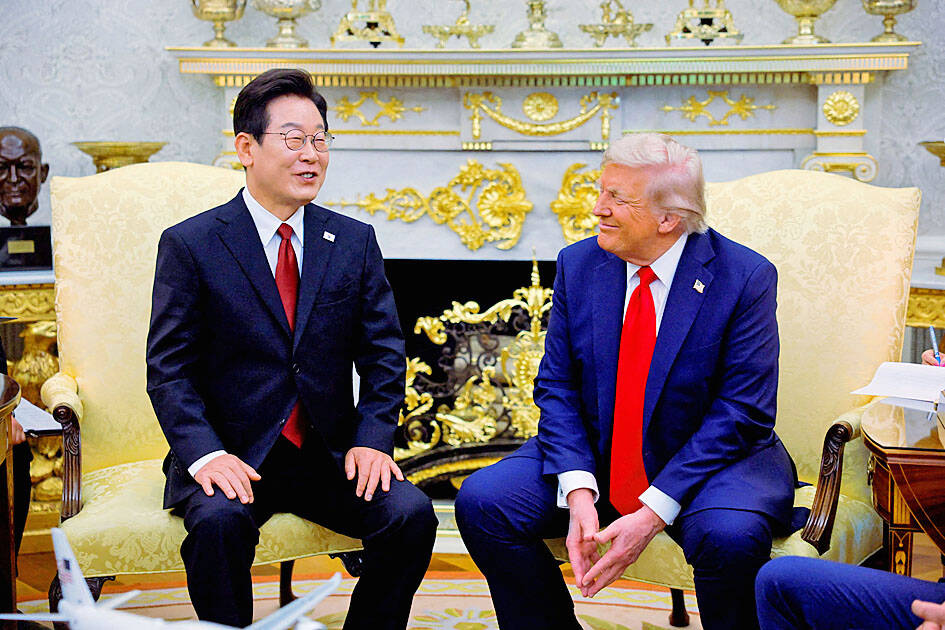
Photo: Reuters
Seoul and Washington agreed in July to a US$350 billion investment pledge as part of a broader trade deal to lower US tariffs to 15 percent from 25 percent, but the two sides remain divided over how it should be structured.
South Korean officials are seeking loans and a bilateral currency swap arrangement with the US to soften the economic impact, saying that the sum represents more than 80 percent of its foreign reserves.
US Secretary of Commerce Howard Lutnick has reportedly told South Korean officials that Washington prefers the investment in cash rather than loans.
US President Donald Trump recently described the contribution as “up front.”
South Korean President Lee Jae-myung said earlier this month that the country’s economy could fall into crisis rivaling its 1997 meltdown if his government accepted the US demands without safeguards.
Lee told US Secretary of the Treasury Scott Bessent on Wednesday in New York that the Asian country needs a foreign exchange swap to make the US$350 billion investment it has pledged in the tariff talks.
Wi on Saturday said the government is exploring alternatives and hopes for progress when the two leaders meet at the APEC Summit in Gyeongju, South Korea, next month.
Separately, the US has agreed that South Korea is not manipulating its currency for trade advantage, a spokesperson for Lee said yesterday.
The two allies agreed that Seoul does not fall under the manipulator designation that the US Department of the Treasury announces in reports twice a year, Kang Yu-jung told a news conference in Seoul.
The administration of former US president Joe Biden added South Korea to a manipulation monitoring list in November last year due to its large current account surplus and its sizable trade surplus with the US. The Trump administration kept Seoul on the list in June.
Under a 2015 US law, Washington can take “remedial action” against countries that do not “correct the undervaluation of their currency and trade surplus with the United States.”
Additional reporting by Reuters
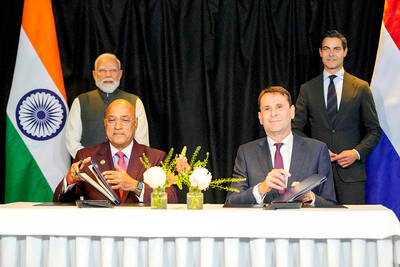
NEW MARKET: The partnership opens up India to the Dutch company, which already has a strong hold in the semiconductor market of South Korea, Taiwan and China ASML Holding NV entered into a partnership agreement with Tata Electronics Pvt Ltd aimed at ramping up India’s goal to develop domestic chip-manufacturing capabilities. The Dutch company’s technology would help power Tata Electronics’ planned 300 millimeter (mm) semiconductor foundry in Gujarat, according to a joint statement from the two companies on Saturday. The signing of a memorandum of understanding coincides with a visit by Indian Prime Minister Narendra Modi to the Netherlands, which is looking to deepen bilateral relations with New Delhi. ASML, whose top customers include Taiwan Semiconductor Manufacturing Co (台積電) and Samsung Electronics Co, makes lithography machines that can print
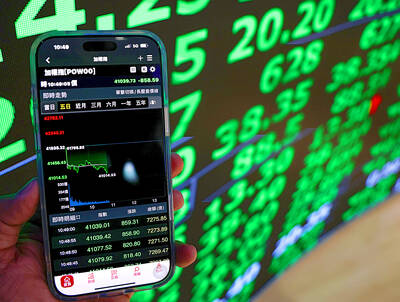
PORTFOLIO REBALANCING: The adjustments in three global equity indices reflect rising investor appetite for semiconductor and artificial intelligence-related stocks Taiwan’s weighting in major global equity indices compiled by MSCI Inc is to rise modestly following the latest quarterly review, underscoring the market’s expanding role in emerging-market portfolios, as global investors continue to favor the nation’s technology sector. Taiwan’s weighting in the MSCI Emerging Markets Index is to increase by 0.30 percentage points to 23.76 percent, after the changes take effect at the close of the May 29 session. Its weighting in the MSCI All-Country Asia ex-Japan Index is to rise 0.37 percentage points to 27.16 percent, while that in the MSCI All Country World Index is to edge up slightly to
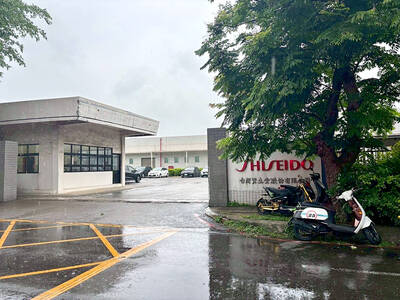
The Hsinchu County Government’s Labor Affairs Department yesterday said that it has received a plan from cosmetics brand Taiwan Shiseido Co (台灣資生堂) detailing mass layoffs at its plant in Hukou Township (湖口). While the labor authorities did not disclose the number of employees to be laid off, Japanese news media earlier in the day reported that the closure of the company’s factory in Hukou would result in 170 employees losing their jobs. Shiseido followed the law by reporting its layoff plan, the department said, adding that authorities would closely monitor negotiations between the management and affected employees and step in if any
Hon Hai Precision Industry Co (鴻海精密) on Tuesday confirmed a cyberattack targeting some of its North American facilities, but said the affected factories were gradually returning to normal. The company, known globally as Foxconn Technology Group (富士康科技集團), said that its cybersecurity team “activated the response mechanism and implemented operational measures to ensure the continuity of production and delivery.” “The affected factories are resuming normal production,” the company said in a statement. Hon Hai had previously described it as a “technical issue,” when news of the cyberattack first surfaced. The confirmation followed media reports of a large-scale information technology system incident that broke out at


 RSS
RSS