


US President Donald Trump on Thursday said that he would nominate a top economic adviser to the US Federal Reserve’s board of governors for four months, temporarily filling a vacancy while continuing his search for a long-term appointment.
Trump said he has named Stephen Miran, chair of the White House’s Council of Economic Advisers, to fill a seat vacated by Fed Governor Adriana Kugler, a Biden appointee who was stepping down yesterday. Miran, if approved by the US Senate, would serve until Jan. 31 next year.
The appointment is Trump’s first opportunity to exert more control over the Fed, one of the few remaining independent federal agencies. Trump has relentlessly criticized Fed Chairman Jerome Powell for keeping short-term interest rates unchanged, calling him a stubborn moron last week on social media.
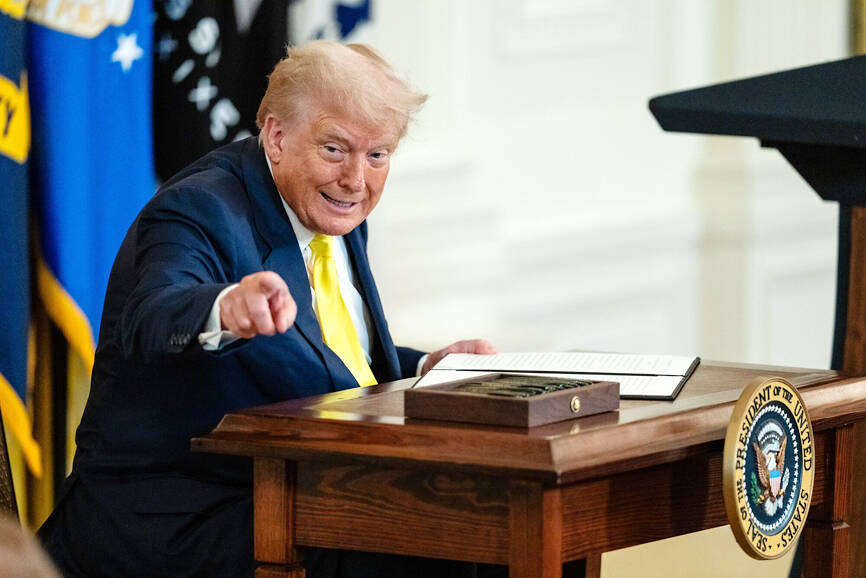
Photo: Bloomberg
Miran has been a major defender of Trump’s income tax cuts and tariff hikes, arguing that the combination would generate enough economic growth to reduce budget deficits. He has also played down the risk of Trump’s tariffs generating higher inflation, a major source of concern for Powell.
The choice of Miran might heighten concerns about political influence over the Fed, which has traditionally been insulated from day-to-day politics. Fed independence is generally seen as key to ensuring that it can take difficult steps to combat inflation, such as raising interest rates, that politicians might be unwilling to take.
Fed governors vote on all the central bank’s interest-rate decisions, as well as its financial regulatory policies.
Miran’s nomination, if approved, would add a near-certain vote in support of lower interest rates. Kugler had echoed Powell’s view that the Fed should keep rates unchanged and further evaluate the impact of tariffs on the economy before making any moves.
Trump has said he would appoint Fed officials who would cut interest rates, which he says would reduce the borrowing costs of the federal government’s huge US$36 trillion debt pile. Trump also wants lower rates to boost moribund home sales, which have been held back partly by higher mortgage costs. Yet the Fed does not directly set long-term interest rates for things such as home and car purchases.
At its most recent meeting last week, Fed officials kept their key rate unchanged at 4.3 percent, where it has stood after three rate cuts late last year, but two Fed governors — Christopher Waller and Michelle Bowman — dissented from that decision. Both were appointed by Trump in his first term.
Still, even with Miran on the board, 12 Fed officials vote on interest rate policy and many remain concerned that Trump’s sweeping tariffs could push inflation higher.
Miran could be renominated to a longer term at the Fed once his initial appointment is concluded, or replaced by another nominee.
Powell’s term as chair ends in May next year, yet he could remain on the board of governors until January 2028, even after he steps down as chair. That would deny, or at least delay, an opportunity for Trump to appoint an additional policymaker to the Fed’s board.

CHIP RACE: Three years of overbroad export controls drove foreign competitors to pursue their own AI chips, and ‘cost US taxpayers billions of dollars,’ Nvidia said China has figured out the US strategy for allowing it to buy Nvidia Corp’s H200s and is rejecting the artificial intelligence (AI) chip in favor of domestically developed semiconductors, White House AI adviser David Sacks said, citing news reports. US President Donald Trump on Monday said that he would allow shipments of Nvidia’s H200 chips to China, part of an administration effort backed by Sacks to challenge Chinese tech champions such as Huawei Technologies Co (華為) by bringing US competition to their home market. On Friday, Sacks signaled that he was uncertain about whether that approach would work. “They’re rejecting our chips,” Sacks

NATIONAL SECURITY: Intel’s testing of ACM tools despite US government control ‘highlights egregious gaps in US technology protection policies,’ a former official said Chipmaker Intel Corp has tested chipmaking tools this year from a toolmaker with deep roots in China and two overseas units that were targeted by US sanctions, according to two sources with direct knowledge of the matter. Intel, which fended off calls for its CEO’s resignation from US President Donald Trump in August over his alleged ties to China, got the tools from ACM Research Inc, a Fremont, California-based producer of chipmaking equipment. Two of ACM’s units, based in Shanghai and South Korea, were among a number of firms barred last year from receiving US technology over claims they have
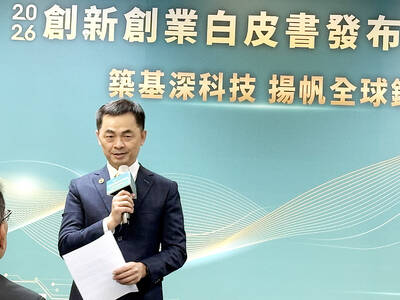
BARRIERS: Gudeng’s chairman said it was unlikely that the US could replicate Taiwan’s science parks in Arizona, given its strict immigration policies and cultural differences Gudeng Precision Industrial Co (家登), which supplies wafer pods to the world’s major semiconductor firms, yesterday said it is in no rush to set up production in the US due to high costs. The company supplies its customers through a warehouse in Arizona jointly operated by TSS Holdings Ltd (德鑫控股), a joint holding of Gudeng and 17 Taiwanese firms in the semiconductor supply chain, including specialty plastic compounds producer Nytex Composites Co (耐特) and automated material handling system supplier Symtek Automation Asia Co (迅得). While the company has long been exploring the feasibility of setting up production in the US to address

OPTION: Uber said it could provide higher pay for batch trips, if incentives for batching is not removed entirely, as the latter would force it to pass on the costs to consumers Uber Technologies Inc yesterday warned that proposed restrictions on batching orders and minimum wages could prompt a NT$20 delivery fee increase in Taiwan, as lower efficiency would drive up costs. Uber CEO Dara Khosrowshahi made the remarks yesterday during his visit to Taiwan. He is on a multileg trip to the region, which includes stops in South Korea and Japan. His visit coincided the release last month of the Ministry of Labor’s draft bill on the delivery sector, which aims to safeguard delivery workers’ rights and improve their welfare. The ministry set the minimum pay for local food delivery drivers at


 RSS
RSS