


Microsoft Corp said it will spend more than US$30 billion in the current quarter to build out the data centers powering its artificial intelligence (AI) services.
Investors, applauding accelerating growth in the company’s cloud-computing unit, sent the shares up sharply.
The closely watched Azure division posted a 39 percent rise in sales during Microsoft’s fiscal fourth quarter, the company said in a statement on Wednesday. Analysts projected a 34 percent increase. The company’s forecast for a 37 percent growth in the current quarter also exceeded analyst estimates.
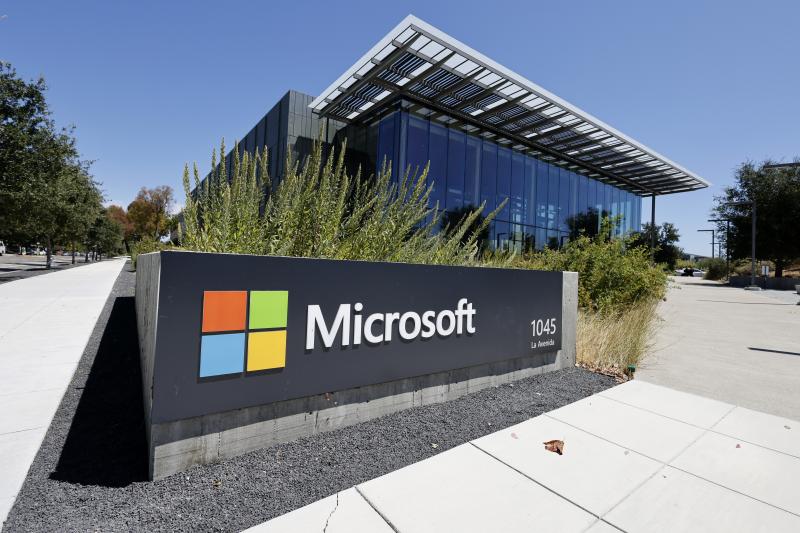
Photo: John G. Mabanglo, EPA
Microsoft said sales at the cloud division grew 34 percent to more than US$75 billion during the year ended on June 30, the first time the company has disclosed a revenue figure for Azure, which sells computing power and other services to businesses.
The results suggest that Microsoft, perhaps the most prodigious spender of the AI age, is starting to see a return in the form of rising sales.
The company's shares rose as much as 8.2 percent to US$555.45 as the markets opened on Thursday in New York, a new record high. Microsoft now has a market capitalization of more than US$4 trillion, making it the second company after Nvidia Corp to achieve that distinction.
On a call with analysts on Wednesday, Microsoft chief executive Satya Nadella said Copilot, the chatbot the company markets to individuals, businesses and coders, has more than 100 million monthly active users. Some 800 million customers interact with the AI features scattered through Microsoft’s products, Nadella said.
“Microsoft 365 Copilot is becoming the new way to organize work,” he said, referring to the company’s main business-focused chatbot.
Even as Microsoft made new disclosures about its AI business, the company abandoned its recent practice of detailing what portion of Azure’s growth was attributable to AI demand. Jonathan Neilson, a vice president of investor relations, said in an interview that such figures have become less relevant as use of AI-specific services like rentals of high-end graphics processing units (GPUs) increasingly spur customers to ramp up their use of other products like data storage or analytics.
Microsoft in the last few years has deployed AI tools, including those powered by OpenAI, across its products, betting that conversant chatbots and more powerful automation technology will boost sales of the company’s productivity software and cloud services.
That’s come at a steep cost, as Microsoft races to construct enough data centers to meet surging demand for generative AI training and tools.
The Redmond, Washington-based company’s capital expenditures during the recently completed quarter, US$24.2 billion, were a record. It won’t stand for long. Microsoft chief financial officer Amy Hood said the company would spend upwards of US$30 billion in the current quarter, which would be at least 50 percent more than the outlay during the same period a year earlier.
“We will continue to invest against the expansive opportunity ahead,” Hood said.
The quarter’s strong growth in Azure “could quell lingering investor concern over the company’s elevated capital spending,” Bloomberg Intelligence analysts Anurag Rana and Andrew Girard wrote in a note. “We expect this to give Microsoft greater justification to invest more in its AI business, with spending likely skewed heavier toward shorter-term assets like servers and GPUs.”
Microsoft’s overall sales rose 18 percent to US$76.4 billion during the quarter. Net income was US$3.65 a share. Analysts on average estimated US$73.9 billion in revenue and earnings per share of US$3.37.

SECOND-RATE: Models distilled from US products do not perform the same as the original and undo measures that ensure the systems are neutral, the US’ cable said The US Department of State has ordered a global push to bring attention to what it said are widespread efforts by Chinese companies, including artificial intelligence (AI) start-up DeepSeek (深度求索), to steal intellectual property from US AI labs, according to a diplomatic cable. The cable, dated Friday and sent to diplomatic and consular posts around the world, instructs diplomatic staff to speak to their foreign counterparts about “concerns over adversaries’ extraction and distillation of US AI models.” Distillation is the process of training smaller AI models using output from larger, more expensive ones to lower the costs of training a powerful new
Micron Technology Inc is a driving force pushing the US Congress to pass legislation that would put new export restrictions on equipment its Chinese competitors use to make their chips, according to people familiar with the matter. A US House of Representatives panel yesterday was to vote on the “MATCH Act,” a bill designed to close gaps in restrictions on chipmaking equipment. It would also pressure foreign companies that sell equipment to Chinese chipmaking facilities to align with export curbs on US companies like Lam Research Corp and Applied Materials Inc. The bill targets facilities operated by China’s ChangXin Memory Technologies Inc

Singapore-based ride-hailing and delivery giant Grab Holdings’ planned acquisition of Foodpanda’s Taiwan operations has yet to enter the formal review stage, as regulators await supplementary documents, the Fair Trade Commission (FTC) said yesterday. Acting FTC Chairman Chen Chih-min (陳志民) told the legislature’s Economics Committee that although Grab submitted its application on March 27, the case has not been officially accepted because required materials remain incomplete. Once the filing is finalized, the FTC would launch a formal probe into the deal, focusing on issues such as cross-shareholding and potential restrictions on market competition, Chen told lawmakers. Grab last month announced that it would acquire
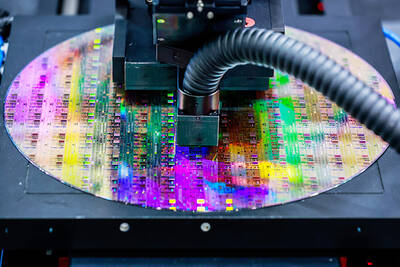
The artificial intelligence (AI) boom has triggered a seismic reshuffling of global equity markets, with Taiwan and South Korea muscling past European nations one by one. With its stock market now valued at nearly US$4.3 trillion, Taiwan surpassed the UK, Europe’s biggest market, earlier this month, data compiled by Bloomberg showed. South Korea is about US$140 billion away from doing the same. The tech-heavy Asian markets have shot past Germany and France in the past seven months. The shift is largely down to massive gains in shares of three companies that provide essential hardware for AI: Taiwan Semiconductor Manufacturing Co (TSMC, 台積電),


 RSS
RSS