

Vanguard International Semiconductor Corp (世界先進), a foundry service provider specializing in producing power management and display driver chips, yesterday said net profit dipped 15 percent sequentially last quarter as significant appreciation of the New Taiwan dollar eroded its gross margin.
Net profit slid to NT$2.04 billion (US$68.7 million) from NT$2.24 billion in the first quarter, and earnings per share fell to NT$1.10 from NT$1.30. Gross margin was 28 percent, the lowest in about a year, compared with 30.1 percent the prior quarter, the company said.
Vanguard expects gross margin to weaken further to between 25 percent and 27 percent this quarter due to the NT dollar’s continued uptrend against the US dollar and higher equipment depreciation costs from its new 12-inch fab in Singapore, Vanguard chief financial officer Amanda Huang (黃惠蘭) said.
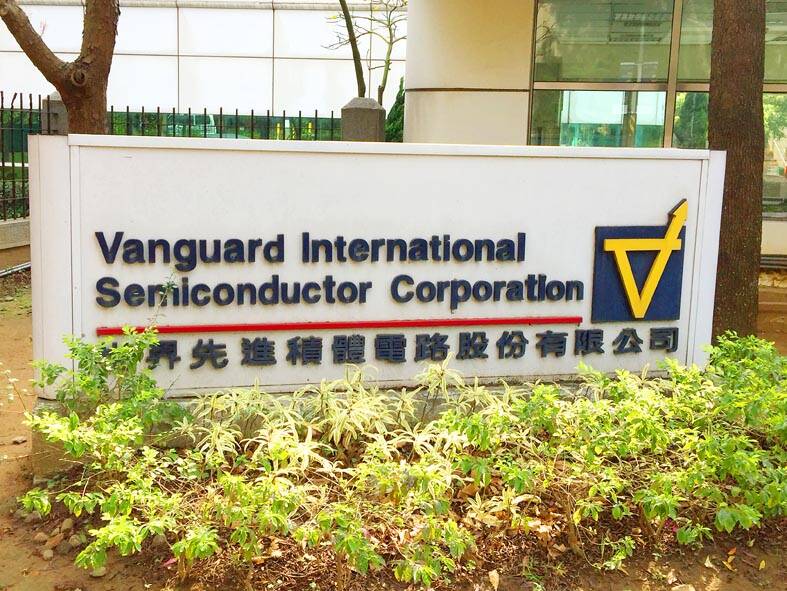
Photo: Grace Hung, Taipei Times
The company said customer demand is picking up gradually, thanks to proactive measures taken by supply chain partners amid worries about the US’ tariff policy, as well as improving inventory throughout the supply chain.
Vanguard president John Wei (尉濟時) said the company has order visibility of three months and expects its factory utilization rate to rise to 80 percent this quarter, on improving customer demand, from 73 percent last quarter.
Wafer shipments this quarter would expand about 7 percent to 9 percent quarter-on-quarter, while average selling prices would climb about 1 to 3 percent sequentially, he told a virtual investor conference.
Vanguard is gaining market share from competitors as customers continue to shift power management chip orders out of China, Wei said, adding that the company expects this growth momentum to extend into next year, with revenue from 0.18-micron and more advanced technologies to increase from the previous quarter.
Power management chips, which are used in a wide range of end products, remain Vanguard’s largest revenue driver, contributing about 70 percent of total sales.
However, demand for display driver chips is relatively muted, as such chips are mostly used in consumer electronics, which are prone to macroeconomic uncertainty, Vanguard said.
Customers are adopting a more cautious approach to restocking display driver chips in the second half of the year, driven by concerns over US tariffs, following a surge in demand in the first half, fueled by China’s subsidy programs, Vanguard vice president Claire Chen (陳姿鈞) said.
However, the growth momentum for high-performance computing and industrial applications is expected to continue into the third and fourth quarters, she said.
“The psychological impact from the US tariffs is blunting, although the sectoral tariffs on semiconductors and the result of the investigation under Section 232 of the US Trade Expansion Acts remain unknown,” Vanguard chairman Fang Leuh (方略) said. “The global semiconductor industry is expected to grow moderately in the second half.”
Vanguard yesterday maintained its full-year capital expenditure at NT$60 billion to NT$70 billion, with about 90 percent of the budget to be allocated for its new 12-inch fab in Singapore.
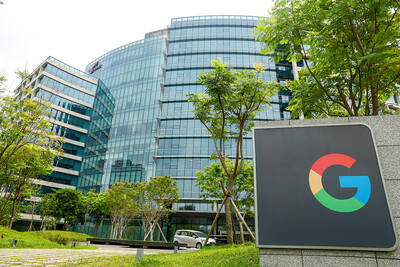
READJUSTMENT? Despite the rumors, a senior Google official said that the company plans to expand its AI research center in Taipei’s Shilin District Google Taiwan is reducing its workforce as the company continues to adjust operations to improve efficiency and focus resources on core goals, the Chinese-language Liberty Times (sister paper of the Taipei Times) reported yesterday. The Alphabet Inc unit said the organizational adjustments have begun and would continue, even though it did not put a figure on the number of potential job cuts or specify the affected departments in its Taiwan operations. The company’s response came after rumors circulated on social media about major job cuts at Google Taiwan. Some posts said the downsizing would target the company’s consumer electronics-related departments
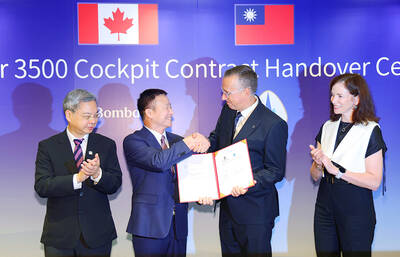
Taiwanese aircraft maker Aerospace Industrial Development Corp (AIDC, 漢翔航空) yesterday announced that it has secured a 20-year partnership agreement with Canada-based Bombardier Inc. The two companies held a ceremony in Taipei yesterday to exchange signed copies of the agreement, launching the 20-year partnership under which AIDC would supply cockpit and forward fuselage structural components for Bombardier’s super-midsize Challenger 3500 business jets, the Taiwanese company said. The agreement represents a new milestone in cooperation between the two companies, which dates back to 1999, with the Taiwanese supplier having provided rear fuselage structural components for more than 1,000 Challenger 3500 aircraft, it
FOUNDRY DATA: Demand pushed production on some TSMC lines to full utilization, while Samsung’s market share of 5.9 percent dropped, TrendForce said Taiwan Semiconductor Manufacturing Co’s (TSMC, 台積電) foundry market share edged up to 72.5 percent in the second quarter from 72.3 percent in the previous quarter, propelled by robust artificial intelligence (AI) and smartphone chip revenue, data compiled by market researcher TrendForce Corp (集邦科技) showed yesterday. TSMC’s revenue last quarter grew 12 percent sequentially to US$40.2 billion, outpacing the 11.5 percent average growth among the world’s top 10 foundry companies, the researcher said. Combined revenue of the top 10 is expected to grow further this quarter from US$53.49 billion last quarter, supported by strong demand and price hikes, it said. The increased demand has

Global notebook computer shipments are expected to fall 8 percent year-on-year to 167.9 million units this year, dragged by weak demand, high component prices and supply constraints, the Market Intelligence and Consulting Institute (MIC) said on Tuesday. Next year, shipments are expected to decline by a further 4.7 percent to 160 million units as higher retail prices weigh on consumption, MIC deputy director-general Edward Lin (林柏齊) told a news conference in Taipei. The downtrend is expected to extend into 2028, with replacement demand unlikely to recover before supplies of key components rebound and costs decline, Lin said. Surging demand for artificial intelligence (AI)


 RSS
RSS