


Worries over future US tariffs are clouding the outlook for factories across much of Asia and Europe, according to surveys released yesterday which nonetheless showed some were able to shrug off the uncertainty and keep growing.
Among the bright spots, Japan’s manufacturing data showed growth for the first time in 13 months, South Korea’s activity contracted at a milder pace and China’s Caixin purchasing managers’ index (PMI) also expanded last month — confounding an official survey that showed activity shrinking for a third straight month.
In Europe, Ireland, Spain and the Netherlands were among the star performers, even as the wider eurozone data was broadly flat and the UK continued to contract, albeit more slowly.
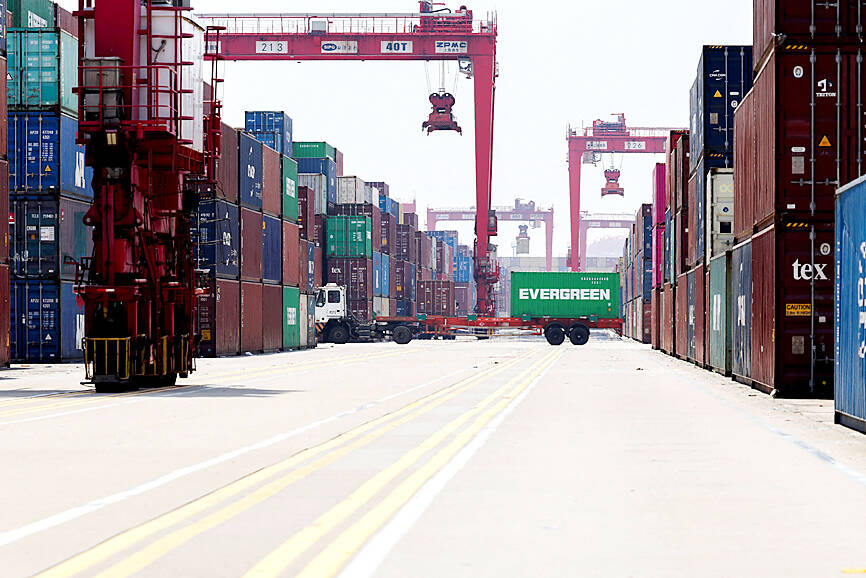
Photo: Reuters
Analysts said the underlying softness in surveys highlights the challenges facing businesses and policymakers as they try to navigate US President Donald Trump’s moves to shake up the global trade order with sweeping tariffs.
The Caixin/S&P Global survey showed that the Chinese manufacturing PMI rose to 50.4, surpassing expectations in a Reuters poll.
Japan’s final au Jibun Bank PMI rose to 50.1 due to an upswing in output, but overall demand remained weak as new orders shrank on concerns over US tariffs.
Factory activity in South Korea contracted for the fifth straight month, although the pace of decline eased on relief over a snap presidential election on June 3 that ended six months of uncertainty.
In manufacturing, India was a significant outlier in the region last month, as activity accelerated to a 14-month high, driven by a substantial rise in international sales that helped spark a record-breaking spurt in hiring.
Negotiators from major US trading partners are rushing to reach deals with Trump’s administration by a Wednesday next week deadline to avoid import tariffs jumping to higher levels.
While China is continuing its negotiations for a broader trade deal with the US, Japan and South Korea have so far failed to win concessions on the tariffs imposed on their mainstay export items such as automobiles.
The 27-member EU is embarking on new talks in Washington later this week.
The eurozone HCOB manufacturing PMI, compiled by S&P Global, edged up to 49.5 last month from 49.4 in May, its highest level since August 2022, but still below the 50 mark denoting growth in activity.
Moreover, national surveys revealed stark differences across the EU. Ireland recorded the highest PMI at a 37-month peak of 53.7, while Greece, Spain and the Netherlands also posted readings above 50.
While Germany’s manufacturing PMI reached its highest in nearly three years, it still indicated contraction. France, Italy and Austria on the other hand registered faster declines in manufacturing conditions.
In the UK, the manufacturing sector showed some signs of turning a corner in its long slump.
“That said, any hoped for stabilization remains fragile, and subject to potential headwinds that could severely impact demand, supply chain reliability and future growth prospects,” S&P Global Market Intelligence director Rob Dobson said.
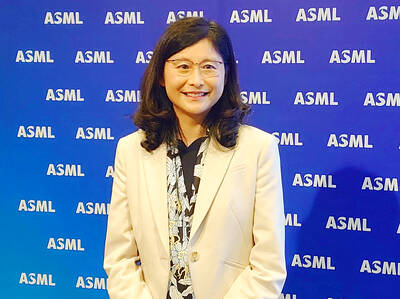
Netherlands-based semiconductor equipment supplier ASML Holding NV yesterday said that it is planning to hire an additional 1,000 people in Taiwan this year in response to growing demand from clients. ASML had previously planned to recruit 600 people this year, but that the plan has been adjusted upward, ASML vice president and ASML Taiwan general manager Grace Wang (汪佳慧) told reporters. ASML has a workforce of more than 4,500 in Taiwan, accounting for about 10 percent of its global total, Wang said. This year’s recruitment campaign would focus on adding people in the customer support, manufacturing and supply chain domains to assist ASML

UNDER MICROSCOPE: Taiwan detained three people who allegedly conspired to buy servers in Taiwan and export them using fraudulent documentation, prosecutors said Nvidia Corp chief executive officer Jensen Huang (黃仁勳) on Saturday urged Super Micro Computer Inc to tighten up on compliance after Taiwan detained three people this week for allegedly making fraudulent declarations about artificial intelligence (AI) servers made by its US partner. The development marked the nation’s first crackdown on semiconductor smuggling, which grew after the US slapped restrictions on exports of high-end chips such as Nvidia AI accelerators to China. Nvidia is “rigorous” in explaining regulations to all of its partners, Huang told reporters after arriving in Taipei. “Ultimately Super Micro has to run their own company,” he said in response to

Nvidia Corp yesterday announced that CEO Jensen Huang (黃仁勳) would attend an employee meeting in Taipei tomorrow to celebrate the launch of the company’s Taiwan headquarters project. Huang would attend a gathering at the site of Nvidia’s planned headquarters in Beitou Shilin Technology Park (北投士林科技園區), the company said in a statement. After arriving in Taiwan on Saturday last week, Huang told reporters that he plans to meet with Quanta Computer Inc (廣達) chairman Barry Lam (林百里) and Taiwan Semiconductor Manufacturing Co (TSMC, 台積電) chairman C.C. Wei (魏哲家), and would attend the groundbreaking ceremony for Nvidia’s Taiwan headquarters tomorrow. Nvidia has not yet applied

Huawei Technologies Co (華為) said it has come up with a new pathway to shorten its gap with industry leader Taiwan Semiconductor Manufacturing Co (TSMC, 台積電), potentially achieving a breakthrough in making advanced semiconductors without cutting-edge equipment. Right now there is about a five-year gap between what TSMC is capable of and what Huawei, together with its manufacturing partner Semiconductor Manufacturing International Corp (中芯), can produce. Huawei is to start making 1.4-nanometer chips by 2031 with its own “LogicFolding” technology, Huawei semiconductor chief He Tingbo (何庭波) said in a rare public appearance during a chip conference yesterday, while TSMC has


 RSS
RSS