


Wistron Corp’s (緯創) new artificial intelligence (AI) park in Hsinchu County would focus on producing next-generation AI servers, with most of its capacity occupied by Nvidia Corp’s orders, company president Jeff Lin (林建勳) said yesterday.
The park in the county’s Jhubei City (竹北) is expected to become Wistron’s largest global AI server production base, Lin said.
In addition to the Jhubei park, Wistron operates an AI server production facility in Hsinchu County’s Hukou Township (湖口) and another in the Hsinchu Science Park (新竹科學園區).
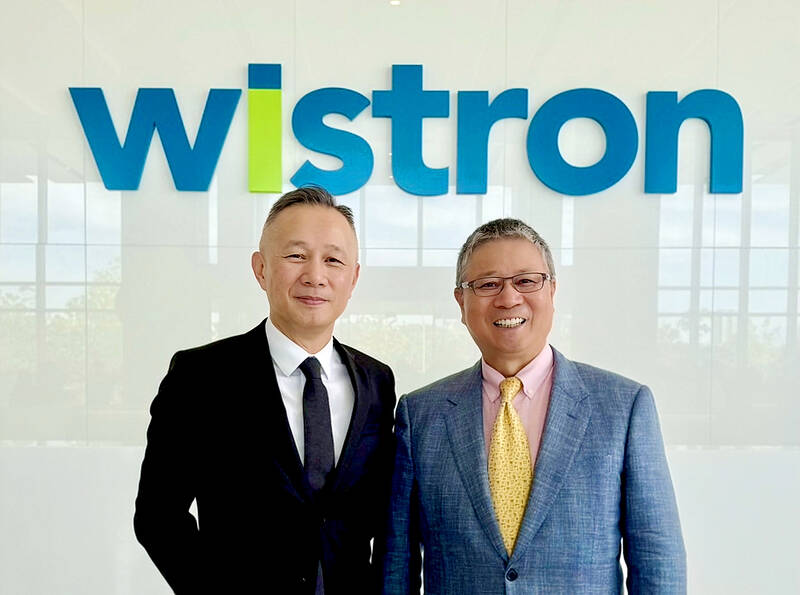
Photo: Fang Wei-chieh, Taipei Times
The company’s total AI server production capacity in Taiwan is projected to double once the new Jhubei facility reaches full capacity in one to two years, Lin said.
Wistron in February acquired a plant in Jhubei from textile maker Lan Fa Textile Co (聯發), which is adjacent to the AI park.
“We are reorganizing the facility, which is expected to begin production next year once the process is completed,” he said.
The company’s AI server plants could eventually expand to 10, with capacity to be determined by client demand and regional deployment, Lin said.
Wistron’s seven AI factories produce 240,000 computers powered by Blackwell graphics processing units each quarter, he said.
Asked about the company’s server business outlook, Lin said demand remains strong and that he is positive on the company’s performance in the second half of the year.
Wistron has received robust orders through May next year, he added.
However, the prospect for the company’s PC business would depend on how US tariff policies unfold, Lin said.
This segment could still expand if the tariff impact is manageable, but the sharp appreciation of the New Taiwan dollar against the US dollar earlier last month might affect the company’s operational costs, he added.
Wistron’s board of directors last month approved a plan to build a new factory in Dallas, Texas.
The new facility is expected to begin mass production next year, with capacity to be scaled based on future orders, Lin said.
Texas would be a focus of the company’s US expansion drive, as it already operates a maintenance facility there with more than 1,000 employees, he said.
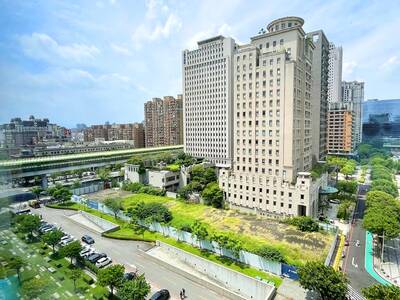
Taichung reported the steepest fall in completed home prices among the six special municipalities in the first quarter of this year, data compiled by Taiwan Realty Co (台灣房屋) showed yesterday. From January through last month, the average transaction price for completed homes in Taichung fell 8 percent from a year earlier to NT$299,000 (US$9,483) per ping (3.3m²), said Taiwan Realty, which compiled the data based on the government’s price registration platform. The decline could be attributed to many home buyers choosing relatively affordable used homes to live in themselves, instead of newly built homes in the city’s prime property market, Taiwan Realty
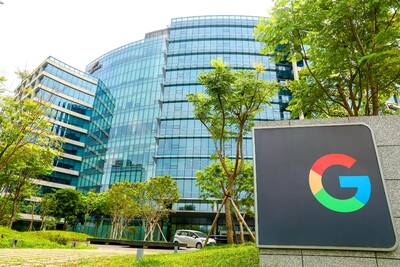
The government yesterday approved applications by Alphabet Inc’s Google to invest NT$27.08 billion (US$859.98 million) in Taiwan, the Ministry of Economic Affairs said in a statement. The Department of Investment Review approved two investments proposed by Google, with much of the funds to be used for data processing and electronic information supply services, as well as inventory procurement businesses in the semiconductor field, the ministry said. It marks the second consecutive year that Google has applied to increase its investment in Taiwan. Google plans to infuse NT$25.34 billion into Charter Investments Ltd (特許投資顧問) through its Singapore-based subsidiary Fructan Holdings Singapore Pte Ltd, and

Micron Technology Inc is a driving force pushing the US Congress to pass legislation that would put new export restrictions on equipment its Chinese competitors use to make their chips, according to people familiar with the matter. A US House of Representatives panel yesterday was to vote on the “MATCH Act,” a bill designed to close gaps in restrictions on chipmaking equipment. It would also pressure foreign companies that sell equipment to Chinese chipmaking facilities to align with export curbs on US companies like Lam Research Corp and Applied Materials Inc. The bill targets facilities operated by China’s ChangXin Memory Technologies Inc

Singapore-based ride-hailing and delivery giant Grab Holdings’ planned acquisition of Foodpanda’s Taiwan operations has yet to enter the formal review stage, as regulators await supplementary documents, the Fair Trade Commission (FTC) said yesterday. Acting FTC Chairman Chen Chih-min (陳志民) told the legislature’s Economics Committee that although Grab submitted its application on March 27, the case has not been officially accepted because required materials remain incomplete. Once the filing is finalized, the FTC would launch a formal probe into the deal, focusing on issues such as cross-shareholding and potential restrictions on market competition, Chen told lawmakers. Grab last month announced that it would acquire


 RSS
RSS