


Hon Hai Precision Industry Co (鴻海) has invested US$142 million in Texas, which industrial sources close to the deal said was aimed at expanding its artificial intelligence (AI) server capacity.
The company has acquired a 34.9 hectare lot in Houston and a 92,903m2 building through its cloud solution subsidiary Ingrasys Technology Inc (鴻佰), Hon Hai said in a filing with the Taiwan Stock Exchange on Monday.
Hon Hai, also known as Foxconn Technology Group (富士康), did not specify the purpose of the investment, saying only that it was for operational needs, the filing showed.
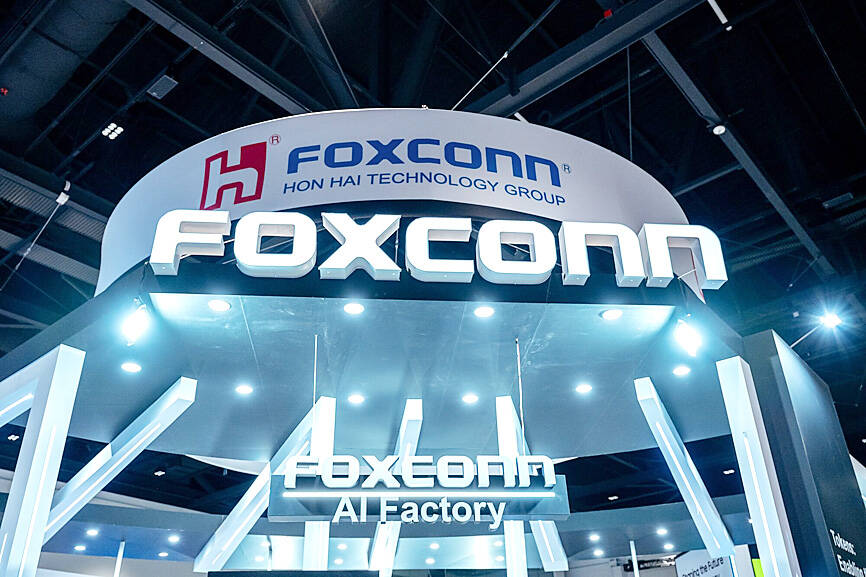
Photo: Bloomberg
However, sources said it would be used to expand AI server production to initially cater to clients in North America, except Apple Inc, which last month said it would partner with Hon Hai to build an AI server assembly plant in Houston by next year.
Hon Hai is expanding AI server capacity in Taiwan, the US, Mexico and Vietnam to give it flexibility in adjusting high-end AI server production based on market conditions.
The company on March 14 told investors that AI server sales this year are expected to be more than NT$1 trillion (US$30.23 billion) and would account for 50 percent of its total server revenue, along with a more than 40 percent share of the global AI server market.
Hon Hai, which has invested in 24 countries and operates 233 facilities, from 2022 to last year spent more than NT$340 billion in capital expenditure to expand production globally, making it resilient amid US tariff threats, Hon Hai chairman Young Liu (劉揚偉) has said.

AI BOOST: Although Taiwan’s reliance on Chinese rare earth elements is limited, it could face indirect impacts from supply issues and price volatility, an economist said DBS Bank Ltd (星展銀行) has sharply raised its forecast for Taiwan’s economic growth this year to 5.6 percent, citing stronger-than-expected exports and investment linked to artificial intelligence (AI), as it said that the current momentum could peak soon. The acceleration of the global AI race has fueled a surge in Taiwan’s AI-related capital spending and exports of information and communications technology (ICT) products, which have been key drivers of growth this year. “We have revised our GDP forecast for Taiwan upward to 5.6 percent from 4 percent, an upgrade that mainly reflects stronger-than-expected AI-related exports and investment in the third
Mercuries Life Insurance Co (三商美邦人壽) shares surged to a seven-month high this week after local media reported that E.Sun Financial Holding Co (玉山金控) had outbid CTBC Financial Holding Co (中信金控) in the financially strained insurer’s ongoing sale process. Shares of the mid-sized life insurer climbed 5.8 percent this week to NT$6.72, extending a nearly 18 percent rally over the past month, as investors bet on the likelihood of an impending takeover. The final round of bidding closed on Thursday, marking a critical step in the 32-year-old insurer’s search for a buyer after years of struggling to meet capital adequacy requirements. Local media reports

TECHNOLOGICAL RIVALRY: The artificial intelligence chip competition among multiple players would likely intensify over the next two years, a Quanta official said Quanta Computer Inc (廣達), which makes servers and laptops on a contract basis, yesterday said its shipments of artificial intelligence (AI) servers powered by Nvidia Corp’s GB300 chips have increased steadily since last month, should surpass those of the GB200 models this quarter. The production of GB300 servers has gone much more smoothly than that of the GB200, with shipments projected to increase sharply next month, Quanta executive vice president Mike Yang (楊麒令) said on the sidelines of a technology forum in Taipei. While orders for GB200 servers gradually decrease, the production transition between the two server models has been
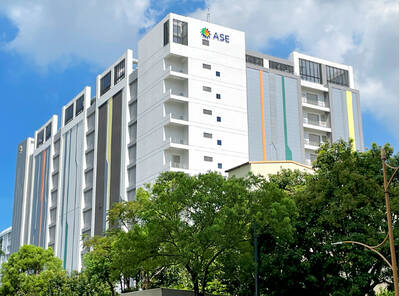
ASE Technology Holding Co (日月光投控), the world’s largest integrated circuit (IC) packaging and testing supplier, yesterday announced a strategic collaboration with Analog Devices Inc (ADI), coupled with the signing of a binding memorandum of understanding. Under the agreement, ASE intends to purchase 100 percent shares of Analog Devices Sdn Bhd and acquire its manufacturing facility in Penang, Malaysia, a press release showed. The ADI Penang facility is located in the prime industrial hub of Bayan Lepas, with an area of over 680,000 square feet, it said. In addition, the two sides intend to enter into a long-term supply agreement for ASE to


 RSS
RSS