


Taiwan’s insurance industry is likely to see their assets grow next year amid a stable economy at home and continued normalization of monetary policy abroad, KPMG Taiwan said in an annual report released yesterday.
The sector’s collective profit exceeded NT$300 billion (US$9.24 billion) in the first eight months, already higher than the whole of last year, the consultancy firm said, citing data from the Financial Supervisory Commission.
The improvement came after global economic conditions and financial markets turn favorable this year, compared with last year, KPMG analyst Joyce Tsai (蔡珮汝) said, as major central banks cut interest rates after inflationary pressures mitigated.

Photo: Taipei Times
Monetary tightening hurt the value of bond holdings and prompted corporate and retail investors to hold onto cash, ominous for sales of insurance policy and wealth management as a whole.
The economic scenes look stable moving forward, as the US Federal Reserve would further lower interest rates like peers in Europe and elsewhere, in the absence of major surprises, KPMG said.
The backdrop is positive for the sector to augment its assets, which picked up 3.8 percent last year to NT$35.38 trillion, it said.
The volume accounted for 33.72 percent of the assets for the entire financial industry, slowing from 34.17 percent one year earlier, as insurers have not fully emerged from global monetary tightening and structural changes.
Taiwan notched 14th last year in premium rankings, down from 11th place one year earlier, with its market share falling from 1.28 percent to 1.09 percent on the world stage, the report pointed out.
At the same time, insurance penetration dropped from 11.4 percent to 10.3 percent of the nation’s GDP, sliding from fifth to sixth globally and behind Hong Kong and South Korea in the region, it said.
Taiwan retained the world’s leading position for 13 years by measure of insurance penetration until 2020 when low interest rates and regulatory restrictions regarding bond holdings dampened the appeal of unit-linked insurance policies, formerly a popular investment tool among Taiwanese, analysts said.
Taiwan’s super-aging society poses a challenge and presents an opportunity for insurance players, another KPMG analyst Michael Lien (連宏銘) said.
The world population is aging, but the phenomenon is more poignant in Taiwan where the proportion of people aged 65 and older is expected to hit 20 percent next year, Lien said.
The demographic trend is unfavorable for doing business generally but suggests need for life planning and risk management, Lien said.
The insurance industry could develop financial products to help people cope with the evident and inevitable needs, Lien said.
Shares of contract chipmaker Taiwan Semiconductor Manufacturing Co (TSMC, 台積電) came under pressure yesterday after a report that Apple Inc is looking to shift some orders from the Taiwanese company to Intel Corp. TSMC shares fell NT$55, or 2.4 percent, to close at NT$2,235 on the local main board, Taiwan Stock Exchange data showed. Despite the losses, TSMC is expected to continue to benefit from sound fundamentals, as it maintains a lead over its peers in high-end process development, analysts said. “The selling was a knee-jerk reaction to an Intel-Apple report over the weekend,” Mega International Investment Services Corp (兆豐國際投顧) analyst Alex Huang
Taiwan Semiconductor Manufacturing Co (TSMC, 台積電) is expected to remain Apple Inc’s primary chip manufacturing partner despite reports that Apple could shift some orders to Intel Corp, industry experts said yesterday. The comments came after The Wall Street Journal reported on Friday that Apple and Intel had reached a preliminary agreement following more than a year of negotiations for Intel to manufacture some chips for Apple devices. Taiwan Institute of Economic Research (台灣經濟研究院) economist Arisa Liu (劉佩真) said TSMC’s advanced packaging technologies, including integrated fan-out and chip-on-wafer-on-substrate, remain critical to the performance of Apple’s A-series and M-series chips. She said Intel and Samsung
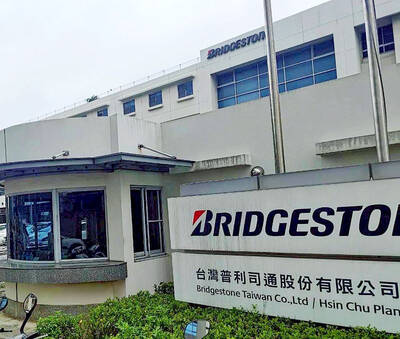
TRANSITION: With the closure, the company would reorganize its Taiwanese unit to a sales and service-focused model, Bridgestone said Bridgestone Corp yesterday announced it would cease manufacturing operations at its tire plant in Hsinchu County’s Hukou Township (湖口), affecting more than 500 workers. Bridgestone Taiwan Co (台灣普利司通) said in a statement that the decision was based on the Tokyo-based tire maker’s adjustments to its global operational strategy and long-term market development considerations. The Taiwanese unit would be reorganized as part of the closure, effective yesterday, and all related production activities would be concluded, the statement said. Under the plan, Bridgestone would continue to deepen its presence in the Taiwanese market, while transitioning to a sales and service-focused business model, it added. The Hsinchu
Taiwan Semiconductor Manufacturing Co (TSMC, 台積電) has approved a capital budget of US$31.28 billion for production expansion to meet long-term development needs during the artificial intelligence (AI) boom. The company’s board meeting yesterday approved the capital appropriation plan for purposes such as the installation of advanced technology capacity and fab construction, the world’s largest contract chipmaker said in a statement. At an earnings conference last month, TSMC forecast that its capital expenditure for this year would be at the higher end of the US$52 billion to US$56 billion range it forecast in January in response to robust demand for 5G, AI and


 RSS
RSS