


If former US president Donald Trump wins next month’s US presidential election, Mike Sagan’s toy-making company would halve its China supply chain within a year.
KidKraft, which also makes outdoor play equipment, had already shifted 20 percent of its production out of China to Vietnam, India and elsewhere after Trump introduced 7.5 percent to 25 percent tariffs in July 2018, midway through his first term.
Now Trump threatens blanket 60 percent tariffs on China, which Sagan said would be a game-changing “blunt” tool.
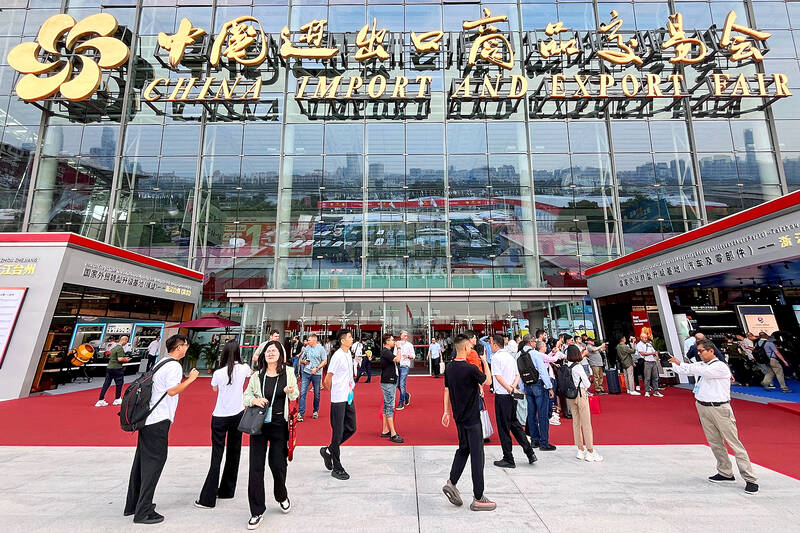
Photo: Reuters
He said he expects Vice President and Democratic presidential candidate Kamala Harris to be less aggressive, but still likely to keep confronting China on trade.
“The writing is on the wall that it’s going to be difficult,” said Sagan, vice president for supply chains and operations at KidKraft.
The firm has reduced its Chinese suppliers to 41 from 53 at the start of this year.
“Question is: is it going to be extremely difficult or just difficult?” he said.
The tariff threat alone is rattling China’s industrial complex, which sells more than US$400 billion goods annually to the US and hundreds of billions more in components for products Americans buy from elsewhere.
Of the 27 Chinese exporters with at least 15 percent of sales to the US that Reuters spoke with, 12 were planning to accelerate relocation if Trump returned to the White House. Four others, still fully in China, said they would open factories overseas if Trump raised tariffs. The other 11 had no specific plans around the election result, but most expressed concern they might lose US market access.
The producers expected higher tariffs on the world’s largest exporter to disrupt supply chains and further shrink Chinese profits, hurting jobs, investment and already sagging growth.
A trade dispute would raise production costs and US consumer prices even if factories relocated, they said.
The Chinese Ministry of Commerce did not respond to questions on the effect of the US election outcome on its economy, trade and diplomatic relations with Washington.
Matt Cole, who cofounded m.a.d Furniture Design in 2010, is among those who have not moved production yet.
He said his due diligence in Southeast Asia in 2018 showed he would still need to import 60 percent of furniture components from China. The costs of logistics and other inefficiencies were about the same as those added by a 25 percent tariff.
Although he saw little value in moving six years ago, he now feels exposed.
If Trump wins, Cole said he would move as much product to the US as possible ahead of the tariffs, buying himself time to explore other bases.
“Some people made a good decision going into third countries. I’m pretty sure they are not as worried about the US election as I am,” he said. “I might be on a flight to Malaysia or Vietnam very, very soon.”
Sagan said his production costs outside China are about 10 percent higher and likely to rise, but lower standards are the bigger worry.
If Harris wins, the relocation would proceed at a more considerate pace to reduce that risk.
Quality is “one of the biggest trade-offs that you make in the very beginning because it takes time to secure the sub-supply chain” and “find the right people,” he said. “You really risk your integrity.”
The 2018 tariffs benefited Southeast Asia, which emerged as the preferred assembly point for US-bound products that rely on Chinese supply chains, but they did little damage to Chinese growth and nothing to alter global economic reliance on US consumption and Chinese production.
China has grown its share in global manufacturing since the tariffs, as it redirected credit to factories from the property sector, as part of Chinese President Xi Jinping’s (習近平) push for new productive forces.
The tariffs had a smaller effect on the US trade deficit with China than the latter’s 2022 COVID-19 lockdowns, further evidence of their economic interdependence.
However, a new Trump-led trade dispute would be a moment of reckoning for many Chinese exporters, whose profits are dwindling under heavy deflationary pressure, caused by state-directed investment into factories at the expense of consumers.
“If it’s 60 percent tariffs, nobody can handle it,” said Zeng Zhaoliang, the head of Guangzhou Liangsheng Trading Co, which sells 30 to 40 percent of its low-margin cookers to the US.
Tariffs also push costs higher elsewhere, said Great Lakes Wholesale president Lance Ericson, who has been sourcing goods from China for 30 years and is now scouting suppliers in India, Vietnam and Cambodia to replace the 40 percent in business lost since Trump’s presidency.
“The Indians are already raising prices by 10 percent,” he said. “It’s going to be bad for China. It’s going to be bad for me.”
Exports where China has an edge, such as electric vehicles, face high tariffs in the US, Europe and elsewhere. Trump threatens to chase Chinese electric vehicle (EV) makers with 200 percent tariffs if they sell to the US from Mexico, where BYD Co plans new factories.
While backlash against Chinese exports targets mainly solar panels, EVs and batteries, some markets such as Indonesia and India are raising tariffs on China-made clothing, ceramics or steel.
Other industries are taking notice.
“We’re building factories overseas not just because of the US market, but to prepare for changes in the global landscape,” said Cheng Xinxian, an executive at appliance-maker Hangzhou Yongyao Technology Co.
The earliest a 60 percent tariff could come into force would be in the middle of next year, reducing Chinese growth by 0.4 to 0.7 percentage points next year through diverted investment and jobs and output cuts, economists have said.
Beijing can mitigate this with more stimulus, export controls and a weaker currency, although these steps carry risks such as capital flight, debt and further trade conflict.
“If Beijing is planning on giving rebates to factories and things like that, the tariffs are just going to go higher and higher,” said Larry Sloven, who has been sourcing and manufacturing products across Asia for international companies since the 1970s. “If you’re not spreading yourself, you’re dead, you’re in great danger.”
Almost all exporters hoped Trump would moderate his stance if he wins.
Yang Qiong, an executive at Chongqing Hybest Tools Group Co, which makes hand drills, pneumatic nail guns and staplers, says her firm would expand Vietnam facilities if Trump returned, but stay put if Harris became president.
Capital Economics chief Asia economist Mark Williams said that a second Trump term would undermine China’s near-term growth through “challenges to a global economic order that has helped China prosper,” but it also risks splintering a US coalition of allies from Europe to east Asia that are increasingly like-minded on Beijing.
If Harris kept allies onside, “China would probably be more constricted economically over the medium term,” he said.

Cairo’s new monorail slices across the city skyline, running above the familiar chaos of blaring horns and aging buses’ exhaust fumes that mark rush hour below. The US$4.5 billion monorail, opened this month, is among Egypt’s most prominent new transport projects, part of a debt-funded infrastructure drive criticized for sapping state finances while bringing limited benefits to most of the country’s 109 million people. “It feels like you’re in a different country,” said Ramy Sayed, a restaurant manager, aboard a driverless Innovia 300 train. “No noise, no traffic, we’re not used to this.” The eastern line runs 56km from the bustling middle-class

Taiwanese firms have increased investment in the Philippines in recent years as Manila’s ties with Washington deepen and global supply chains continue to shift away from China, an expert at the Chung-Hua Institution for Economic Research (CIER, 中華經濟研究院) said yesterday. The Philippines had not been among Taiwanese investors’ top choices in Southeast Asia, CIER Taiwan ASEAN Studies Center director Kristy Hsu (徐遵慈) said at a seminar in Taipei. However, Taiwan’s investment in the country has grown significantly since the COVID-19 pandemic, reaching US $257 million last year, a high in recent years, she said. Although Taiwan’s total investment in the Philippines still lags
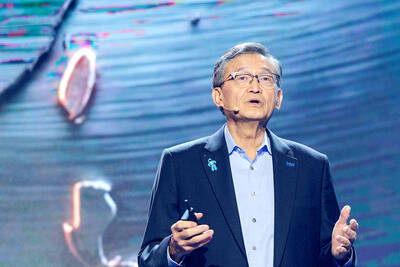
Intel Corp regards Taiwan Semiconductor Manufacturing Co (TSMC, 台積電) as a longstanding partner, as the US chipmaker would continue outsourcing production of advanced chips to TSMC, Intel chief executive officer Lip-Bu Tan (陳立武) said yesterday. “I don’t look at people as competitors. I look at the collaboration... Nvidia is also, you know, a good friend,” Tan told a news conference following his keynote speech at the Computex trade show in Taipei. “It’s a very trusted partnership for us... We are a big, top customer for them, and we’re going to continue doing that,” he said, referring to TSMC, the world’s largest foundry
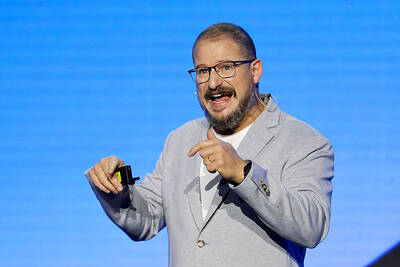
Artificial intelligence (AI) agents would supplant smartphones as the center of people’s digital lives, fundamentally reshaping personal devices and driving a major computing upgrade cycle, Qualcomm Inc CEO Cristiano Amon said yesterday. In his keynote speech for this year’s Computex trade show in Taipei, Amon said that the rise of "agentic AI" — AI systems capable of reasoning, planning and carrying out tasks autonomously — would transform how people interact with technology across phones, PCs, vehicles and wearable devices. Describing the technology as the next major evolution in computing, Amon said that "2026 is the year of agents.” For decades, smartphones have sat


 RSS
RSS