


Asustek Computer Inc (華碩) yesterday reported 39 percent quarterly growth in net profit for last quarter after the PC vendor reached its 4-percent operating profit target ahead of its schedule, thanks to stringent cost control and improved operational efficiency.
Operating margin rose to 4.1 percent during the quarter ending March 31, compared with 2.1 percent in the previous quarter and minus-3.6 percent a year earlier, Asustek said.
This was the highest in eight quarters, Asustek added.
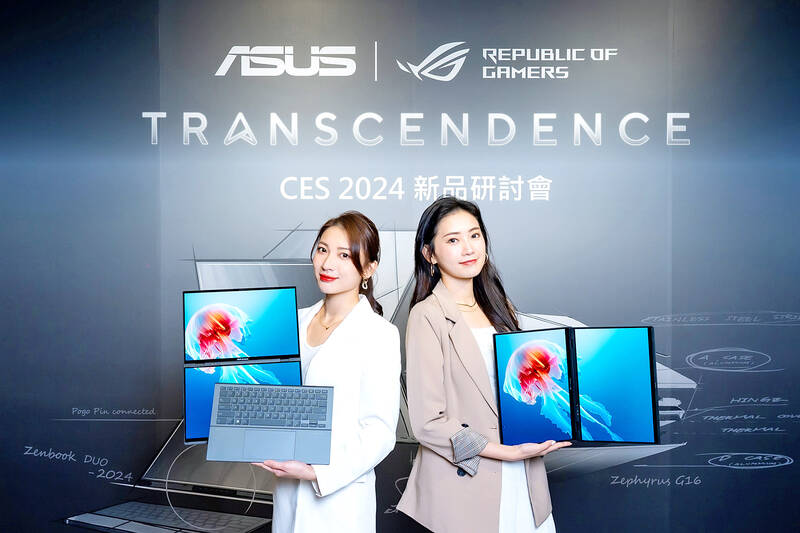
Photo courtesy of Asustek Photo courtesy of Asustek Computer Inc via CNA
The company aimed to lift its operating margin to 4 percent by the end of this year, Asustek said in March.
“We have worked hard to optimize several financial metrics including revenue, cost and expense, and are glad to see operating margin hit the 4 percent level earlier than expected,” Asustek chief financial officer Nick Wu (吳長榮) told a virtual investors’ conference yesterday.
The firm expects its operating margin to stay at 4 percent this quarter and looks at further improvement in the second half of the year, aided by new product launches, Wu said.
Asustek’s net profit last quarter surged to NT$5.45 billion (US$168.2 million), compared with NT$3.93 billion in the previous quarter and reversing a loss of NT$1.68 billion the previous year.
Earnings per share were NT$7.3, up from NT$5.3 the previous quarter.
The firm had posted losses per share of NT$2.3 a year earlier.
This quarter’s PC revenue is expected to grow 10 percent to 15 percent from last quarter’s, Wu said.
Last quarter, PC and smartphone revenue increased 5 percent amid sluggish demand, although channel inventory returned to a healthy level, he said.
The company expects component revenue this quarter to be flat, he said.
Asustek said it is confident about its business outlook, as the company plans to launch a series of artificial intelligence (AI) PCs later this month.
AI PCs are expected to make up at least 50 percent of the global PC market in 2026, a rapid uptake from just several million units shipped this year, the company said.
“We are optimistic about this AI revolution and believe AI PCs will fuel the next wave of growth for the industry and Asustek as well,” Asustek cochief executive officer S.Y. Hsu (許先越) said yesterday.
Another growth driver is AI servers, which would see multiple revenue growth from the same period last year, Asustek said.
The company is an ecosystem partner of Nvidia Corp for its new AI GPU GB200.
AI servers accounted for 70 to 80 percent of Asustek’s total server shipments, but servers made up less than 10 percent of the company’s overall revenue, Asustek added.
CHIP RACE: Three years of overbroad export controls drove foreign competitors to pursue their own AI chips, and ‘cost US taxpayers billions of dollars,’ Nvidia said China has figured out the US strategy for allowing it to buy Nvidia Corp’s H200s and is rejecting the artificial intelligence (AI) chip in favor of domestically developed semiconductors, White House AI adviser David Sacks said, citing news reports. US President Donald Trump on Monday said that he would allow shipments of Nvidia’s H200 chips to China, part of an administration effort backed by Sacks to challenge Chinese tech champions such as Huawei Technologies Co (華為) by bringing US competition to their home market. On Friday, Sacks signaled that he was uncertain about whether that approach would work. “They’re rejecting our chips,” Sacks
Taiwan’s long-term economic competitiveness will hinge not only on national champions like Taiwan Semiconductor Manufacturing Co. (TSMC, 台積電) but also on the widespread adoption of artificial intelligence (AI) and other emerging technologies, a US-based scholar has said. At a lecture in Taipei on Tuesday, Jeffrey Ding, assistant professor of political science at the George Washington University and author of "Technology and the Rise of Great Powers," argued that historical experience shows that general-purpose technologies (GPTs) — such as electricity, computers and now AI — shape long-term economic advantages through their diffusion across the broader economy. "What really matters is not who pioneers

BUBBLE? Only a handful of companies are seeing rapid revenue growth and higher valuations, and it is not enough to call the AI trend a transformation, an analyst said Artificial intelligence (AI) is entering a more challenging phase next year as companies move beyond experimentation and begin demanding clear financial returns from a technology that has delivered big gains to only a small group of early adopters, PricewaterhouseCoopers (PwC) Taiwan said yesterday. Most organizations have been able to justify AI investments through cost recovery or modest efficiency gains, but few have achieved meaningful revenue growth or long-term competitive advantage, the consultancy said in its 2026 AI Business Predictions report. This growing performance gap is forcing executives to reconsider how AI is deployed across their organizations, it said. “Many companies
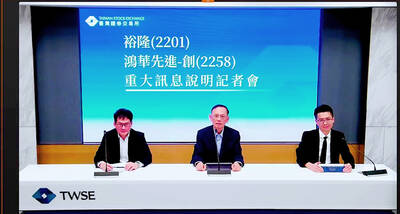
TAIWAN VALUE CHAIN: Foxtron is to fully own Luxgen following the transaction and it plans to launch a new electric model, the Foxtron Bria, in Taiwan next year Yulon Motor Co (裕隆汽車) yesterday said that its board of directors approved the disposal of its electric vehicle (EV) unit, Luxgen Motor Co (納智捷汽車), to Foxtron Vehicle Technologies Co (鴻華先進) for NT$787.6 million (US$24.98 million). Foxtron, a half-half joint venture between Yulon affiliate Hua-Chuang Automobile Information Technical Center Co (華創車電) and Hon Hai Precision Industry Co (鴻海精密), expects to wrap up the deal in the first quarter of next year. Foxtron would fully own Luxgen following the transaction, including five car distributing companies, outlets and all employees. The deal is subject to the approval of the Fair Trade Commission, Foxtron said. “Foxtron will be


 RSS
RSS