


The European Union yesterday announced an investigation into Chinese wind turbine suppliers suspected of receiving an unfair advantage in the European market through foreign subsidies.
“Today, we are launching a new inquiry into Chinese suppliers of wind turbines,” EU Commissioner for Competition Margrethe Vestager said in a speech at Princeton University in the US state of New Jersey.
“We are investigating the conditions for the development of wind parks in Spain, Greece, France, Romania and Bulgaria.”
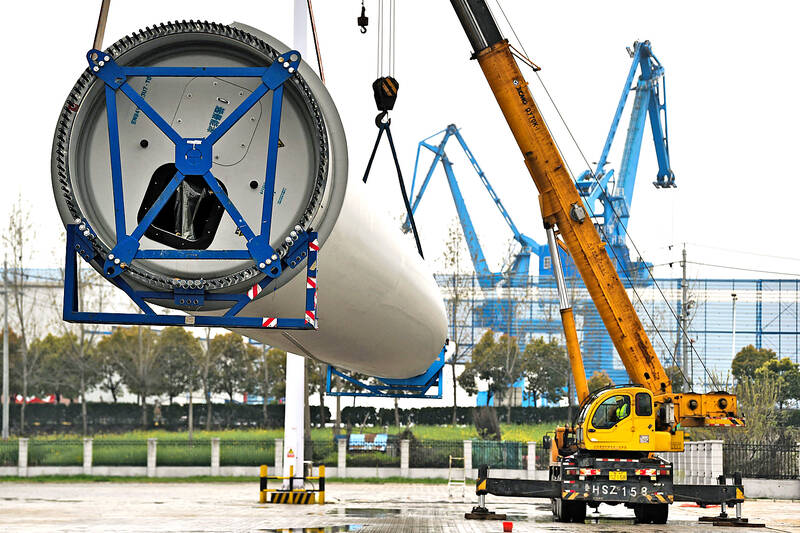
Photo: AFP
Brussels has in the past year taken stronger action to defend European industry against growing threats from both China and the US. The wind probe follows similar investigations targeting Chinese subsidies for solar panels, electric cars and trains, as trade tensions heat up between Brussels and Beijing.
The 27-nation bloc wants to ramp up its renewable energy capacity as it aims for net-zero greenhouse gas emissions by 2050, while also moving away from excessive reliance on cheaper Chinese wind and solar technology.
The latest probe was launched under new rules that came into force in July last year and seek to prevent foreign subsidies from undermining fair competition in the EU.
Vestager did not provide details of the wind turbine suppliers being targeted.
Brussels opened its first probe under the new Foreign Subsidies Regulation in February, targeting a subsidiary of Chinese rail giant CRRC Corp (中國中車). That investigation was closed after the subsidiary withdrew last month from a tender in Bulgaria to supply electric trains.
A second probe announced last week is targeting Chinese-owned solar panel manufacturers seeking to build and operate a photovoltaic park in Romania, partly financed by European funds.
Two separate consortiums are under investigation in that case, one of which includes the Enevo group in Romania and a German subsidiary of China’s Longi Green Energy Technology Co (隆基綠能) — the world’s biggest solar panel manufacturer.
The second is made up of two subsidiaries that are both fully owned and controlled by Chinese state-owned Shanghai Electric Group Co (上海電氣集團).
Under a different set of rules, Brussels in September last year started a probe into Chinese electric car subsidies that could lead to punitive tariffs on vehicles it believes are being unfairly sold at a lower price.
Beijing at the time warned that the move would harm trade relations and risk a trade war.


Taiwan’s foreign exchange reserves fell below the US$600 billion mark at the end of last month, with the central bank reporting a total of US$596.89 billion — a decline of US$8.6 billion from February — ending a three-month streak of increases. The central bank attributed the drop to a combination of factors such as outflows by foreign institutional investors, currency fluctuations and its own market interventions. “The large-scale outflows disrupted the balance of supply and demand in the foreign exchange market, prompting the central bank to intervene repeatedly by selling US dollars to stabilize the local currency,” Department of Foreign

Intel Corp is joining Elon Musk’s long-shot effort to develop semiconductors for Tesla Inc, Space Exploration Technologies Corp and xAI, marking a surprising twist in the chipmaker’s comeback bid. Intel would help the Terafab project “refactor” the technology in a chip factory, the company said on Tuesday in a post on X, Musk’s social media platform. That is a stage in the development process that typically helps make chips more powerful or reliable. The chipmaker’s shares jumped 4.2 percent to US$52.91 in New York trading on Tuesday. The Terafab project is a grand plan by Musk to eventually manufacture his own chips for
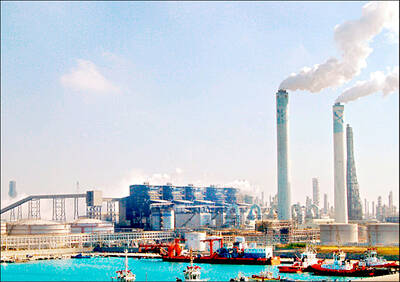
Taiwan Power Co (Taipower, 台電) yesterday said it plans to resume operations at two coal-fired power generators for three months to boost security of electricity supply as liquefied natural gas (LNG) supply risks are running high due to the Middle East conflict. The two coal-fired power generators are at Mailiao Power Plant in Yunlin County’s Mailiao Township (麥寮). The plant, operated by Formosa Plastics Group (台塑集團), supplied electricity to Taipower’s power grid until the end of last year. Taipower’s decision came about one month after Minister of Economic Affairs Kung Ming-hsin (龔明鑫) on March 10 said that the nation had no imminent
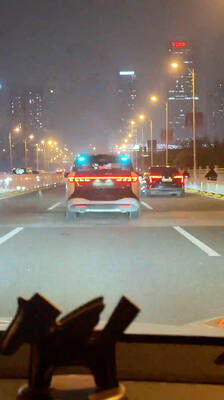
Some robotaxi passengers were left stranded in the middle of fast-moving traffic in a major Chinese city after their driverless vehicles stopped running, according to police and media reports on Wednesday. A preliminary investigation indicates more than 100 robotaxis came to a halt because of a “system malfunction,” police in the city of Wuhan said in a statement, without elaborating. No injuries were reported. One passenger told Chinese media that their robotaxi stopped after turning a corner. An instruction on a screen read: “Driving system malfunction. Staff are expected to arrive in 5 minutes.” After no one showed up, the passenger pushed


 RSS
RSS