


Homes in Taiwan are 32 years old on average, with nearly 70 percent older than 25, while less than 35 percent have earthquake insurance, raising safety concerns, property analysts said yesterday.
The issue came to the forefront after a magnitude 7.2 earthquake hit Taiwan’s east coast yesterday morning, killing nine and injuring more than 900.
“The government should accelerate urban renewal projects to improve building safety nationwide, as most buildings in Taiwan are not quake resistant,” H&B Realty Co (住商機構) said.
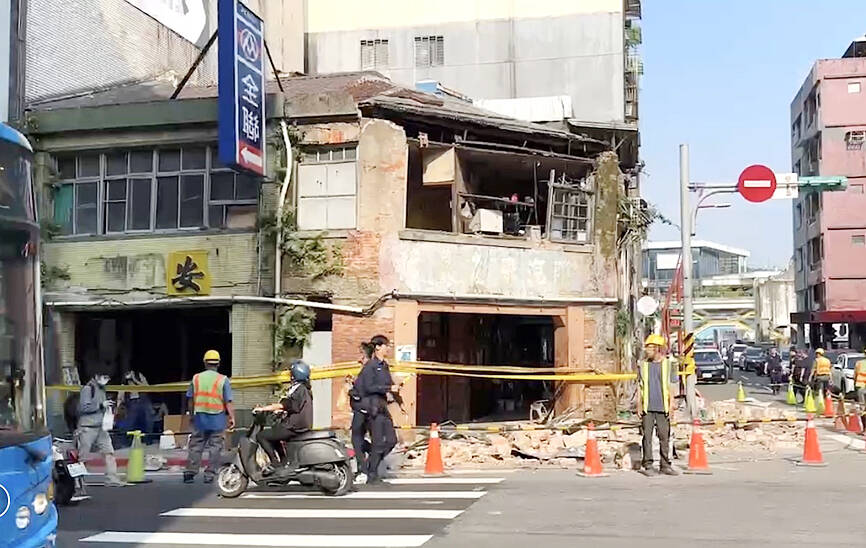
Photo: Lu Hsien-hsiu, Taipei Times
As of December last year, almost 70 percent of houses in Taiwan were 25 years old, with the figure approaching 80 percent in Taipei, H&B head researcher Jessica Hsu (徐佳馨) said, citing Ministry of the Interior data.
Homes are facing the same issue as the people of Taiwan, which is aging, meriting serious attention and a joint effort from all levels of government, Hsu said.
High-rise buildings constructed after 1999 — when a magnitude 7.6 earthquake in central Taiwan caused hundreds of deaths and injuries — are relatively safe, as developers introduced quake-resistant designs, she said, adding that houses built prior to 1999 remain susceptible to temblors and other natural disasters.
Houses in Taipei are 37.6 years old on average, meeting requirements for preferential building terms intended to facilitate urban renewal, and retirement of old and dilapidated buildings, Hsu said.
“Disasters will not wait and can strike without warning,” she said.
Great Home Realty Co (大家房屋) said people should do research when hunting for a home to avoid those that are prone to soil liquefaction.
Houses in Hsinchu and Taoyuan are young compared with the other four special municipalities, with those that are at least 25 years old making up 50 and 56 percent of the total respectively, Great Home Realty said, citing government data.
That has to do with the increase of high-paying jobs in the tech sector, it said.
Liability from residential earthquake insurance policies in Taiwan total about NT$5.9 trillion (US$184.05 billion), with about 3.52 million policies in effect, or only 34.4 percent of households nationwide, H&B said, citing government data.
Taoyuan and Hsinchu have the greatest average earthquake insurance coverage, at 42.3 and 41.9 percent respectively, Hsu said, adding that homes in the two municipalities must have earthquake and fire insurance to qualify for mortgage applications.
Home owners who have paid off their mortgage generally refuse to get property insurance, exposing themselves to unexpected risks such as yesterday’s temblor, she said.

Shares of contract chipmaker Taiwan Semiconductor Manufacturing Co (TSMC, 台積電) came under pressure yesterday after a report that Apple Inc is looking to shift some orders from the Taiwanese company to Intel Corp. TSMC shares fell NT$55, or 2.4 percent, to close at NT$2,235 on the local main board, Taiwan Stock Exchange data showed. Despite the losses, TSMC is expected to continue to benefit from sound fundamentals, as it maintains a lead over its peers in high-end process development, analysts said. “The selling was a knee-jerk reaction to an Intel-Apple report over the weekend,” Mega International Investment Services Corp (兆豐國際投顧) analyst Alex Huang
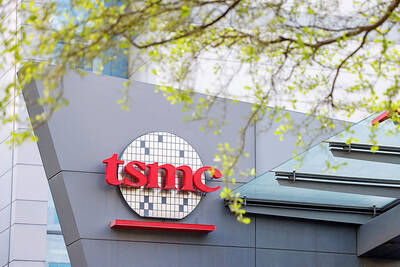
Taiwan Semiconductor Manufacturing Co (TSMC, 台積電) is expected to remain Apple Inc’s primary chip manufacturing partner despite reports that Apple could shift some orders to Intel Corp, industry experts said yesterday. The comments came after The Wall Street Journal reported on Friday that Apple and Intel had reached a preliminary agreement following more than a year of negotiations for Intel to manufacture some chips for Apple devices. Taiwan Institute of Economic Research (台灣經濟研究院) economist Arisa Liu (劉佩真) said TSMC’s advanced packaging technologies, including integrated fan-out and chip-on-wafer-on-substrate, remain critical to the performance of Apple’s A-series and M-series chips. She said Intel and Samsung
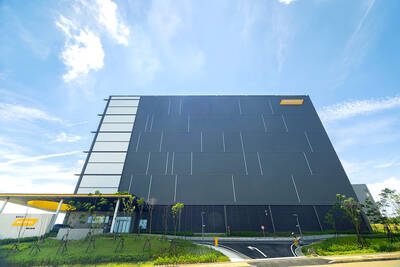
POWER BUILDUP: Powered by Nvidia’s B200 Blackwell chips, the data center would support MediaTek’s computing power demand and business growth, the company said Smartphone chip designer MediaTek Inc (聯發科) yesterday launched a new artificial intelligence (AI) data center with a maximum capacity of 45 megawatts to meet its rising demand for computing power required to develop new advanced chips for AI applications. The company has completed the first-phase computing power buildup at the data center in Miaoli County’s Tongluo Township (銅鑼), providing 15 megawatts of capacity to support its research and development (R&D) capabilities, despite an industrywide shortage of key components, MediaTek said. Supply constraints have plagued a wide range of key components, including memory chips, solid-state drives, power supply units and central
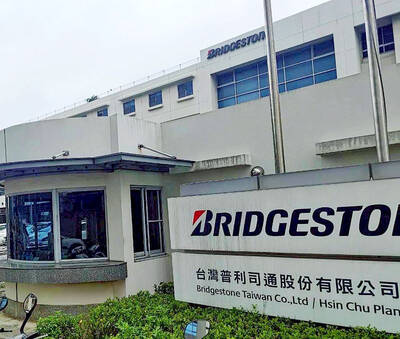
TRANSITION: With the closure, the company would reorganize its Taiwanese unit to a sales and service-focused model, Bridgestone said Bridgestone Corp yesterday announced it would cease manufacturing operations at its tire plant in Hsinchu County’s Hukou Township (湖口), affecting more than 500 workers. Bridgestone Taiwan Co (台灣普利司通) said in a statement that the decision was based on the Tokyo-based tire maker’s adjustments to its global operational strategy and long-term market development considerations. The Taiwanese unit would be reorganized as part of the closure, effective yesterday, and all related production activities would be concluded, the statement said. Under the plan, Bridgestone would continue to deepen its presence in the Taiwanese market, while transitioning to a sales and service-focused business model, it added. The Hsinchu


 RSS
RSS