


Boeing Co CEO Dave Calhoun will step down by the end of the year, in a broad management shakeup brought on by the planemaker’s sprawling safety crisis stemming from a January mid-air panel blowout on a 737 MAX plane.
Boeing Commercial Airplanes president and CEO Stan Deal would retire, and Stephanie Pope would lead that business, the planemaker said yesterday. Steve Mollenkopf has been appointed the new chair of the board.
The leadership change caps weeks of turmoil at Boeing, after the mid-air incident involving an Alaska Airlines-operated MAX 9 jet carrying 171 passengers turned into a full-blown safety and reputational crisis for the iconic planemaker.
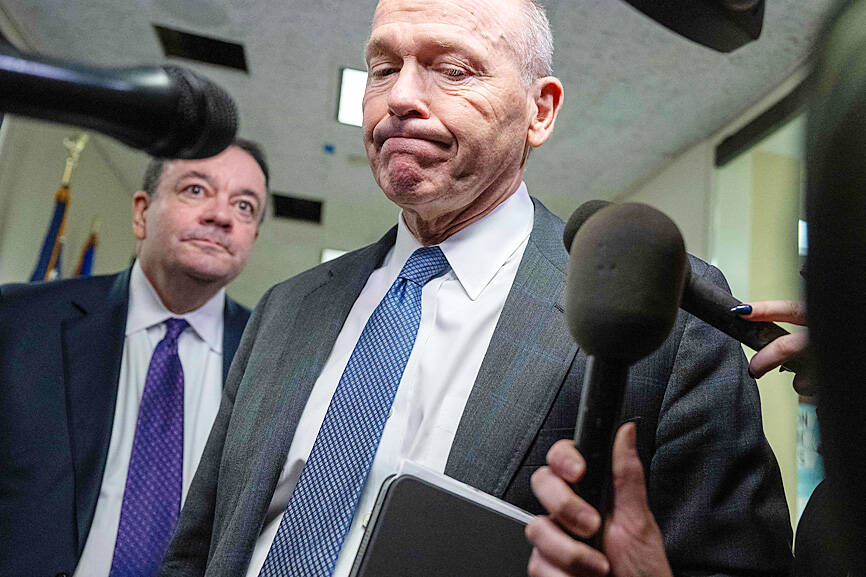
Photo: AFP
Boeing shares have lost roughly one-quarter of their value since the incident. They were up 4 percent in premarket trading.
The company is facing heavy regulatory scrutiny and US authorities curbed production while it attempts to fix safety and quality issues. The company is in talks to buy its former subsidiary Spirit AeroSystems Holdings Inc to try to get more control over its supply chain.
Some investors expressed concern that this shake-up would not be enough to address long-standing safety issues that were the reason for Calhoun’s ascendance to CEO in the first place in 2020.
"We’ve long thought that the issues at Boeing have been seated in cultural challenges," Newedge Wealth LLC chief investment officer Cameron Dawson said.
Last week, a group of US airline CEOs sought meetings with Boeing directors without Calhoun to express concern over the Alaska Airlines Flight 1282 accident, saying it was an unusual sign of frustration with the manufacturer’s problems and Calhoun.
Calhoun, an industrial veteran who has held top positions at several troubled companies, became CEO in January 2020 with the mandate of steering the planemaker through a series of crises emanating from two MAX crashes in 2018 and 2019 that killed nearly 350 people.
Following the incident, the US Federal Aviation Administration (FAA) curbed Boeing production to a rate of 38 jets per month, but company chief financial officer Brian West said last week it had not even reached that figure.
Since Calhoun took the reins, the company has endured ongoing delays in production. Still, in October last year, Calhoun was upbeat over how fast Boeing could raise output of its MAX jets, saying Boeing would get back to 38 jets a month and was "anxious to build from there as fast as we can."
But weeks after the mid-air cabin panel blowout in January, Calhoun said it’s time to "go slow to go fast."
The company’s crisis has frustrated airlines already struggling with delivery delays from both Boeing and its rival Airbus SE, and the planemaker has been burning more cash than expected this quarter.
"For years, we prioritized the movement of the airplane through the factory over getting it done right, and that’s got to change," West said last week.
Airbus recently clinched orders for 65 jets from two of Boeing’s key Asian customers — Japan Airlines Co and Korean Air Lines Co, in what some saw as a sign of executives’ concerns about Boeing.
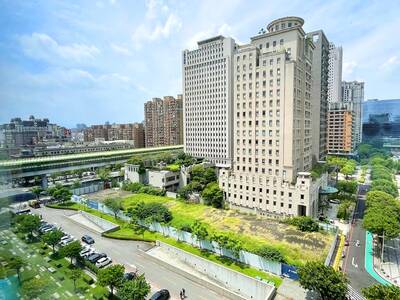
Taichung reported the steepest fall in completed home prices among the six special municipalities in the first quarter of this year, data compiled by Taiwan Realty Co (台灣房屋) showed yesterday. From January through last month, the average transaction price for completed homes in Taichung fell 8 percent from a year earlier to NT$299,000 (US$9,483) per ping (3.3m²), said Taiwan Realty, which compiled the data based on the government’s price registration platform. The decline could be attributed to many home buyers choosing relatively affordable used homes to live in themselves, instead of newly built homes in the city’s prime property market, Taiwan Realty
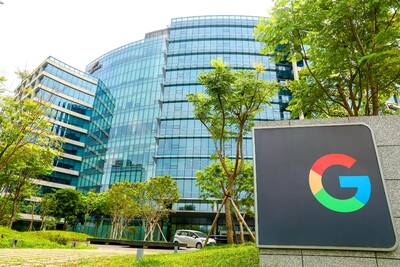
The government yesterday approved applications by Alphabet Inc’s Google to invest NT$27.08 billion (US$859.98 million) in Taiwan, the Ministry of Economic Affairs said in a statement. The Department of Investment Review approved two investments proposed by Google, with much of the funds to be used for data processing and electronic information supply services, as well as inventory procurement businesses in the semiconductor field, the ministry said. It marks the second consecutive year that Google has applied to increase its investment in Taiwan. Google plans to infuse NT$25.34 billion into Charter Investments Ltd (特許投資顧問) through its Singapore-based subsidiary Fructan Holdings Singapore Pte Ltd, and
Micron Technology Inc is a driving force pushing the US Congress to pass legislation that would put new export restrictions on equipment its Chinese competitors use to make their chips, according to people familiar with the matter. A US House of Representatives panel yesterday was to vote on the “MATCH Act,” a bill designed to close gaps in restrictions on chipmaking equipment. It would also pressure foreign companies that sell equipment to Chinese chipmaking facilities to align with export curbs on US companies like Lam Research Corp and Applied Materials Inc. The bill targets facilities operated by China’s ChangXin Memory Technologies Inc

Singapore-based ride-hailing and delivery giant Grab Holdings’ planned acquisition of Foodpanda’s Taiwan operations has yet to enter the formal review stage, as regulators await supplementary documents, the Fair Trade Commission (FTC) said yesterday. Acting FTC Chairman Chen Chih-min (陳志民) told the legislature’s Economics Committee that although Grab submitted its application on March 27, the case has not been officially accepted because required materials remain incomplete. Once the filing is finalized, the FTC would launch a formal probe into the deal, focusing on issues such as cross-shareholding and potential restrictions on market competition, Chen told lawmakers. Grab last month announced that it would acquire


 RSS
RSS