


The first human patient received an implant from brain-chip start-up Neuralink on Sunday and is recovering well, company founder Elon Musk said.
“Initial results show promising neuron spike detection,” Musk said in a post on the social media platform X on Monday.
Spikes are activity by neurons, which the US National Institute of Health describes as cells that use electrical and chemical signals to send information around the brain and to the body.
Photo: Reuters
The US Food and Drug Administration had given the company clearance last year to conduct its first trial to test its implant on humans, a critical milestone in the start-up’s ambitions to help patients overcome paralysis and a host of neurological conditions.
In September, Neuralink said it received approval for recruitment for the human trial.
The study uses a robot to surgically place a brain-computer interface (BCI) implant in a region of the brain that controls the intention to move, Neuralink said previously, adding that its initial goal is to enable people to control a computer cursor or keyboard using their thoughts alone.
The implants’ “ultra-fine” threads help transmit signals in participants’ brains, Neuralink has said.
The first product from Neuralink would be called Telepathy, Musk said in a separate post on X.
The start-up’s PRIME Study is a trial for its wireless brain-computer interface to evaluate the safety of the implant and surgical robot.
Neuralink has faced calls for scrutiny regarding its safety protocols. Reuters reported earlier this month that the company was fined for breaching US Department of Transportation rules regarding the movement of hazardous materials.
The company was valued at about US$5 billion in June last year, but four lawmakers in late November asked the US Securities and Exchange Commission to investigate whether Musk had misled investors about the safety of its technology after veterinary records showed problems with the implants on monkeys included paralysis, seizures and brain swelling.

NOT JUSTIFIED: The bank’s governor said there would only be a rate cut if inflation falls below 1.5% and economic conditions deteriorate, which have not been detected The central bank yesterday kept its key interest rates unchanged for a fifth consecutive quarter, aligning with market expectations, while slightly lowering its inflation outlook amid signs of cooling price pressures. The move came after the US Federal Reserve held rates steady overnight, despite pressure from US President Donald Trump to cut borrowing costs. Central bank board members unanimously voted to maintain the discount rate at 2 percent, the secured loan rate at 2.375 percent and the overnight lending rate at 4.25 percent. “We consider the policy decision appropriate, although it suggests tightening leaning after factoring in slackening inflation and stable GDP growth,”
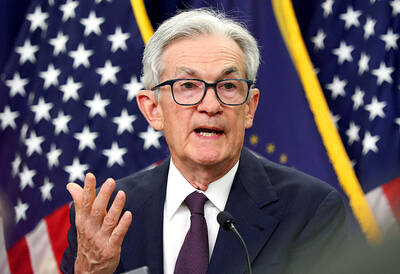
DIVIDED VIEWS: Although the Fed agreed on holding rates steady, some officials see no rate cuts for this year, while 10 policymakers foresee two or more cuts There are a lot of unknowns about the outlook for the economy and interest rates, but US Federal Reserve Chair Jerome Powell signaled at least one thing seems certain: Higher prices are coming. Fed policymakers voted unanimously to hold interest rates steady at a range of 4.25 percent to 4.50 percent for a fourth straight meeting on Wednesday, as they await clarity on whether tariffs would leave a one-time or more lasting mark on inflation. Powell said it is still unclear how much of the bill would fall on the shoulders of consumers, but he expects to learn more about tariffs
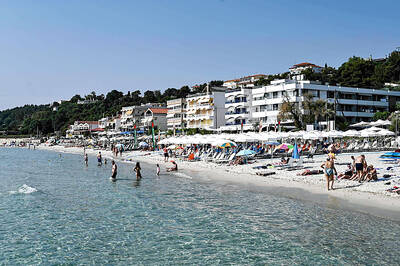
Greek tourism student Katerina quit within a month of starting work at a five-star hotel in Halkidiki, one of the country’s top destinations, because she said conditions were so dire. Beyond the bad pay, the 22-year-old said that her working and living conditions were “miserable and unacceptable.” Millions holiday in Greece every year, but its vital tourism industry is finding it harder and harder to recruit Greeks to look after them. “I was asked to work in any department of the hotel where there was a need, from service to cleaning,” said Katerina, a tourism and marketing student, who would
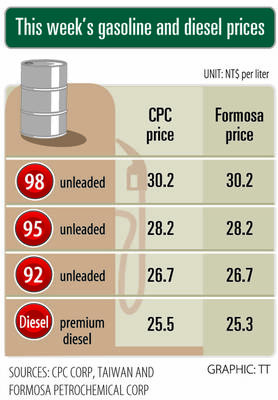
i Gasoline and diesel prices at fuel stations are this week to rise NT$0.1 per liter, as tensions in the Middle East pushed crude oil prices higher last week, CPC Corp, Taiwan (台灣中油) and Formosa Petrochemical Corp (台塑石化) said yesterday. International crude oil prices last week rose for the third consecutive week due to an escalating conflict between Israel and Iran, as the market is concerned that the situation in the Middle East might affect crude oil supply, CPC and Formosa said in separate statements. Front-month Brent crude oil futures — the international oil benchmark — rose 3.75 percent to settle at US$77.01


 RSS
RSS